Overview
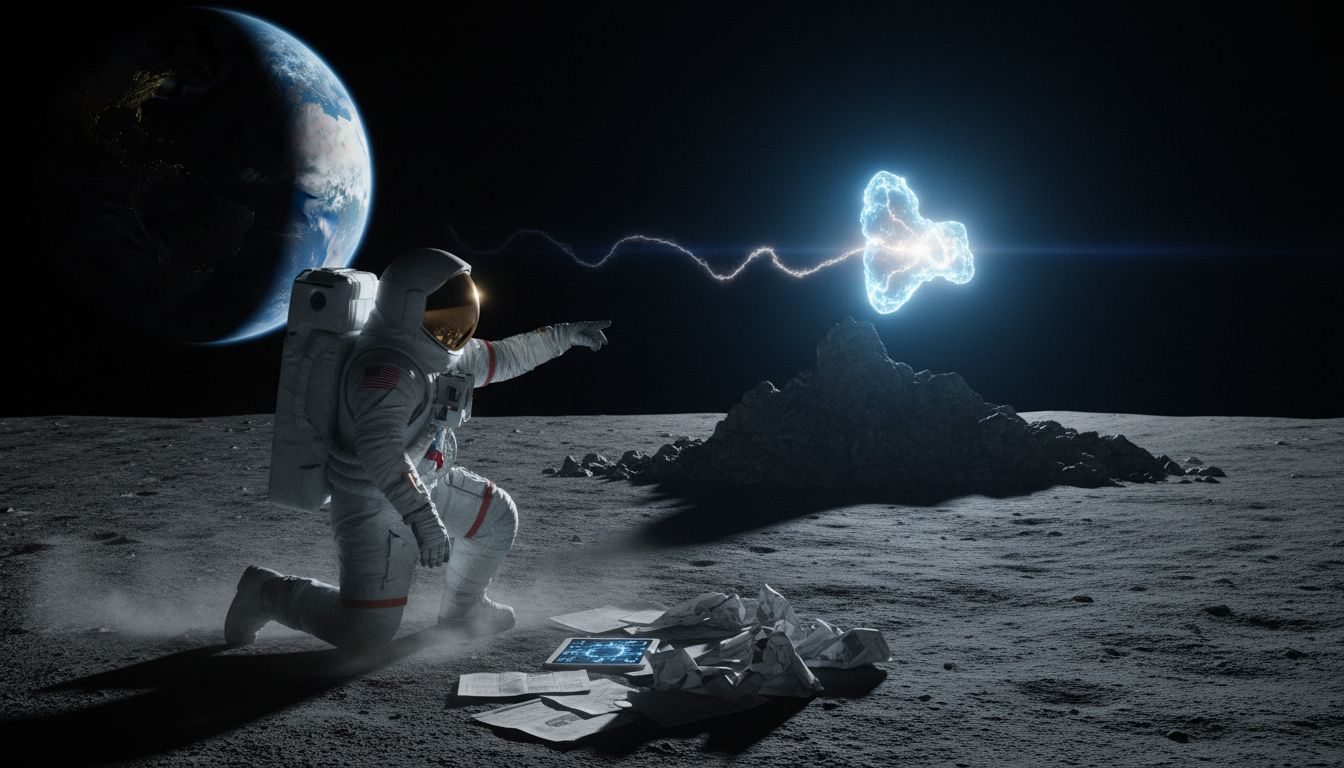
A batch of declassified documents released as part of the U.S. government’s ongoing UFO/UAP disclosure effort includes a brief reference to a visual anomaly observed by the Apollo 17 crew in December 1972. The files, made public under the administration’s transparency mandate, note that astronauts Eugene Cernan, Harrison Schmitt and Ronald Evans reported “a brief, bright flash or object” while orbiting the Moon. The mention has reignited public speculation about whether a spacecraft or extraterrestrial presence was sighted on the lunar surface, prompting media outlets and UFO researchers to revisit the historic mission.
The Newly Released Files
The disclosure package, compiled by the Office of the Director of National Intelligence and shared with the National Archives, contains a short memorandum dated 1973 that logs the crew’s observation during the mission’s third lunar orbit. According to the document, the astronauts “noted a transient luminous phenomenon lasting less than a second, appearing to move relative to the lunar horizon.” The report also records that the crew “consulted the onboard camera data, which showed a brief bright spot but no discernible shape.” No further analysis was attached, and the files do not include the original video footage.
Expert Interpretation
Aerospace historians and former NASA engineers caution against drawing extraordinary conclusions from the limited data. Dr. Linda Ramirez, a planetary scientist at the University of Arizona, told USA Today, “The description matches several known camera artifacts—such as sensor flare or a momentary reflection from lunar dust.” Similarly, James Whitaker, a retired NASA flight director, noted that “Apollo 17 was the last mission to use a 16‑mm film camera, which is prone to brief overexposures when the Sun reflects off high‑albedo surface features.” Both experts emphasize that without corroborating telemetry or additional imagery, the anomaly remains inconclusive.
Historical Context
Apollo 17 was the final crewed lunar landing, and its scientific payload included extensive photographic surveys of the Moon’s far side. The mission’s documentation has been extensively studied, and no prior reports have indicated an unidentified craft. In the 1970s, NASA’s “UFO” reporting protocol was informal, and many visual sightings—often meteoroids or spacecraft debris—were logged but later explained. The recent release is the first time a specific Apollo‑era observation has been highlighted in a modern UAP disclosure, illustrating how historical records are being re‑examined under today’s heightened interest in unidentified aerial phenomena.
What the Evidence Shows
While the declassified memo confirms that the Apollo 17 crew noticed an unusual flash, the absence of definitive visual evidence—such as a clear photograph or corroborating sensor data—means the incident cannot be classified as a confirmed extraterrestrial encounter. The documents do, however, underscore the government’s commitment to cataloging all anomalous observations, even those dating back half a century. As the National Archives continue to process the larger trove of UAP files, analysts expect additional context that may either clarify the lunar sighting or place it among the many mundane explanations that have historically resolved similar reports.
The release serves as a reminder that historical space missions can still yield new questions, but rigorous scientific scrutiny remains essential. Until further data emerges, the Apollo 17 flash will likely stay classified as an unresolved visual anomaly—interesting, but not proof of a UFO on the Moon.


