Overview
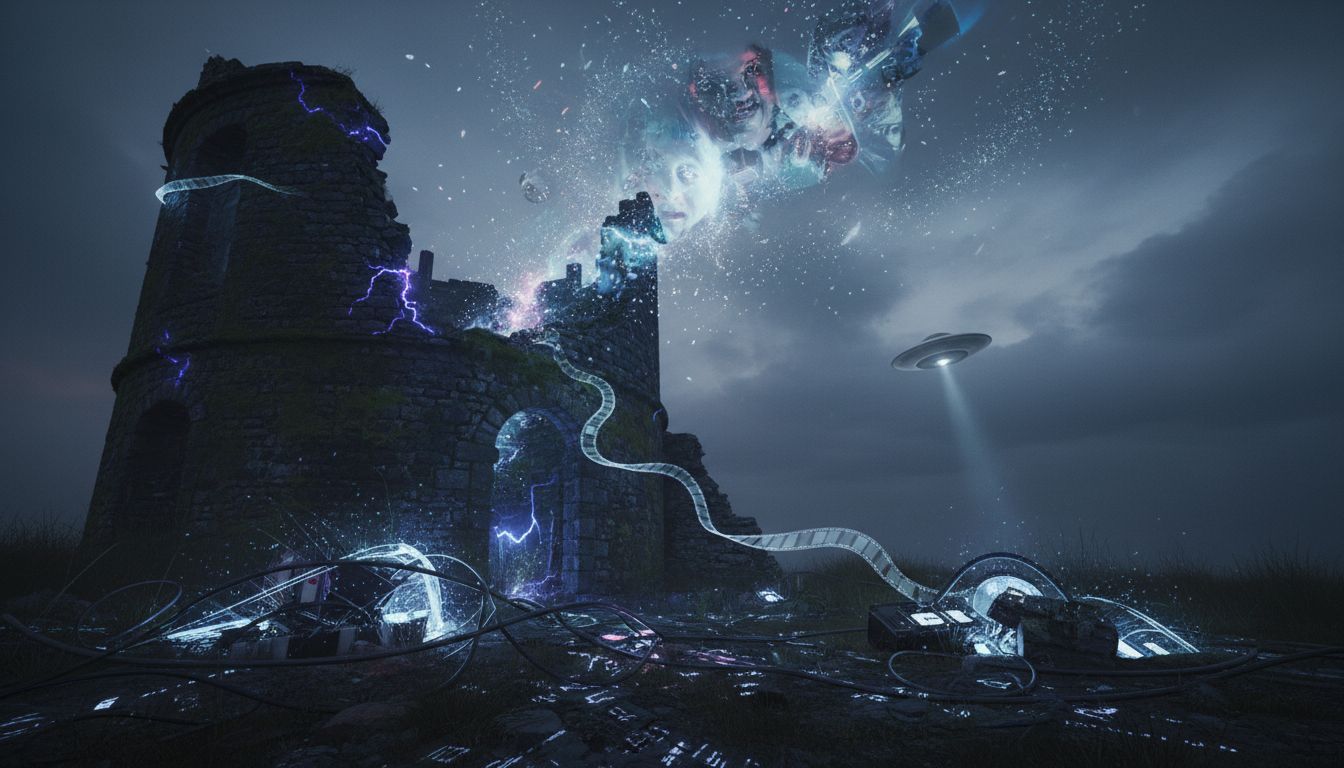
The long‑standing Stone Tape Theory—first articulated by archaeologist‑turned‑paranormal researcher T. C. Lethbridge—posits that intense emotional events can imprint themselves on physical media, much like a recording on magnetic tape. Lethbridge’s ideas inspired Nigel Kneale’s 1972 BBC drama The Stone Tape, which popularised the notion that ghosts are “projections” of past energies that replay under the right conditions. In a recent essay for The Observer (April 14, 2026), the magazine’s editorial team extends this framework to the digital realm, suggesting that the collective obsessions of internet culture may leave a lingering “digital residue” capable of influencing reality.
From Stone to Silicon
Lethbridge argued that memories attached to objects behave like a low‑frequency “vibe shift,” allowing a sensitive observer to witness a replay of a historic moment. He likened the phenomenon to a film projected on a screen, a metaphor shaped by the emerging motion‑picture technology of his era. The Observer’s piece draws a parallel with today’s ubiquitous screens, noting that online memes, GIFs, and viral videos are repeatedly streamed, archived, and re‑experienced by millions. The authors propose that the emotional intensity behind such content—whether terror, awe, or grief—could be encoded in the data streams themselves, creating a subtle, persistent energetic imprint.
Potential Consequences
If digital residue behaves analogously to the stone‑tape imprint, the implications for screen addiction and mental health are significant. The article warns that constant exposure to high‑arousal media may amplify the “energy pressure” in virtual spaces, making it easier for users to absorb residual affective states. Psychologist Dr. Maya Patel, who studies media‑induced anxiety, is quoted: “When a traumatic video goes viral, it’s not just the visual information that spreads; the collective emotional charge can linger in the platforms that host it, potentially affecting viewers long after the original post is deleted.” While the hypothesis remains speculative, the authors argue that acknowledging such a mechanism could inform more responsible content moderation and design.
Expert Perspectives
Parapsychologist Dr. James Whitaker, author of Echoes in the Ether, notes that Lethbridge’s theory has long been dismissed by mainstream science for lacking empirical verification. “The stone‑tape idea is a fascinating cultural artifact,” Whitaker says, “but translating it to digital data requires rigorous testing—something we currently lack.” Conversely, digital anthropologist Prof. Lina Gómez sees value in the metaphor: “Even if there’s no literal ‘energy imprint,’ the concept captures how digital artifacts shape collective memory and emotional climate. It’s a useful lens for examining how online narratives persist and influence behavior.”
Looking Ahead
The Observer concludes by urging readers to remain vigilant about their digital consumption. It hints at an upcoming project—described only as a “once‑in‑a‑lifetime, dream opportunity”—that may explore ways to measure or mitigate digital residue. Until such research materialises, the article recommends practical steps: limiting continuous scrolling, curating feed content, and taking regular breaks to “reset” one’s mental bandwidth. As the line between physical and virtual environments continues to blur, the age‑old question of whether places can remember now invites a modern twist: can servers and screens retain the echoes of our collective emotions?