Overview
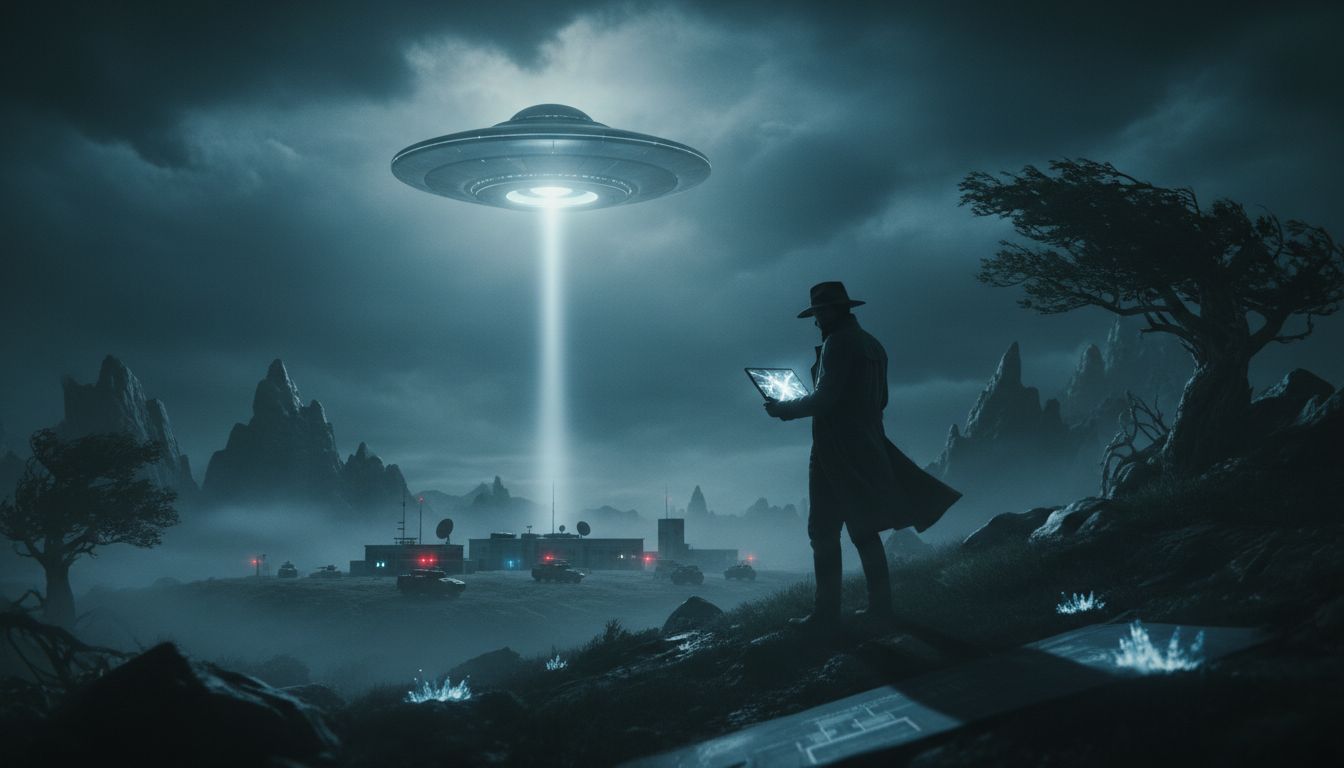
The latest wave of the Disclosure Movement—an international push for governments to release classified information on unidentified aerial phenomena (UAP)—has moved the UFO topic from fringe speculation into mainstream public discourse. A recent article, “Disclosure: UFOs, the Government and You,” published on March 5, 2026, outlines how newly declassified data, academic surveys, and historic incidents are reshaping both public perception and policy debates surrounding possible extraterrestrial encounters.
Survey Findings at Armstrong University
An exclusive survey of 47 Armstrong University students reveals a striking level of belief in extraterrestrial life and suspicion of governmental secrecy. 87.2 % of respondents said they believe life exists elsewhere in the universe, while 68.1 % think the U.S. government has withheld evidence related to that life. Only 12.8 % reported a personal “unexplained experience” they associate with extraterrestrials, but the anecdote of freshman music major Jaden Higgins‑Brooks illustrates why such experiences continue to capture imagination. Higgins‑Brooks recounted a 2022 camping trip in the Appalachian Mountains where she sensed a “human‑like head” and “tall figure” accompanied by mysterious lights. “It felt as if something was there I wasn’t supposed to see,” she said, emphasizing the lingering uncertainty that fuels the disclosure narrative.
Historical Context of Government Investigations
UFO sightings in the United States date back to World War II, when pilots on both sides reported “foo‑fighters”—unexplained, maneuverable lights. The U.S. Air Force responded with several formal investigations, the most famous being Project Blue Book (1952‑1969). Although the program officially ended, reports persisted, prompting later inquiries such as the Advanced Aerospace Threat Identification Program (AATIP) and the Unidentified Aerial Phenomena Task Force (UAPTF).
Georgia has been a hotspot for notable incidents. In 1969, former President Jimmy Carter observed a luminous object that shifted from blue to red and approached within 300 yards of his group in Leary, GA. A 1973 “UFO flap” produced multiple sightings across the state, including a documented encounter by two military police officers at Hunter Army Airfield who reported a flashing object that pursued their vehicle. A contested 1977 event at Fort Benning involved alleged “mass abduction” and military engagement with orbs of light, underscoring the region’s long‑standing connection to the phenomenon.
Current Government Stance and Potential Policy Shifts
Former President Barack Obama has publicly acknowledged the reality of UAPs, stating, “They’re real, but I haven’t seen them.” More concretely, President Donald Trump announced on February 19, 2026, that the administration would release a batch of files related to “alien and extraterrestrial life, unident[ified] aerial phenomena.” The upcoming disclosures are expected to include declassified radar logs, pilot testimonies, and analysis from the Office of the Director of National Intelligence (ODNI).
Policy experts caution that transparency alone will not resolve scientific questions. Dr. Miriam Patel, a senior analyst at the Congressional Research Service, notes, “Releasing raw data can improve public trust, but without rigorous peer‑reviewed analysis, the material may still be inconclusive.” Nonetheless, the move may trigger legislative action, such as the UAP Transparency Act, which seeks to institutionalize regular reporting to Congress and allocate funding for scientific study of anomalous aerial observations.
Public Reaction and Future Outlook
The combination of academic survey results, personal testimonies like Higgins‑Brooks’, and impending government releases is fostering a more nuanced public dialogue. While a majority of respondents remain skeptical of official explanations, the 68 % who suspect governmental withholding suggest a persistent demand for accountability.
If the forthcoming documents substantiate the existence of advanced, non‑conventional aerial platforms, the implications could extend beyond national security to aerospace regulation, scientific research, and even philosophical considerations about humanity’s place in the cosmos. Until then, journalists and researchers alike will continue to monitor the Disclosure Movement, balancing curiosity with a commitment to factual, evidence‑based reporting.


