Overview
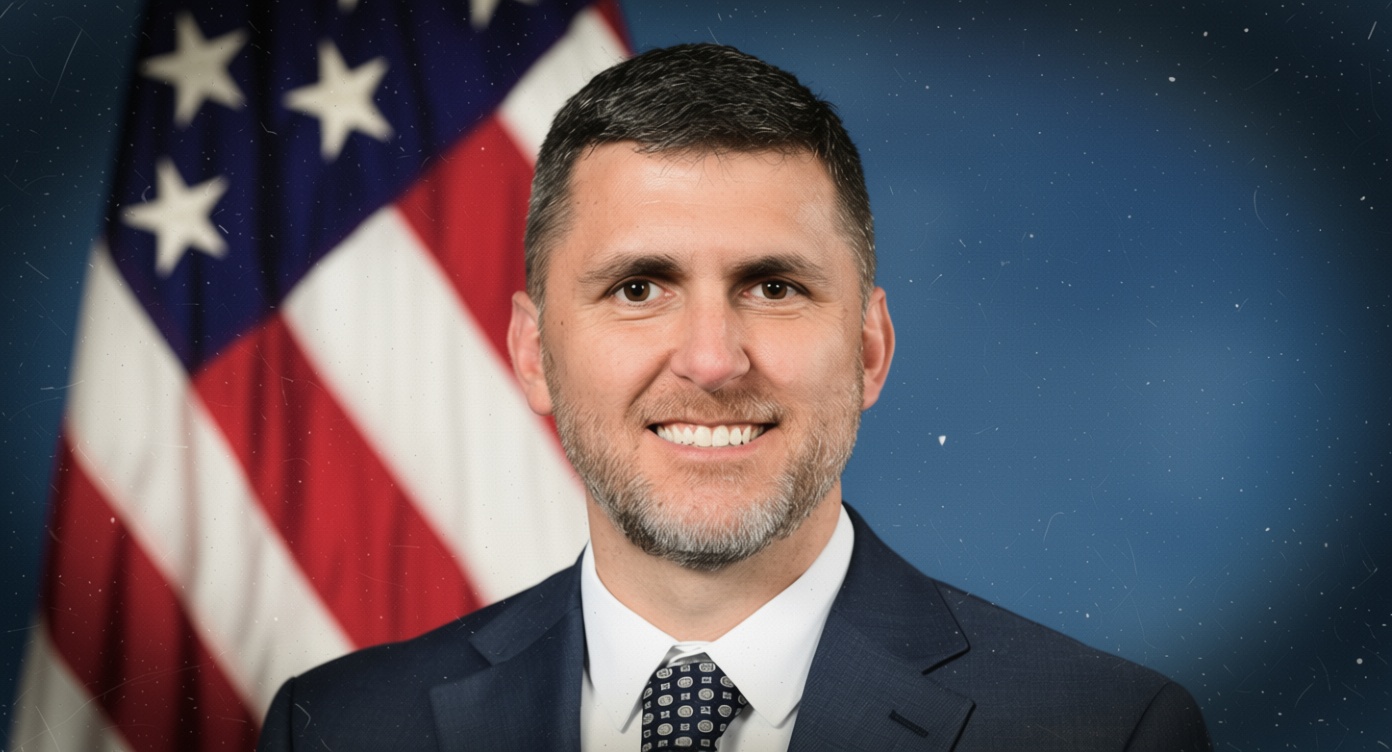
A recent StarTalk segment featuring host Neil deGrasse Tyson, co-host Chuck Nice, and Dr. Sean Kirkpatrick, the former director of the Pentagon’s All-domain Anomaly Resolution Office (AARO), took a measured look at how Unidentified Anomalous Phenomena, or UAP, are evaluated by government investigators. The discussion focused less on speculation and more on the practical challenges of documenting unusual sightings, particularly those reported by law enforcement officers and left unresolved because of limited evidence. While the conversation acknowledged a small number of cases that remain difficult to explain, the broader message was that most reports ultimately fall into familiar categories once analysts obtain enough information.
What the Data Shows
Kirkpatrick said AARO’s casework suggests that 98% of reports are eventually explained as conventional objects or natural events, including balloons, drones, and meteorological phenomena. He added that about 40% of cases have been formally closed, while 57% remain unresolved largely because investigators lack what he described as “scientific quality data.” Those unresolved reports are kept in an active archive in case future analysis or cross-correlation with other data sources reveals a clearer picture. In his view, the remaining roughly 2% are the cases that merit the most attention, because they appear to show characteristics not easily matched to current human engineering.
The Law Enforcement Account
One of the more striking examples in the discussion involved a law enforcement officer in an undisclosed region of the United States who reported seeing a “black triangular prism” hovering roughly 40 to 60 meters away. According to Kirkpatrick’s account, the object was about the size of a Toyota Prius, tilted at a 45-degree angle, and then accelerated upward at extreme speed. The officer also described red and blue flare-like lights illuminating the vehicle, but reported no sound or wind. A key limitation, however, was the absence of dashcam or bodycam footage; Kirkpatrick said the officer was in shock and did not capture video. He noted that similar reports of triangular craft and glowing orbs have come from other officers in the same area, though the lack of corroborating evidence makes such cases difficult to assess conclusively.
Why Better Instruments Matter
To address that evidence gap, Kirkpatrick said AARO is developing and distributing sensor kits to federal law enforcement agencies. The goal is to give officers a way to collect multi-modal data — such as radar, imagery, and other technical measurements — when a potential UAP encounter occurs. That approach reflects a broader shift in the field away from anecdotal reporting and toward standardized data collection. In the discussion, the emphasis was on building a system that can capture a sighting as it happens, rather than trying to reconstruct it afterward from memory alone. For investigators, the difference between a compelling story and a scientifically useful case often comes down to whether the event was recorded from multiple angles with reliable instrumentation.
Bias, Expectation, and the Need for Rigor
Tyson also raised the issue of collection bias and confirmation bias, warning that public expectations can amplify reports of unusual activity. He illustrated the point with an anecdote about a leopard that was believed to have escaped from a zoo, prompting a flood of sightings even though the animal never left its enclosure. Kirkpatrick agreed that statisticians are essential to separating signal from noise in UAP reporting. The exchange underscored a central theme of the segment: most sightings have ordinary explanations, but a small fraction remain unresolved enough to justify continued scientific study. As AARO continues refining its methods, the focus appears to be on moving from anecdote to evidence — and from mystery to measurable data.