Overview
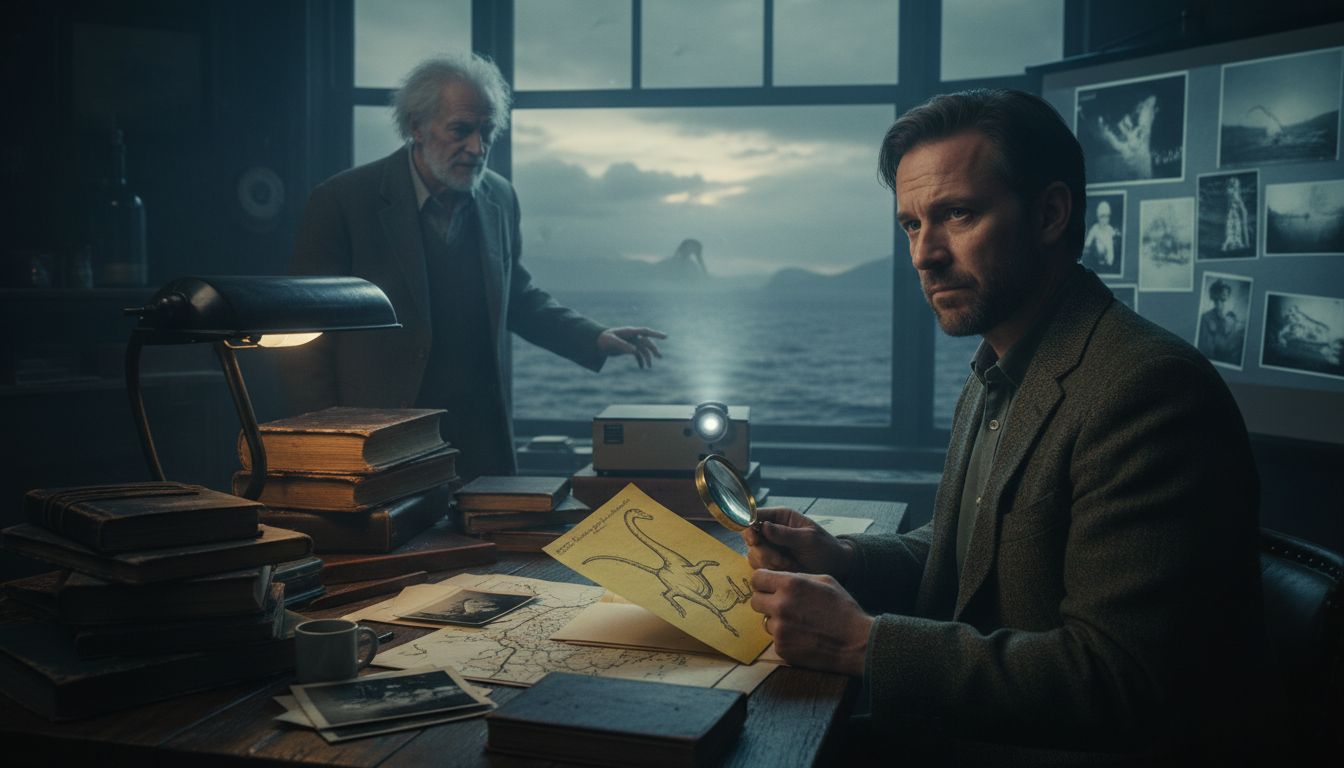
In a recent review, journalist Micah Hanks examines Scottish naturalist Adrian Shine’s multi‑decade investigation into sea‑serpent reports, most famously those surrounding the Loch Ness Monster. Shine, described by peers as a “sympathetic skeptic,” does not dismiss eyewitness accounts outright. Instead, he seeks to validate the observers while offering scientifically grounded explanations for what they saw. His 2024 book, A Natural History of Sea Serpents, frames the phenomenon as a study of human perception as much as a search for undiscovered marine megafauna.
Historical Context
Accounts of “sea serpents” date back centuries, with documented sightings ranging from an 1817 monster reported in Gloucester Harbor to the dramatic 1848 encounter recorded by the crew of HMS Daedalus in the Pacific. Over time, witnesses have included sailors, clergymen, and naturalists—people whose credibility lends weight to the stories. Yet, as Shine points out, many of these reports emerged during the age of steam, when V‑shaped wakes generated by early steamships created fleeting, undulating silhouettes on the water’s surface. Such optical effects, amplified by low light and the inherent suggestibility of observers at sea, have repeatedly been misinterpreted as living creatures.
Shine’s Methodology
Shine’s approach diverges from typical debunkers. He begins by cataloguing each claim, noting the date, location, weather conditions, and the witness’s background. He then cross‑references these details with historical maritime traffic logs, oceanographic data, and contemporary illustrations of ship wakes. “My role is not to prove that sea serpents don’t exist,” Shine told The Debrief, “but to show that the evidence can be explained without invoking unknown biology.” This disciplined, evidence‑first stance has earned him both respect and criticism within cryptozoological circles.
Findings on Past Sightings
Applying his framework, Shine re‑evaluated several high‑profile cases. The 1817 Gloucester sighting, once hailed as proof of a massive, eel‑like beast, aligns closely with the departure of a coal‑laden steamer whose twin propellers produced a pronounced V‑wake that lingered for minutes. The HMS Daedalus crew’s 1848 report of a “serpentine form” moving “with a sinuous grace” coincided with a naval exercise involving multiple steam vessels cutting through foggy seas. In both instances, optical distortion, wave interference, and the human tendency to pattern‑match produced the illusion of a living creature.
Shine also revisits Loch Ness reports, noting that many alleged sightings occurred during periods of heightened tourist traffic and coincided with the operation of hydroelectric turbines that generate surface ripples mimicking a long, undulating neck. While he acknowledges that some observations remain ambiguous, the preponderance of evidence points to environmental and technological factors rather than an undiscovered cryptid.
Implications
Shine’s conclusions carry broader implications for the study of anomalous phenomena. By emphasizing perceptual psychology and historical context, he encourages investigators to look beyond sensational explanations and consider mundane, testable causes. Micah Hanks’s review highlights this shift, noting that Shine’s work “offers a template for responsibly interrogating the unknown without discarding the genuine experiences of witnesses.”
The debate over sea serpents is unlikely to disappear entirely, but Shine’s research suggests that many of the most compelling legends may be mirages born of steam, light, and the human mind. As technology continues to illuminate the oceans, future sightings—if they occur—will be subject to even more rigorous scrutiny, potentially turning today’s “monsters” into tomorrow’s case studies in cognitive bias.