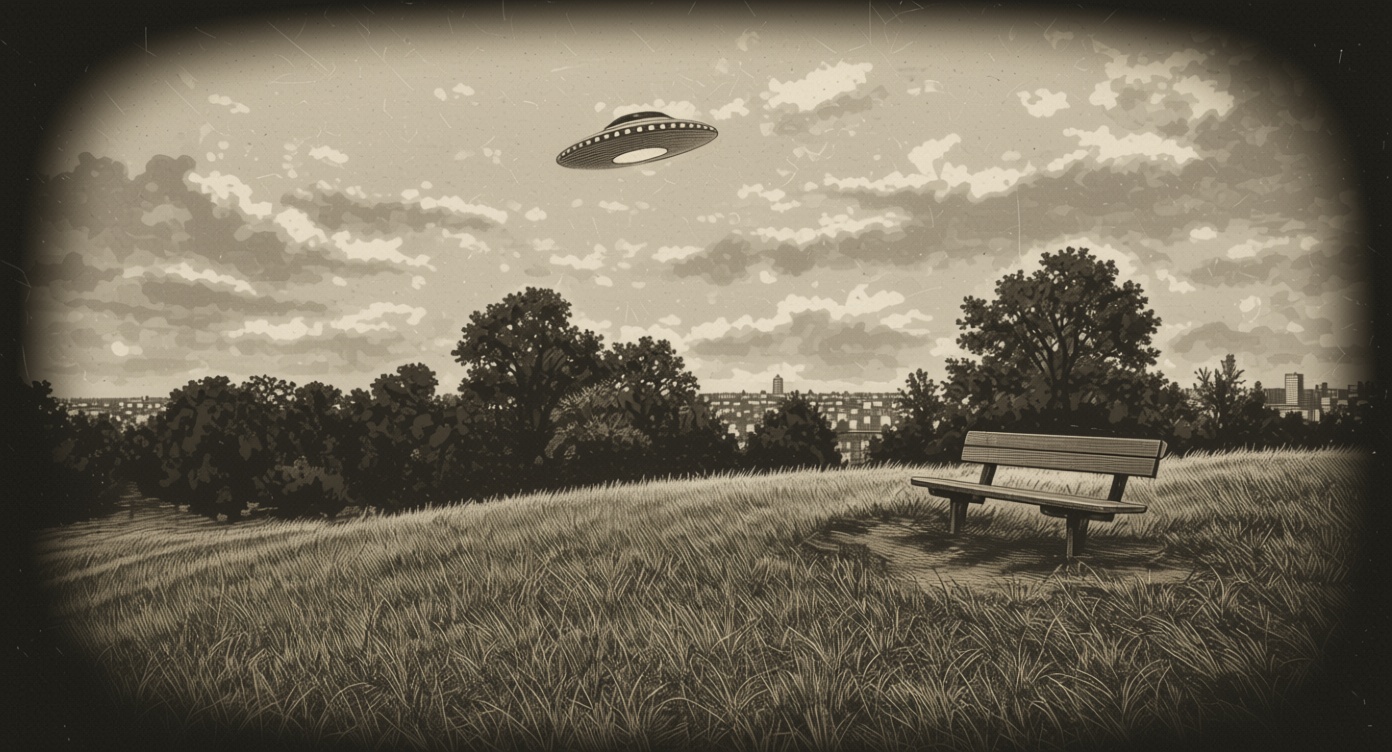
Researchers at several universities and private observatories have reported detecting a fast‑moving, unidentified aerial phenomenon (UAP) on radar and optical instruments over the past 48 hours. According to the data shared with RadarOnline, the object entered Earth’s near‑space environment at a velocity estimated at 30 kilometers per second and is on a trajectory that, if unaltered, would bring it within the upper layers of the atmosphere within the next 12 hours. The sudden appearance and apparent speed have sparked a wave of concern on social media, prompting a handful of scientists to speculate—cautiously—that the object could be an extraterrestrial probe sent to survey humanity.
The lead analyst, Dr. Emily Carter, an astrophysicist at the University of Arizona’s Center for Space Studies, said the radar signatures “do not match any known satellite, debris, or conventional aerospace vehicle.” She added that the object's acceleration profile, which appears to change without visible propulsion, “is anomalous enough to merit serious investigation.” Dr. Carter’s team has compiled a preliminary report that includes time‑stamped radar plots from the U.S. Space Force’s Space Surveillance Network, as well as visual recordings from an amateur astronomer in New Mexico. The report, which has not yet undergone peer review, has been circulated among a small group of UAP researchers but remains unpublished.
Federal agencies have not confirmed the existence of a threatening object, and the Department of Defense’s Unidentified Aerial Phenomena Task Force declined to comment when approached for comment. A spokesperson for NASA’s Near‑Earth Object (NEO) Program emphasized that the organization “monitors all objects that could pose a risk to Earth, but at this stage we have not received any formal notification of a credible impact threat.” The spokesperson also noted that NASA’s planetary defense protocols would be activated immediately if an object were confirmed to be on a collision course.
Public reaction has been swift and varied. On platforms such as Twitter and Reddit, posts ranging from “Do not panic” to “We are not alone” have garnered thousands of likes and shares. Some commentators have drawn parallels to the 2023 “UAP‑1” incident over the Pacific, which later was attributed to a classified high‑altitude balloon test. Skeptics, including Dr. Michael Liu of the American Institute of Aeronautics, warn that “the rush to label anything unknown as ‘alien’ undermines rigorous scientific inquiry.” He points out that atmospheric re‑entries, hypersonic test vehicles, and even software glitches in radar processing can produce misleading signatures.
The episode underscores the growing tension between genuine scientific curiosity about unexplained aerial phenomena and the sensationalism that often accompanies such reports. While the possibility of an extraterrestrial origin cannot be ruled out without thorough analysis, experts agree that the first step is to verify the object's nature through corroborated sensor data and, if necessary, coordinated observation campaigns. Until official agencies release a definitive statement, the public is left with a mixture of intrigue and unease—an echo of past UAP sightings that have repeatedly reminded both scientists and policymakers of the importance of transparent, data‑driven investigation.