Overview
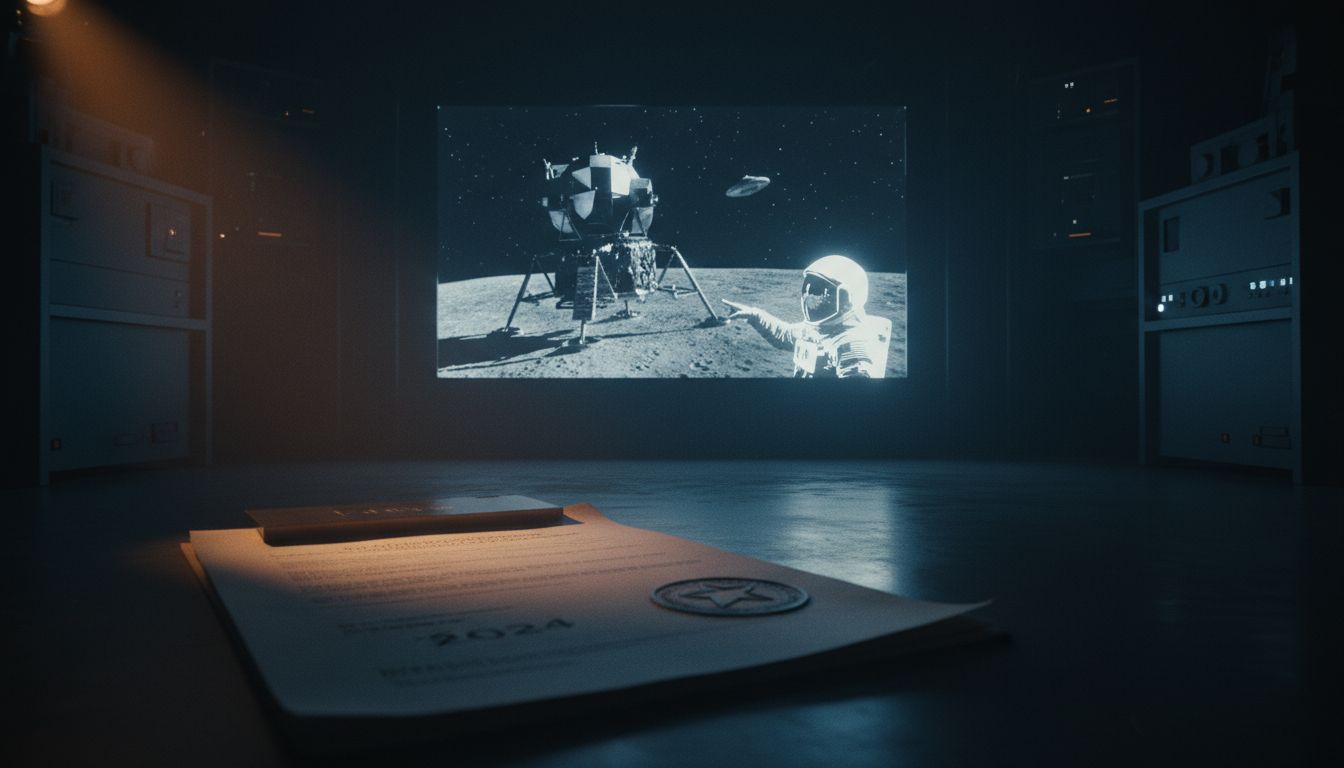
A trove of previously classified documents released in 2024 has reignited public interest in the United States’ long‑standing investigations of unidentified aerial phenomena (UAP). Among the hundreds of reports declassified at the request of Congress, one entry references astronaut Buzz Aldrin’s claim that an unidentified object was observed near the Moon during the Apollo 11 mission. While the Pentagon’s assessment concludes that none of the released files provide verifiable evidence of extraterrestrial technology, the disclosure has prompted renewed scrutiny of how the government handles anomalous sightings.
Congressional Mandate and the 2024 Pentagon Report
In response to growing pressure from lawmakers and advocacy groups, the Department of Defense complied with the 2023 UAP Transparency Act, which required the release of all unclassified material related to aerial anomalies. The resulting 2024 report, compiled by the Office of the Under Secretary of Defense for Intelligence and Security, catalogued over 500 incidents spanning from the Cold War era to the present day.
The report notes that many of the entries are “inconclusive” – lacking sufficient sensor data or corroborating testimony to draw definitive conclusions. A small subset, including the Apollo 11 observation, is highlighted for its historical significance rather than for any proof of alien craft. The Pentagon explicitly states that “no evidence of foreign or non‑human technology has been identified” in the reviewed files.
The Apollo 11 Observation
Buzz Aldrin, the second man to walk on the Moon, has spoken publicly on several occasions about an “unidentified object” he believes he saw while orbiting the lunar surface in 1969. In a 2022 interview, Aldrin described a “bright, disc‑shaped light” that appeared to move independently of the spacecraft. The newly released Pentagon file contains a brief memorandum from a 1970s Navy analyst who logged Aldrin’s account alongside other astronaut sightings, noting the lack of radar or photographic evidence.
Dr. Linda M. Hargrave, a historian of spaceflight at the Smithsonian’s National Air and Space Museum, cautions against over‑interpretation: “Astronauts operate in an environment unlike any other, and visual impressions can be influenced by lighting, glare, and even psychological factors. The record shows several similar reports that were later attributed to debris, instrument glare, or optical artifacts.”
Expert Interpretation and Ongoing Skepticism
UAP researchers and former military officials emphasize that the declassification process, while a step toward transparency, does not equate to validation of extraterrestrial hypotheses. Luis Elizondo, former head of the Pentagon’s Advanced Aerospace Threat Identification Program, remarked in a recent briefing, “The documents give us a clearer picture of the breadth of sightings, but they also underscore how many of these events remain unexplained due to limited data, not because they are of alien origin.”
Academic specialists in aerospace engineering echo this sentiment. Professor James R. Collins of the University of Colorado, who studies sensor limitations in space, notes that “the Apollo era lacked the high‑resolution imaging and continuous telemetry we have today. Without corroborating sensor logs, a single visual report cannot be substantiated.”
What the Release Means for Future Investigations
The Pentagon’s 2024 disclosure, amplified by media outlets such as AOL, illustrates a growing willingness to share historical UAP data while maintaining a cautious stance on interpretation. The U.S. Senate’s Senate Select Committee on Intelligence has announced plans to convene a follow‑up hearing later this year to assess whether additional resources should be allocated to modern UAP research, especially given the rise of commercial lunar missions.
For now, the Buzz Aldrin sighting remains a footnote—a compelling anecdote that highlights the challenges of investigating phenomena at the edge of human perception and technology. As Dr. Hargrave concludes, “History will remember the questions raised by these documents more than any definitive answers they provide.”


