Overview
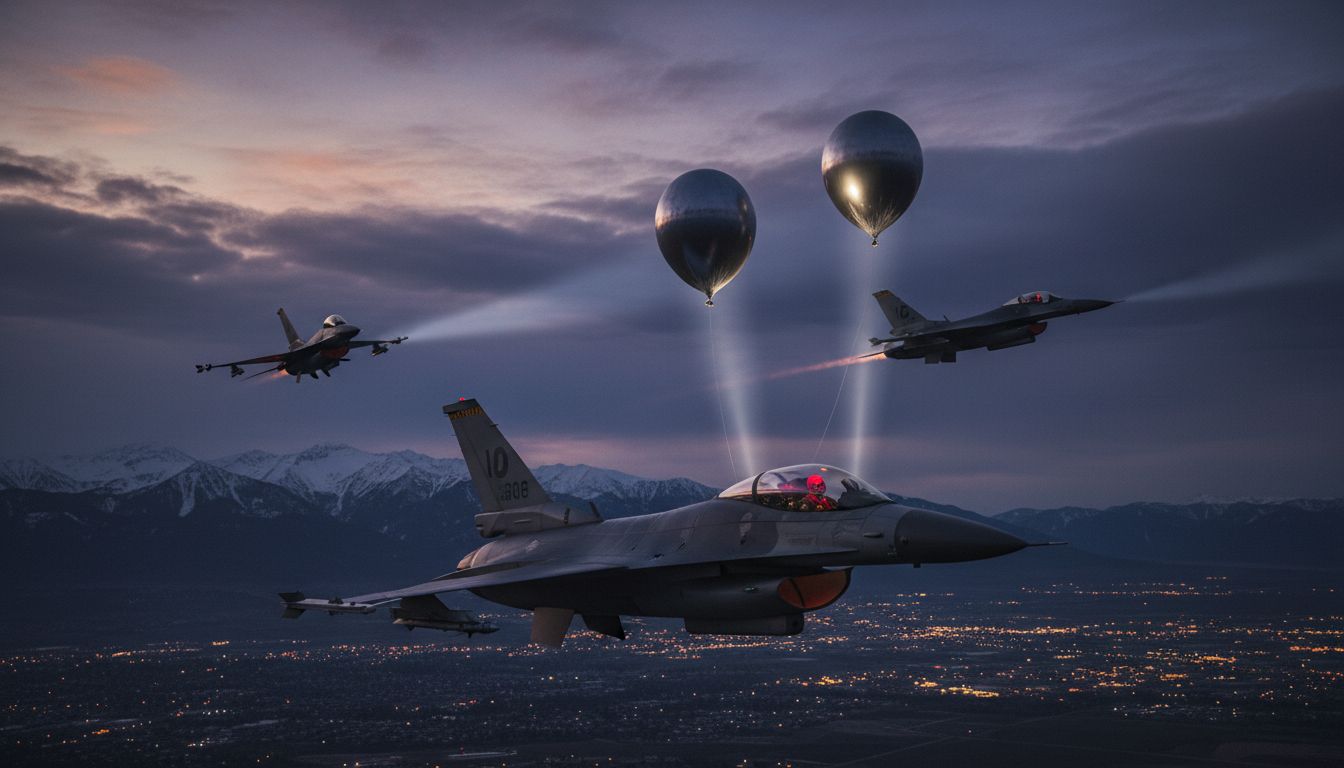
Early Sunday morning, NORAD scrambled two F‑16 fighter jets from March Air Reserve Base in Riverside, California, after air‑traffic controllers reported unidentified aerial phenomena (UAP) over Nevada and northern California. The aircraft, operating under the call signs SURF 31 and SURF 32, were tasked with visual identification and possible interception of the objects. Within hours, pilots and civilian aircrews concluded that the sightings were ordinary weather balloons, not hostile craft or extraterrestrial vehicles. The episode highlights the military’s rapid response protocols and the persistent challenge of distinguishing genuine threats from benign objects in increasingly crowded skies.
Timeline and Flight‑Deck Details
At approximately 04:30 a.m. Pacific Time, radar at Oakland Center detected an unknown object moving northeast over the Reno, Nevada area. The contact later drifted into northern California, prompting controllers to query nearby aircraft for visual confirmation. A UPS 747‑8 cargo flight (UPS 32) responded, describing a “glowing and dimming” object over the Sacramento region. The report triggered the scramble of the two F‑16s, which were subsequently refueled in‑flight by a KC‑135 Stratotanker (callsign GASMAN) also based at March ARB.
“USAF F‑16s SURF31 & 32 scrambled … to identify and intercept an ‘unidentified object’ heading northeast in the upper flight levels over Northern California. A civilian cargo aircraft was able to visually confirm the object…” – Aircraft Spots (Twitter, 15 Feb 2026)
ATC recordings obtained by aviation enthusiast Josh Cox show the exchange between Oakland Center and UPS 32, followed by coordination with SURF 31, confirming that multiple eyes in the sky observed the same luminous anomaly.
Military Response and Procedure
The scramble underscores NORAD’s ready‑alert posture for potential air‑space incursions. F‑16s on alert at March ARB are part of a long‑standing arrangement in which South Dakota Air National Guard aircraft augment California ANG units, providing a rapid reaction capability that can be sustained through aerial refueling. After visual confirmation from the UPS crew and the F‑16 pilots, the object was identified as a weather balloon—a common source of UAP reports, especially at high altitudes where radar signatures can be ambiguous.
Officials from NORAD briefed The War Zone on Sunday night, stating that the incident “did not represent a threat to national security.” The acknowledgment aligns with prior Pentagon assessments that a majority of UAP sightings are attributable to drones, balloons, or atmospheric phenomena, though the agency continues to investigate the minority of cases that remain unexplained.
Context Within the UAP Debate
Since the Pentagon’s 2020 establishment of the UAP Task Force, the military has been under pressure to improve reporting and analysis of anomalous sightings. While the balloon explanation may appear routine, it serves as a reminder that air‑traffic controllers and civilian pilots remain vital partners in the identification process. The incident also illustrates the complexity of modern airspace, where commercial, military, and hobbyist aircraft share the same corridors, increasing the likelihood of misidentifying benign objects as threats.
Experts caution against dismissing every sighting as a balloon; however, historical data show that balloons have accounted for a significant share of UAP reports dating back to the post‑Roswell era. The current episode reinforces the need for robust sensor fusion and transparent communication between agencies to prevent unnecessary scrambles while maintaining readiness.
Outlook and Ongoing Monitoring
As the investigation proceeds, NORAD officials indicate that flight‑tracking data and ATC audio will be archived for future analysis, contributing to a growing database of UAP encounters. The quick resolution of this event demonstrates the effectiveness of existing protocols but also highlights areas for improvement, such as enhanced real‑time identification tools to reduce reliance on visual confirmation alone.
In the broader security landscape, the incident reaffirms that while most UAP sightings are benign, the capacity to respond swiftly remains a cornerstone of North American air‑defense strategy. Continued collaboration between the military, civilian aviators, and scientific communities will be essential to maintain both situational awareness and public confidence in how such phenomena are addressed.