Overview
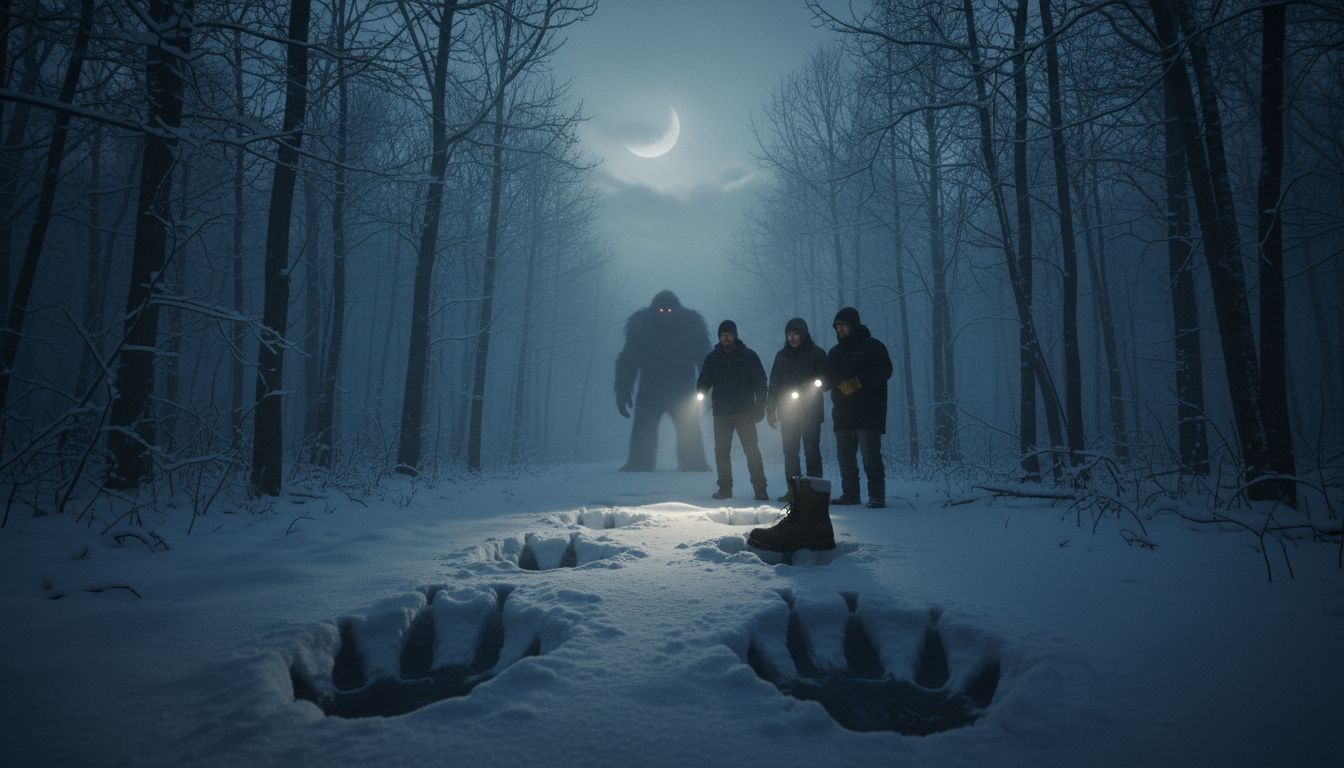
Residents of several Ohio counties have reported a noticeable uptick in alleged Bigfoot activity since March, describing eerie howls heard at night and seven‑foot footprints left in snow‑softened ground. The surge coincides with an unusually harsh winter that, according to locals, may have forced the creature—or a group of them—closer to populated areas. While the accounts echo long‑standing folklore, officials stress that the evidence remains anecdotal and unverified.
Recent Reports
In the small town of Mansfield, a farmer named Tom Whitaker posted a video on a local social‑media group showing a series of deep, elongated prints measuring roughly 24 inches in length and 9 inches across. “The prints are too big for any animal I know around here,” Whitaker told the New York Post. Similar sightings have been logged in the forests near Cleveland, where a homeowner reported hearing a low, guttural howl that lasted several minutes before disappearing into the night. The Ohio Department of Natural Resources (ODNR) has logged the reports but declined to launch a formal investigation, citing a lack of physical evidence.
Expert Analysis
Wildlife biologists caution against jumping to conclusions. Dr. Laura Cheng, a mammalogist at Ohio State University, noted that “large footprints can be produced by a number of known species, especially when snow distorts the shape of tracks.” She suggested that elk, which have been expanding their range northward, or even escaped captive bears could account for some of the impressions. Additionally, Dr. Cheng highlighted that “human hoaxes, using carved wooden molds, have been documented in other Bigfoot cases.” The ODNR spokesperson, Mark Daniels, reiterated that “until we have verifiable material—such as DNA, hair samples, or clear photographic evidence—we cannot confirm the presence of an unknown species.”
Parallel Claims in Louisiana
The Ohio reports are not isolated. In southwestern Louisiana, a woman named Michele Alvarez recounted an encounter on her property where a large, hair‑covered biped fled after she shouted. Alvarez described the creature as “about eight feet tall, with a strong, musky odor.” Local law‑enforcement recorded her statement but classified it as a “non‑criminal incident.” Researchers from the University of Louisiana’s Department of Anthropology are monitoring the claim, noting that the region’s humid climate and dense swamps make it difficult to preserve trace evidence such as footprints.
Community Response and Next Steps
Local governments have responded by issuing public safety reminders, urging residents to report sightings to ODNR and to avoid confronting any unknown wildlife. Some community groups have organized night‑time patrols to document sounds and footprints, hoping to gather data that could be examined by experts. Meanwhile, folklore enthusiasts are planning a regional conference later this summer to discuss the cultural impact of such sightings. As the winter thaws, scientists expect that any genuine tracks will become more discernible, allowing for a clearer assessment of whether these reports reflect an undiscovered species, a misidentified known animal, or a series of elaborate hoaxes.