Overview
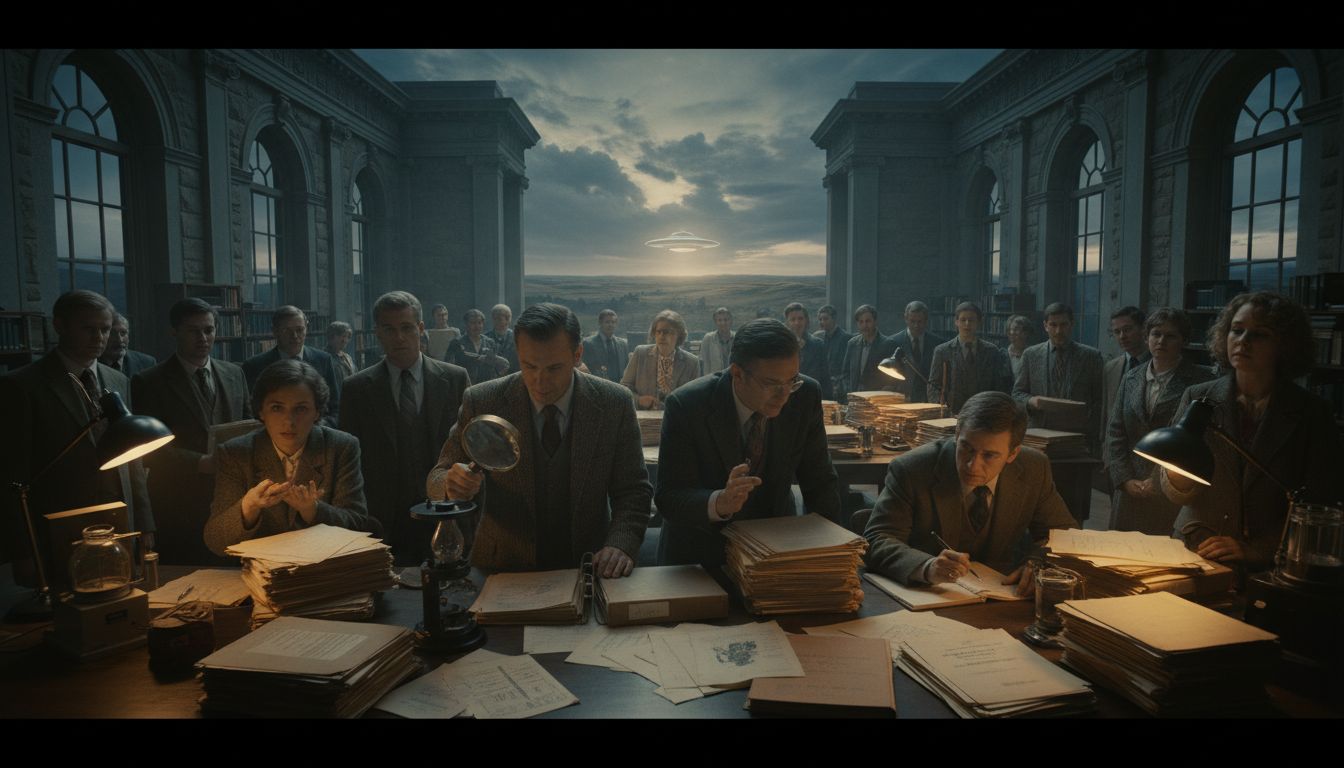
The University of Nebraska – Lincoln has announced that a trove of historic UFO investigation files is now publicly accessible through its archives. The collection, which spans several decades of reports on “flying saucer” sightings over the Nebraska Sandhills, includes eyewitness statements, correspondence with federal agencies, and scientific analyses conducted by university researchers. By declassifying these documents, the university aims to support scholarly inquiry into a phenomenon that has long fascinated both locals and the broader scientific community.
What the Files Contain
The newly released material comprises roughly 1,200 items, ranging from handwritten logs of ranchers who observed unusual lights in the night sky to internal memos exchanged between the university’s physics department and the U.S. Air Force’s Project Blue Book during the 1960s and 1970s. Among the documents are detailed field notes by Dr. Harold Miller, a former professor of atmospheric physics, who applied radar data and meteorological models to assess reported sightings. The archive also holds photographs taken by amateur astronomers, as well as a series of laboratory reports that tested whether the observed phenomena could be explained by known aircraft, weather balloons, or atmospheric optics.
Historical Context
Nebraska’s Sandhills—a 19,000‑square‑mile region of mixed prairie and sand dunes—has been a hotspot for UFO reports since the late 1940s, a period when national attention to unidentified aerial phenomena peaked after the 1947 Roswell incident. Local newspapers from the 1950s regularly printed accounts of “bright, disc‑shaped objects” moving silently over the horizon. The university’s involvement began in 1959 when the state’s Department of Aeronautics requested a formal study, prompting a multidisciplinary team to catalog sightings and evaluate their credibility. The newly released files show how the university’s approach evolved from anecdotal collection to systematic scientific inquiry over the ensuing decades.
Access and Research Opportunities
All documents have been digitized and are now searchable through the University of Nebraska’s digital repository, with physical copies available for on‑site consultation at the UNL Archives. Researchers can request high‑resolution scans, and the university has organized a series of webinars to guide scholars on navigating the collection. “Making these records open supports transparency and encourages rigorous analysis,” said University archivist Karen Thompson in a statement. The repository also includes a “research guide” that contextualizes each batch of files, noting the dates, authors, and any related government filings, thereby streamlining interdisciplinary studies in history, sociology, and aerospace science.
Looking Ahead
The release arrives amid renewed federal interest in unidentified aerial phenomena, highlighted by the Pentagon’s 2022 establishment of the All‑Domain Anomaly Resolution Office. While the UNL archives do not claim to resolve the mystery of the Sandhills sightings, they provide a valuable empirical foundation for future investigations. Scholars are already planning comparative studies that juxtapose Nebraska’s data with similar records from the Midwest and the Southwest. As Dr. Luis Garcia, a historian of science at the university, noted, “These files allow us to trace how community narratives, governmental response, and scientific methodology intersected during a pivotal era of Cold‑War anxiety and technological change.” The university invites both academic and public audiences to explore the collection, underscoring its commitment to open‑access scholarship on a topic that continues to capture the public imagination.


