Overview
In a recent interview, the former chief of science for the National Security Agency (NSA) warned that the scientific community may be overlooking a “huge” component of the unidentified aerial phenomena (UAP) puzzle. The official, who asked to remain unnamed for security reasons, argued that the paucity of rigorously collected data hampers any meaningful assessment of the potential physical, technological, and security ramifications of these sightings. His remarks echo growing calls from former intelligence officers, aerospace engineers, and congressional committees for a more systematic, peer‑reviewed approach to the UAP issue.
Scientific Concerns
The ex‑NSA scientist emphasized that most publicly available UAP reports rely on anecdotal accounts, low‑resolution video, or radar data that have not been subjected to the standards of modern physics research. “We have a trove of sensor information that, if properly calibrated and shared with academic laboratories, could either confirm an anomalous physical phenomenon or rule it out,” he said. He pointed to recent de‑classifications by the Department of Defense’s All‑Domain Anomaly Resolution Office (AARO), noting that while they have revealed “interesting” sensor signatures, the lack of raw data prevents independent verification. Without such transparency, the possibility remains that fundamental physics—such as unknown propulsion mechanisms or novel material properties—could be hidden in plain sight.
National Security Implications
Beyond the scientific intrigue, the former chief highlighted the potential risks to national security. Unexplained aerial objects that can maneuver at speeds and accelerations beyond known aircraft capabilities may represent advanced foreign technology or, as some officials suggest, a new class of threat. “If an adversary has mastered capabilities we cannot yet explain, the strategic balance could shift before we even recognize it,” he warned. The statement aligns with recent congressional hearings where lawmakers pressed the Pentagon for clearer reporting protocols, fearing that gaps in data could allow hostile actors to exploit ambiguities in airspace monitoring.
Call for Rigorous Data Collection
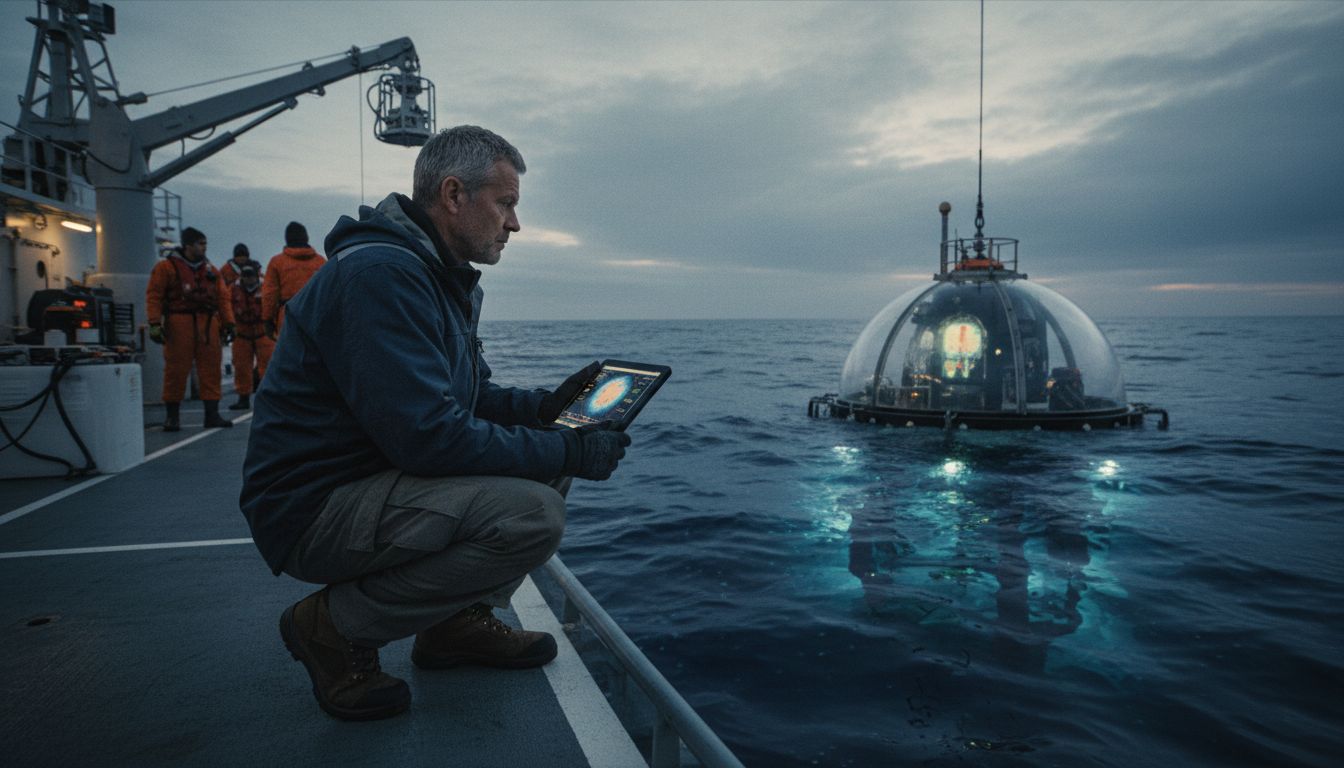
To address these gaps, the former NSA leader advocated for a coordinated, interdisciplinary data‑gathering framework that brings together intelligence agencies, civilian research institutions, and international partners. He suggested establishing standardized sensor suites on military and civilian aircraft, deploying dedicated observation platforms, and creating a secure, open‑access repository for vetted data. “Science advances on reproducibility,” he noted. “If we want to move from speculation to hypothesis testing, we need datasets that meet the same criteria as any other high‑energy physics experiment.” Such an approach, he argued, would also mitigate the risk of misinformation and help the public understand the true nature of UAP encounters.
Looking Ahead
The interview comes at a time when the U.S. government has taken unprecedented steps toward transparency, including the release of a 2023 report that acknowledged “multiple credible reports of unidentified aerial phenomena.” While the former NSA chief’s comments stop short of confirming any extraterrestrial origin, they underscore a consensus among experts: the current evidentiary base is insufficient for definitive conclusions. As policymakers deliberate on funding for dedicated UAP research programs, the scientific community awaits the promised influx of high‑quality data that could either revolutionize our understanding of physics or reinforce conventional explanations. Until then, the “huge” unknown the former NSA scientist references remains a compelling invitation for rigorous inquiry.