Overview
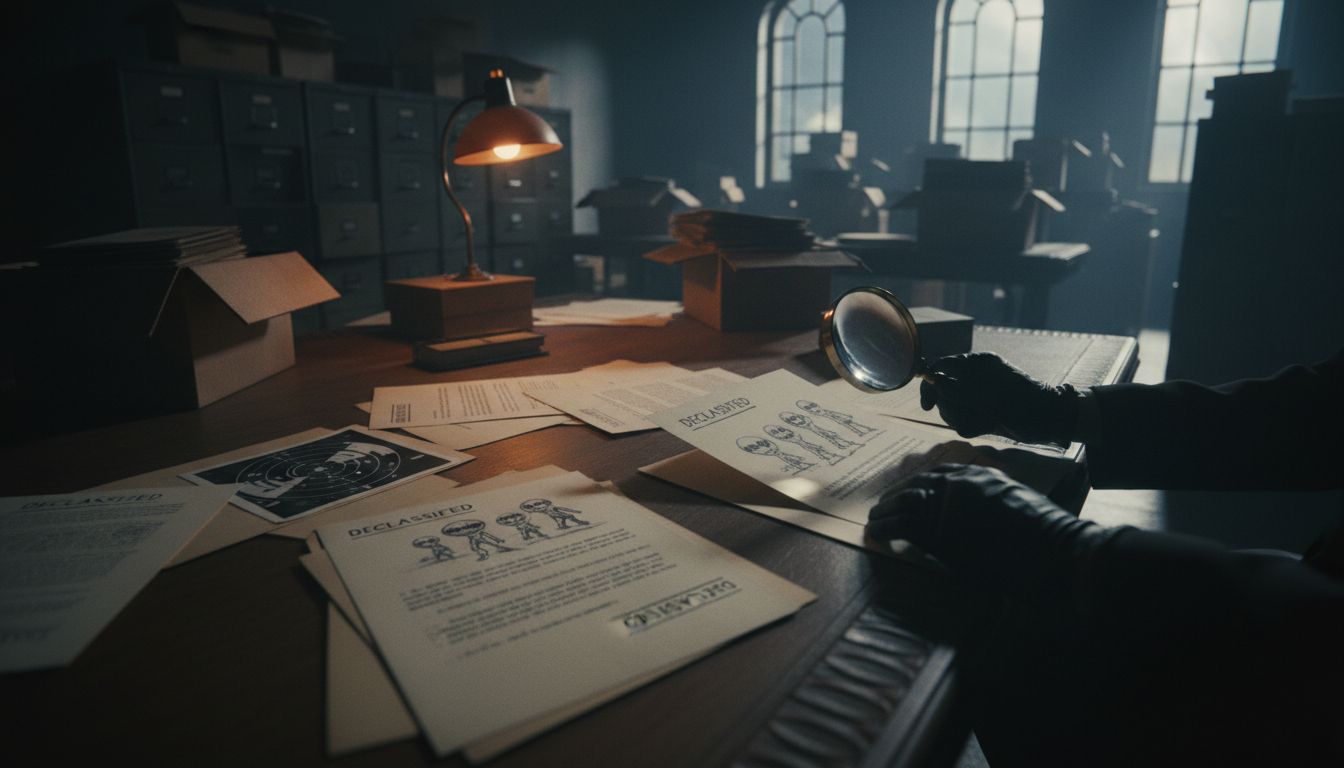
A batch of declassified documents released this week by the U.S. Department of Defense’s Transparency Initiative includes a series of FBI memoranda from the mid‑1960s that describe eyewitness reports of four‑foot‑tall humanoid figures exiting metallic, “silent‑hovering” craft. The most frequently cited record is an internal memo dated 19 October 1966 from the FBI’s San Francisco office to Director J. Edgar Hoover, which notes that 1965 recorded the highest number of UFO sightings nationwide and summarizes accounts of “crewmen” in helmets and suits stepping onto the ground. The files, uploaded to the Department of War archive alongside photographs, infrared images and mission transcripts, have reignited public and scholarly interest in Cold‑War‑era UFO investigations.
Key Details from the Files
The 1966 memo lists several civilian and military witnesses who claimed to have observed “small, approximately four‑foot‑tall beings” emerging from unidentified flying objects that moved at “fantastic speeds” and interfered with local electromagnetic equipment. One excerpt, reproduced in contemporary media coverage, reads: “A few witnesses have reported seeing crewmen who had landed from the objects, described as wearing helmets and suits, roughly four feet in height.” Photographic evidence accompanying the memo includes grainy infrared images of luminous objects hovering over remote sites in California and the Pacific Northwest. Although the images lack definitive visual confirmation of occupants, the accompanying annotations note “possible humanoid silhouettes” in the periphery of the thermal signatures.
Historical Context
During the 1950s and 1960s the FBI, often in coordination with the Air Force’s Project Blue Book, catalogued thousands of UFO reports. While most cases were dismissed as misidentified aircraft, weather phenomena, or hoaxes, a subset—particularly those involving alleged physical contact or material evidence—were escalated to senior officials. The newly released documents illustrate that the bureau treated the “crewmen” sightings with a degree of seriousness, forwarding them for further review rather than dismissing them outright. This approach aligns with the broader Cold‑War mindset, where any unidentified aerial phenomenon was evaluated for potential national‑security implications.
Expert Commentary
Dr. Linda Ramirez, a historian of intelligence agencies at Georgetown University, cautions against jumping to extraordinary conclusions: “The language in the memo reflects the investigative standards of the era—reporting what witnesses said without endorsing its veracity. The lack of corroborating physical evidence means these accounts remain anecdotal.” Conversely, former Air Force pilot Col. James Whitaker (ret.) notes that “the consistency of the height description across geographically disparate reports is intriguing and warrants a systematic re‑examination with modern analytical tools.” Both experts agree that the declassification provides a valuable primary source for scholars studying the sociopolitical impact of UFO reports, even if the phenomena themselves remain unproven.
Implications and Next Steps
The release of these files is part of a broader push for transparency initiated under former President Donald Trump, which aims to make previously classified UFO material accessible to the public and scientific community. Researchers are now calling for a comprehensive review that integrates the FBI’s historical records with recent data from the U.S. Office of the Director of National Intelligence’s UAP Task Force. While the “four‑foot crewmen” narrative captures popular imagination, the prevailing consensus among analysts is that rigorous, evidence‑based investigation is essential before any definitive claims can be made. As the archives continue to be digitized, the hope is that a clearer picture will emerge—whether it confirms, refutes, or simply contextualizes the enigmatic sightings of the 1960s.


