Ryan Sprague’s recent Halloween‑themed essay, released as a special episode on Spotify, attempts to stitch together two often‑separate strands of fringe research: the long‑standing UFO phenomenon and contemporary studies of consciousness. Drawing on the work of veteran ufologist Jacques Vallée, Sprague argues that the “reality of disclosure” is less about a single revelation and more about an evolving cultural narrative that frames anomalous aerial sightings as symbols of collective psyche. “When we look at the sky, we are also looking inward,” he writes, suggesting that reports of “flying saucers” function as modern mythic projections that reveal hidden aspects of human perception.
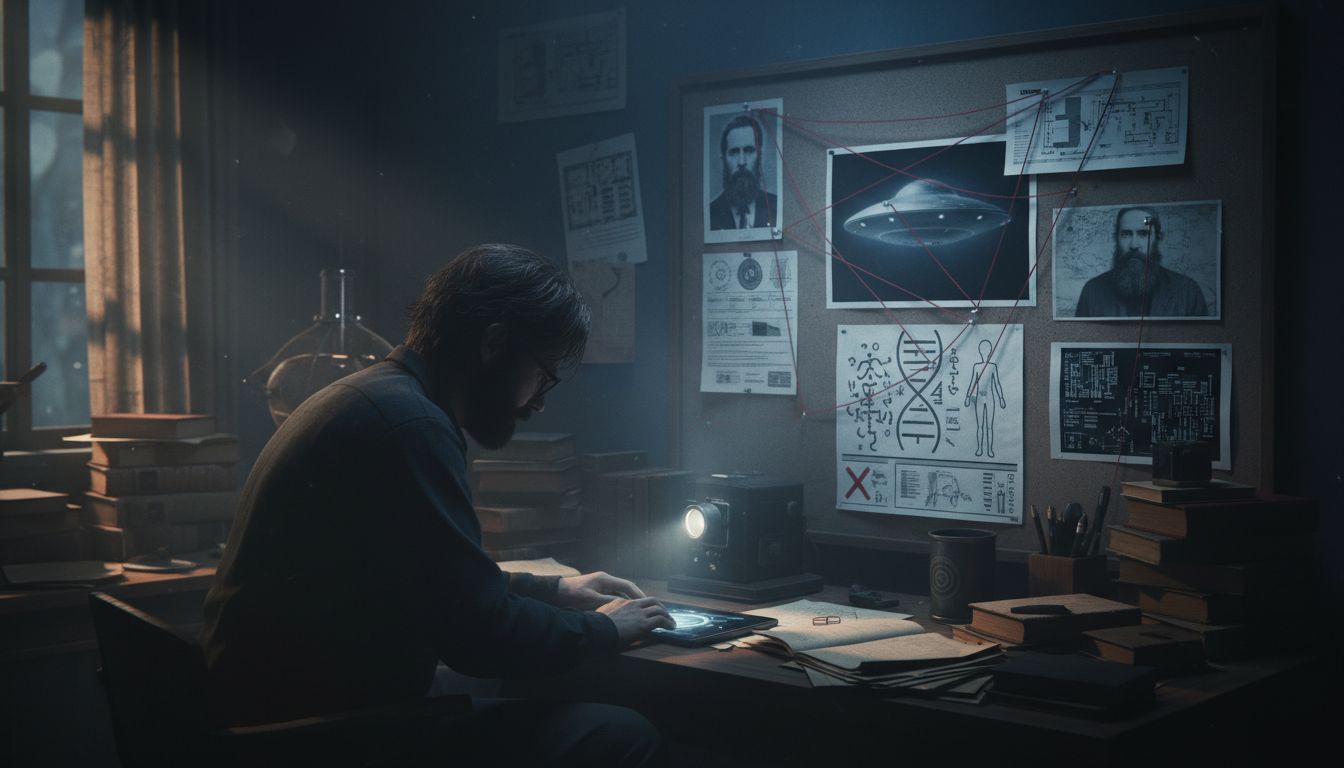
Central to Sprague’s piece is a reference to a controversial study that claims to have identified alien DNA sequences within the human genome. The research, posted as a pre‑print in 2023 and authored by a team of independent scientists, posits that a small percentage of non‑human genetic markers can be traced to extraterrestrial sources. Sprague notes that the study has not undergone peer review and that its methodology has been widely criticized for lacking rigorous controls and for relying on speculative bioinformatic matches. “The allure of alien genetics is powerful, but without replication and transparent data, the claim remains speculative at best,” he cautions, echoing the broader scientific community’s call for caution.
The essay does not merely dwell on speculative biology; it also situates the UFO discourse within the broader context of information warfare. Sprague teases an upcoming documentary that will explore how disinformation campaigns have shaped public understanding of unidentified aerial phenomena. The film is based on Adam Gorightly’s 2021 book, which chronicled the U.S. government’s systematic suppression and manipulation of UFO reports. Gorightly, a former intelligence analyst, argues that the “UFO narrative” has been weaponized to distract from more pressing security concerns and to test public reaction to covert technologies. Sprague quotes Gorightly: “The truth about UFOs is not a single secret, but a layered set of deceptions that have been cultivated over decades.”
Industry insiders suggest the documentary will feature interviews with former Pentagon officials, whistleblowers, and scholars of media manipulation. Production is slated to begin later this year, with an anticipated release on a major streaming platform. While the filmmakers have promised a “balanced” approach, critics warn that the project may inadvertently amplify unverified claims by giving them a high‑profile platform. The tension between investigative rigor and sensational appeal is a recurring theme in UFO media, and Sprague acknowledges this dilemma: “Documentaries can illuminate hidden histories, but they must also guard against turning speculation into fact.”
In the end, Sprague’s Halloween piece serves as a reminder that the intersection of UFO lore, consciousness studies, and disinformation is a complex terrain that resists easy conclusions. By highlighting both the allure of alien DNA theories and the strategic use of UFO narratives in information campaigns, the essay invites readers to scrutinize the sources of their beliefs. As Sprague concludes, “Whether the skies hold tangible visitors or merely reflect our own inner mysteries, the pursuit of truth demands the same disciplined curiosity we apply to any scientific frontier.”