Overview
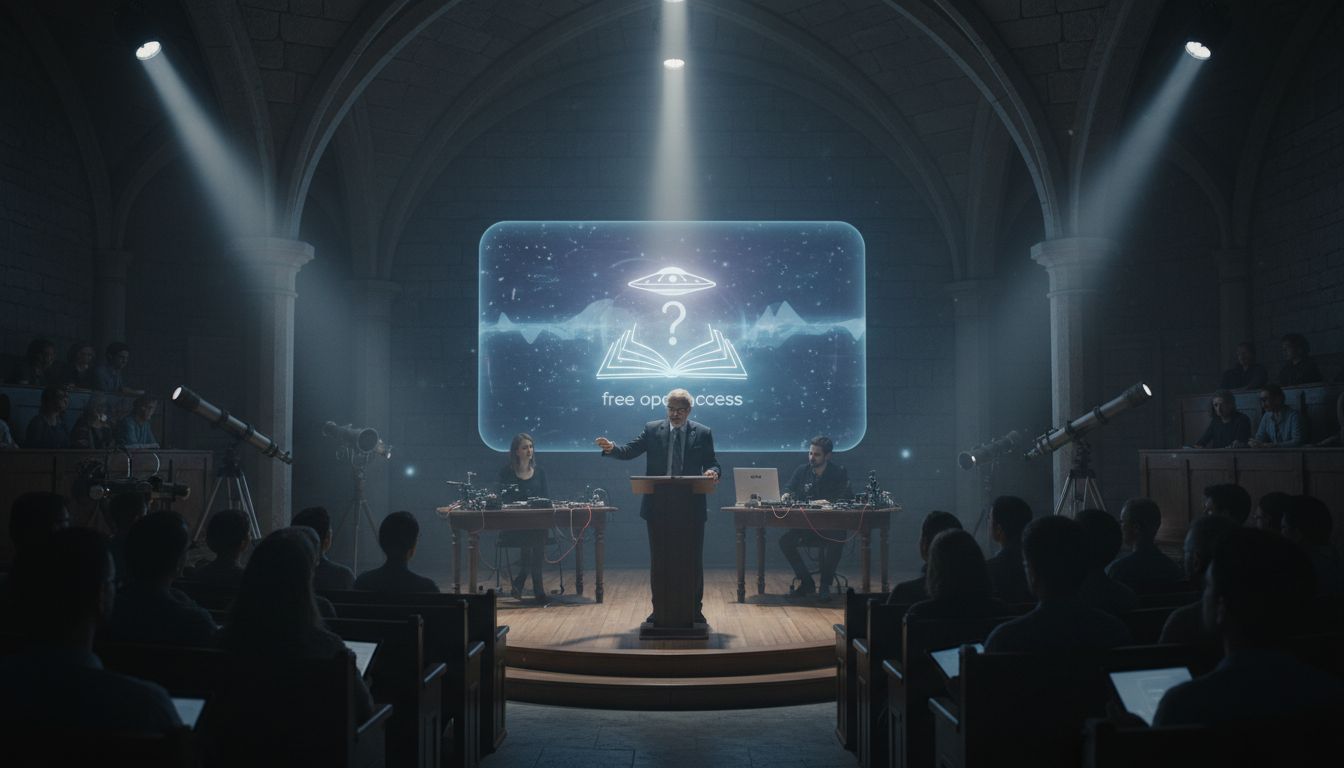
The Society for UAP Studies (SUAPS) announced on February 11 that it is launching a free, open‑access massive open‑online course (MOOC) seminar series dedicated to the systematic study of unidentified aerospace phenomena (UAP). The initiative, unveiled by SUAPS Director of Education Dr. Douglas Giles, aims to move the conversation from speculative folklore to a structured, interdisciplinary methodology. All sessions are hosted on the society’s website and are available in multiple languages, reflecting SUAPS’s commitment to global scholarly collaboration.
Program Details
The semester‑long series comprises weekly seminars led by a rotating roster of experts across physics, phenomenology, anthropology, and astrobiology. Topics range from “Scientific Investigation of UAP” and “Physics of Exotic Propulsion” to “Anthropology and UAP” and “UFOs and American Culture.” Dr. Giles emphasized the curriculum’s rigor:
“Our goal is to bring disciplined scientific methodology to a field that has long been marginalized. By offering these courses at no cost, we hope to lower barriers for students, independent researchers, and anyone with a serious interest in evidence‑based inquiry.”
The seminars feature recorded lectures, live Q&A sessions, and downloadable reading lists that draw from SUAPS’s extensive bibliography. Participants receive digital certificates upon completion, and the platform encourages cross‑disciplinary discussion through moderated forums.
Interdisciplinary Context
The MOOC arrives amid a broader surge in academic attention to UAP. Recent papers in consciousness studies have explored possible links between anomalous aerial sightings and altered states of awareness, with neuroscientist Dr. Maya Patel noting that “the phenomenology of unexpected visual stimuli can inform our understanding of perception under uncertainty.” Simultaneously, the launch has sparked debate within the scientific community. Creationist astrophysicist Dr. Nathaniel Reed critiqued the series, arguing that “while methodological rigor is commendable, the underlying premise risks conflating unexplained observations with speculative extraterrestrial hypotheses, which may detract from conventional astrophysical research.” SUAPS has responded by stressing that the curriculum is agnostic regarding origins, focusing instead on data collection, statistical analysis, and historical context.
Reactions from the Arts and Public Sphere
Beyond academia, the seminar series is already resonating with contemporary artists who incorporate UAP imagery into their work. Installation artist Maya Lin (not to be confused with the architect) referenced the MOOC in a recent interview, stating that “the systematic approach to unknown phenomena offers a fresh narrative for visual art, allowing creators to engage with mystery without resorting to sensationalism.” The society’s outreach team reports a steady increase in enrollment from art schools and cultural studies departments, suggesting that the program is bridging the gap between scientific inquiry and creative expression.
Outlook
With the first module slated to begin in early March, SUAPS expects to attract a diverse cohort of participants ranging from graduate students in physics to independent documentary makers. The organization plans to expand the series in future iterations, potentially adding modules on quantum mechanics and UAP and ethical considerations in disclosure. As Dr. Giles concluded, “By fostering a community of informed, critical thinkers, we hope to transform the study of unidentified aerial phenomena from a fringe curiosity into a legitimate field of research.”
The launch of SUAPS’s MOOC marks a notable step toward methodical, interdisciplinary scholarship on a topic that has long hovered between myth and science. Its open‑access model, coupled with engagement from both critics and cultural practitioners, underscores a growing consensus that the mysteries of the skies merit rigorous, collaborative investigation.


