Overview
America’s fascination with unidentified aerial phenomena (UAP), commonly called UFOs, has moved from the margins of pop‑culture into the halls of Congress and the corridors of the Pentagon. What began in 1947 with a crash‑site rumor in Roswell, New Mexico, has evolved into a series of formal investigations, public hearings, and even a dedicated inter‑agency office. The shift reflects both a growing demand for transparency from the public and an acknowledgement by officials that the data—however limited—warrants systematic study.
Historical Roots
The Roswell incident set the template for modern UFO lore: a mysterious wreckage, conflicting military statements, and a surge of media speculation. In the 1950s and 1960s the U.S. Air Force launched Project Blue Book, compiling over 12,000 sightings and ultimately concluding that most could be explained by conventional aircraft or atmospheric effects. Yet a small “unexplained” category persisted, keeping the topic alive in fringe circles and prompting occasional leaks, such as the 1980 “Battle of Los Angeles” radar anomalies that were later declassified. These early efforts laid the groundwork for a cultural narrative that combined curiosity, skepticism, and a hint of governmental secrecy.
Recent Developments
A watershed moment arrived in 2020 when the Department of Defense officially released three Navy videos showing unidentified aerial objects performing maneu‑vers beyond known technology. The footage prompted the Office of the Director of National Intelligence to publish a preliminary UAP assessment in June 2021, which acknowledged 144 incidents between 2004 and 2021, with 18 classified as “high‑confidence” unexplained events. In May 2022 and again in July 2023, congressional committees—led by Senators Marco Rubio and Bill Haas—held public hearings that featured testimony from former Navy pilots, intelligence officials, and scientific experts. Pentagon spokesperson Lisa Miller noted, “Our mandate is to understand any potential threats, regardless of their origin,” underscoring a shift from dismissal to systematic inquiry.
Political Implications
The emergence of the All‑Domain Anomaly Resolution Office (AARO) in 2022 signaled an institutional commitment to collect, analyze, and disseminate UAP data across the military, intelligence community, and civilian agencies. Lawmakers have introduced bipartisan legislation to fund research, protect whistle‑blowers, and require regular reporting to Congress. Representative Mike Gallagher (R‑WI) argued that “the American people deserve answers, and national security cannot be compromised by ignorance.” At the same time, skeptics warn that allocating resources to phenomena without clear evidence could divert attention from more pressing defense priorities. The debate has thus become a litmus test for how the government balances transparency with security imperatives.
Cultural Shift
Beyond the corridors of power, UAPs have entered mainstream media, academic curricula, and even entertainment. Streaming platforms now host documentary series that feature interviews with former pilots and scientists, while universities such as UCLA and MIT have convened panels to discuss the scientific methodology for studying anomalous aerial observations. Public opinion polls from 2023 show that 57 % of Americans believe the government is withholding information about UFOs, a marked increase from the early 2000s. This broader acceptance has reduced the stigma once attached to the subject, allowing former “UFO enthusiasts” to engage with policymakers without fear of ridicule.
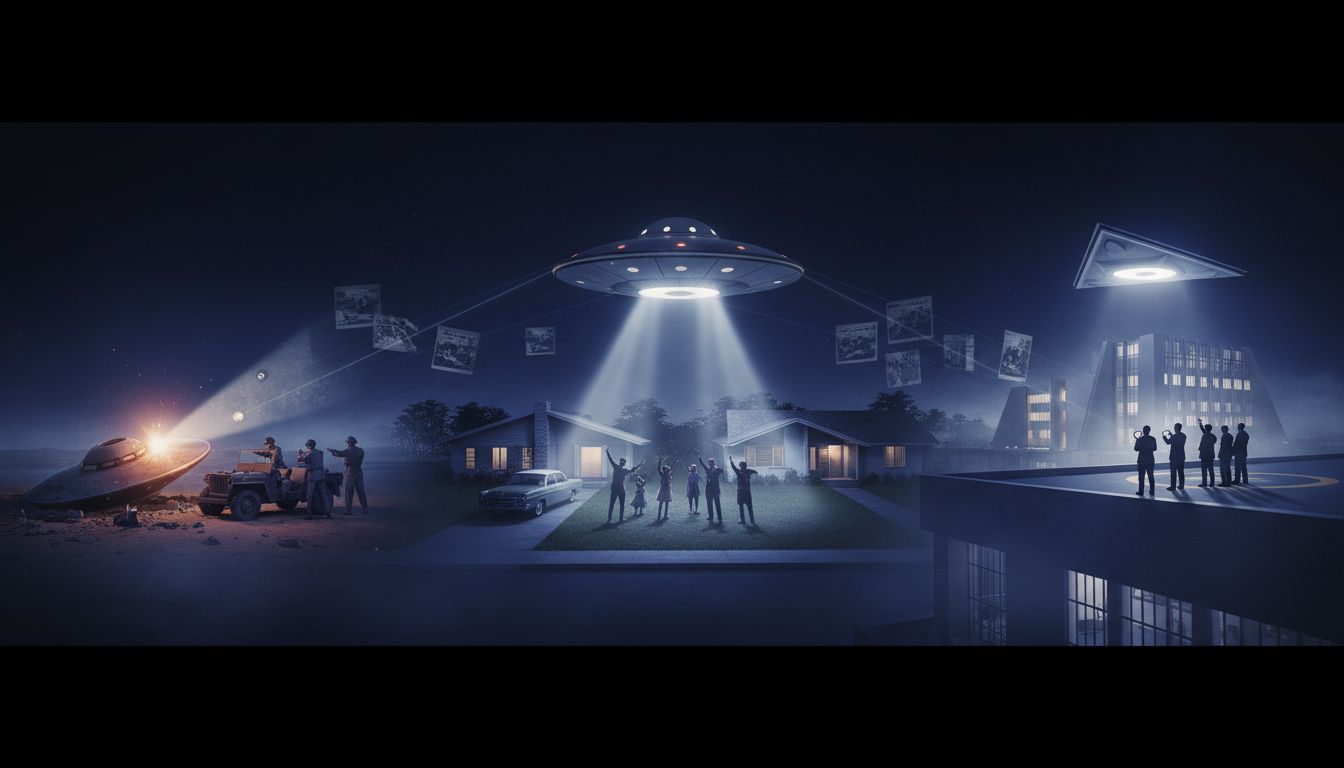
The trajectory from Roswell’s dusty desert to congressional hearing rooms illustrates a fundamental transformation: UFOs are no longer a fringe curiosity but a legitimate issue intersecting national security, scientific inquiry, and public trust. As investigations continue and more data become declassified, the United States faces a pivotal moment—whether to demystify the unknown or to let speculation fill the gaps left by incomplete evidence.