Overview
The first official trailer for Werner Herzog’s new documentary “Ghost Elephants” debuted on Thursday, confirming a February 27 theatrical launch in select U.S. venues followed by a Disney+ and Hulu streaming debut on March 8. The film follows conservation biologist Dr. Andrew Boyes, explorer Kerllen Costa, and three KhoiSan trackers as they trek across the Kalahari in search of evidence for the elusive “ghost elephants” – a long‑standing legend among local hunter‑gatherer communities. A nationwide simulcast of the opening night, paired with a live Q&A featuring Herzog and Boyes, is slated for the evening before the theatrical release, underscoring the director’s intent to blend cinema with a real‑time scientific dialogue.
The Quest and Its Participants
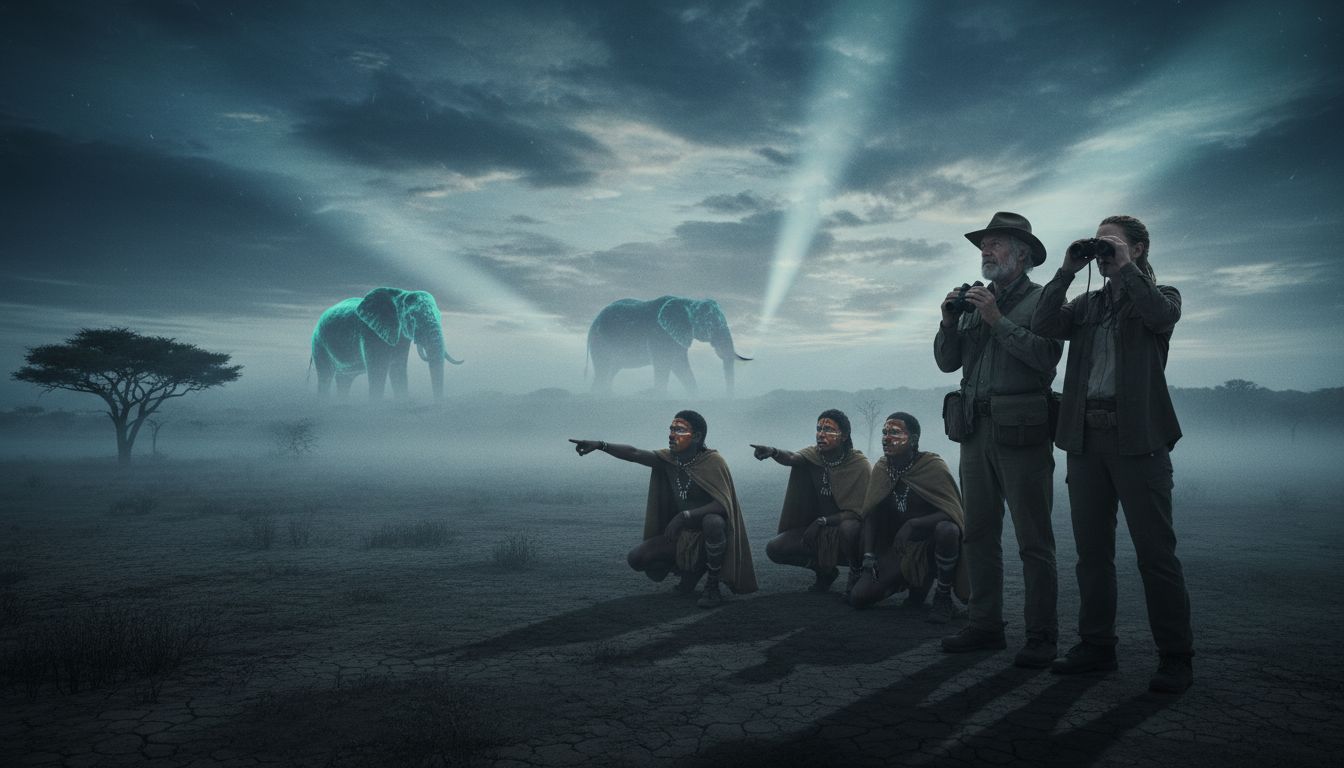
Boyes, a veteran conservationist with more than two decades of field experience in Southern Africa, has become obsessed with verifying whether the “ghost elephants” – described in KhoiSan oral histories as translucent, silent herd members that appear only at dawn – are a biological phenomenon or a cultural metaphor. Costa, known for his work mapping uncharted desert routes, joins Boyes to provide logistical support and aerial reconnaissance. The three KhoiSan trackers, whose families have guarded the legend for generations, bring indigenous knowledge of terrain, animal behavior, and storytelling that Herzog describes as “the living archive of the land.” Their combined expertise forms the narrative spine of the documentary, promising a rare glimpse into collaborative conservation that respects both science and tradition.
Trailer Highlights and Themes
The 90‑second trailer interlaces sweeping aerial shots of the Kalahari’s ochre dunes with intimate close‑ups of the trackers’ weathered hands handling ancient tracking tools. A voice‑over from Herzog, delivered in his characteristic measured cadence, muses that “the hunt for the unseen often reveals more about the hunter than the hunted.” Scenes show Boyes setting up motion‑sensor cameras, Costa navigating a dune‑filled nightscape, and the trackers performing a silent “call” that, according to local lore, summons the phantom herd. The visual language leans heavily on natural soundscapes and minimal narration, reinforcing the film’s positioning as a poetic exploration of human obsession and mysterious nature rather than a conventional wildlife documentary.
Release Strategy and Audience Engagement
Disney’s decision to pair a limited theatrical run with a simultaneous nationwide simulcast reflects a growing trend of hybrid distribution for documentaries that aim to reach both cinephile and streaming audiences. The pre‑release Q&A, streamed live from the Los Angeles premiere, will allow viewers to pose questions directly to Herzog and Boyes, fostering an interactive experience that mirrors the collaborative spirit of the fieldwork itself. Industry analysts note that Herzog’s name alone draws a dedicated fan base, while the conservation angle aligns with the increasing public appetite for environmentally focused content on major streaming platforms.
Context and Expectations
Herzog’s filmography, from “Grizzly Man” to “Into the Abyss,” has repeatedly examined humanity’s relationship with the unknown, often through the lens of extreme environments. “Ghost Elephants” continues this trajectory, but it also arrives at a moment when South African wildlife officials are grappling with poaching crises and the loss of indigenous knowledge. By foregrounding KhoiSan trackers, the documentary may contribute to broader discussions about decolonizing conservation science and integrating traditional ecological knowledge into modern policy. Early critical buzz suggests the film could become a touchstone for both documentary enthusiasts and conservation advocates, offering a measured yet compelling portrait of a quest that blurs the line between myth and measurable reality.