Overview
On May 1, 2026, Coast to Coast AM aired a segment of its “Forbidden Histories” series that compiled three recent videos claiming to capture unexplained apparitions. Host Andreas Sommer introduced a translucent figure filmed inside an abandoned hospital in Mexico City, a sprinting phantom caught on a security camera along a rural Honduran road, and a curated “ghost” exhibit at Basel’s Kunstmuseum. The broadcast highlighted the growing global appetite for paranormal footage while noting the challenges of verifying such material in an era of sophisticated video manipulation.
The Mexican Hospital Clip
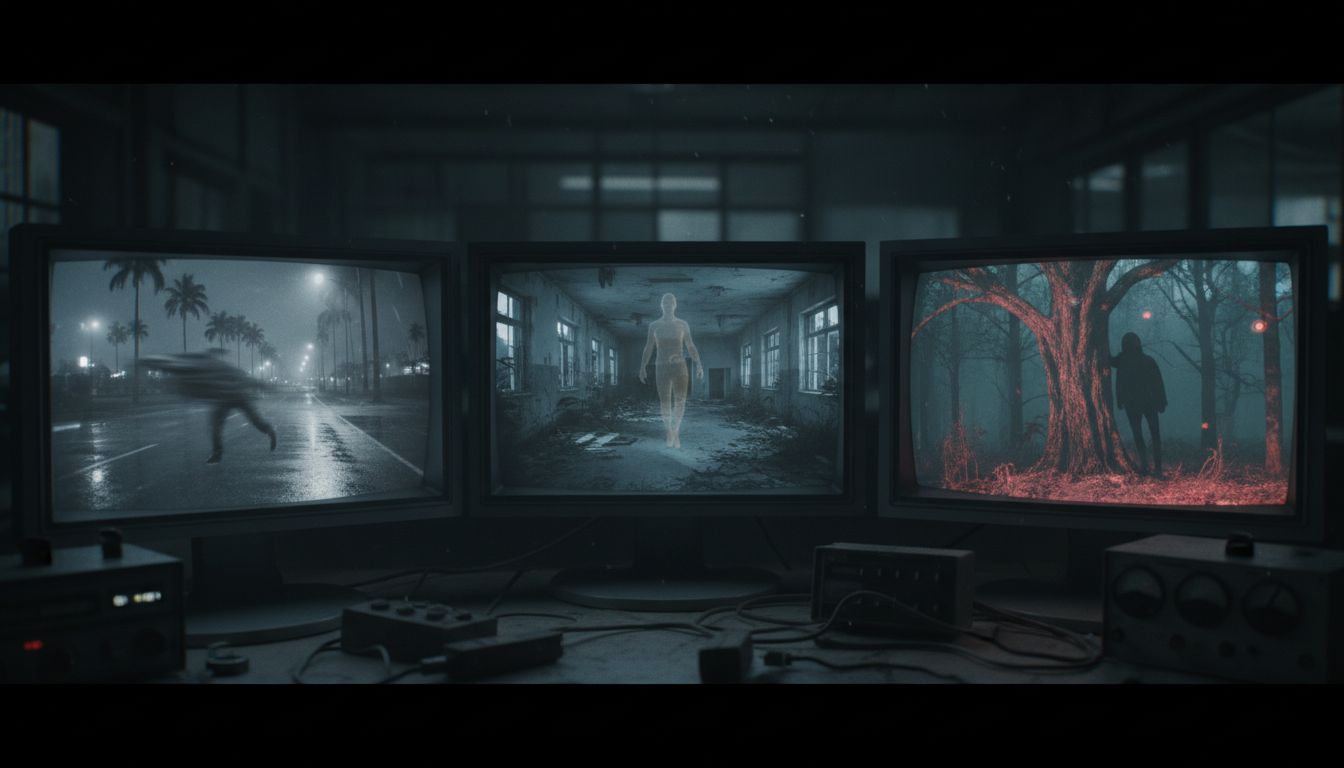
The first clip shows a faint, transparent silhouette gliding through a dimly lit hallway of the former Hospital General de México, a facility that was shuttered in 2015 after a series of structural failures. The video, posted on a public forum earlier this month, runs for roughly 12 seconds before the figure disappears behind a broken door. Sommer remarked, “The figure’s movement is smooth, lacking the jitter typical of frame‑by‑frame edits, which makes it intriguing, though not conclusive.” Researchers from the Mexican Institute of Forensic Imaging have not yet examined the footage, and the original uploader declined to reveal the camera’s make or model.
The Honduran Road Footage
A second video, recorded by a traffic‑monitoring camera on a highway near Tegucigalpa, captures a dark, human‑shaped shape sprinting across the road at an estimated 30 km/h before vanishing into the night. The clip, circulated on social media in April, includes timestamp data and GPS coordinates that correspond to a known surveillance blind spot. “The speed and trajectory are consistent with a person running, but the lack of any discernible facial features or clothing raises questions,” said Dr. Luis Mendoza, a forensic video analyst at the Universidad Nacional Autónoma de Honduras. He added that compression artifacts and low‑light conditions can sometimes produce “ghost‑like” anomalies.
Basel Museum Exhibit
The third segment featured a curated exhibition titled “Specters of the Past” at Basel’s Kunstmuseum, where artists and historians presented installations that blend historical documentation with modern visual effects. Among the pieces was a holographic recreation of a 19th‑century séance, designed to provoke discussion about the cultural persistence of ghost narratives. Museum director Claudia Weber explained, “Our goal is not to prove the existence of spirits but to explore why societies across time create and share these images.” The exhibit has attracted both art critics and paranormal investigators, underscoring the interdisciplinary interest in visual representations of the unseen.
Expert and Public Reaction
While the clips have generated considerable buzz online, experts caution against drawing definitive conclusions. “Without original source files, metadata, and controlled lighting conditions, it’s impossible to rule out digital artifacts or deliberate fabrication,” noted Dr. Eleanor Chase, a professor of digital forensics at the University of Toronto. Nevertheless, the segment’s popularity reflects a broader trend: the global fascination with mysterious visual phenomena amplified by the ease of sharing video content. Social‑media platforms have become hotbeds for both genuine eyewitness accounts and sophisticated hoaxes, prompting calls for standardized verification protocols.
Looking Ahead
The Coast to Coast AM feature underscores the need for collaborative scrutiny between paranormal enthusiasts, artists, and scientific investigators. As Sommer concluded, “Whether these images are windows into another realm or reflections of our collective imagination, they remind us that the line between fact and folklore is increasingly blurred in the digital age.” Future investigations may benefit from coordinated efforts to obtain raw footage, conduct on‑site examinations, and apply rigorous forensic analysis—steps that could either demystify these apparitions or deepen the mystery that continues to captivate audiences worldwide.