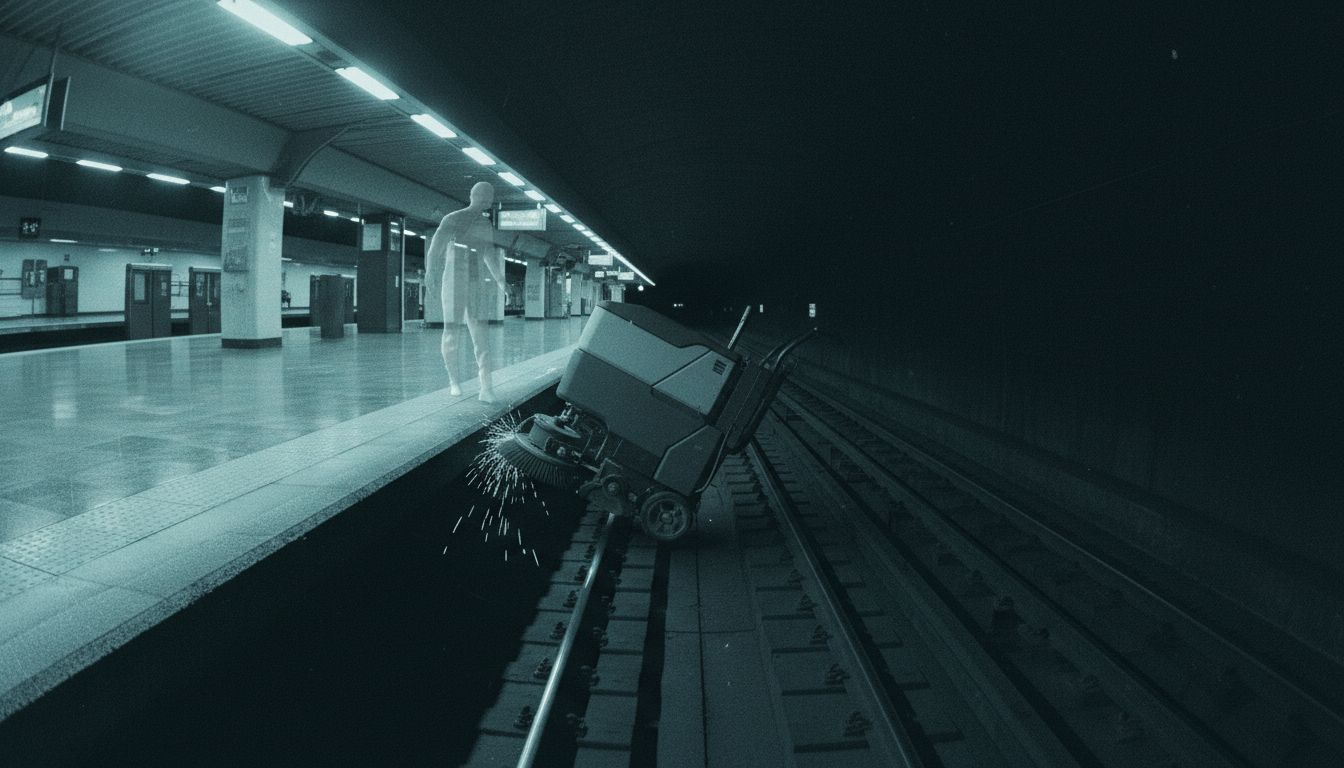
Security footage released by the Mexico City Metro on October 26 shows a floor‑cleaning machine—an industrial‑size sweeper mounted on wheels—leaving a platform, tumbling over a low wall and disappearing onto the tracks. The brief clip, which quickly circulated on social media, prompted a flurry of jokes that framed the event as a “ghost” throwing the equipment, especially because it was posted on the weekend before Halloween. The station’s official account, however, has not confirmed any paranormal activity, and transportation officials say the most likely explanation is a simple operator error.
The video, posted by the system’s public‑relations department, shows the sweeper moving along the platform near the edge of a stairwell. At one point the operator appears to lose control; the machine’s front wheels climb the curb, and the entire unit slides down a short incline onto the rail line below. The clip lasts less than ten seconds before the camera cuts to a different angle. In a brief statement, a spokesperson for the Sistema de Transporte Colectivo (STC) said, “Our safety protocols require that all cleaning equipment be secured before it approaches any track access point. We are reviewing the footage to determine why the device was not stopped in time.” The agency added that no passengers were present on the tracks at the time and that service was restored within fifteen minutes.
Metro engineers note that the design of many stations includes a small “maintenance ledge” that separates the passenger platform from the track area. While this ledge is intended to prevent accidental falls, it can also become a hazard if heavy equipment is not properly braked. “The sweeper’s weight—about 250 kg—combined with a slight incline can generate enough momentum to overcome the modest barrier,” explained Dr. Ana López, a transportation safety analyst at the National Autonomous University of Mexico (UNAM). “If the operator releases the brake or the wheels encounter a slick surface, the machine can roll onto the tracks in a matter of seconds.” Dr. López added that similar incidents have been recorded in other large subway systems, typically attributed to human error rather than equipment malfunction.
The incident has also revived discussions about the role of surveillance footage in public safety. Since 2019, the Mexico City Metro has expanded its network of high‑definition cameras to monitor both passenger flow and maintenance activities. “Our cameras are a tool for transparency and rapid response,” said Carlos Mendoza, head of the metro’s security division. “When an unusual event occurs, we can quickly assess the situation, protect passengers, and coordinate with the operations team to clear the tracks.” Mendoza emphasized that the footage will be examined alongside maintenance logs to verify whether standard operating procedures were followed.
While the Coast to Coast AM segment that highlighted the clip leaned into the “ghost” narrative for entertainment value, experts caution against drawing sensational conclusions from a single short video. “It’s easy for viewers to project supernatural explanations onto ambiguous footage, especially around holidays,” noted Dr. María Gutiérrez, a psychologist who studies media effects. “But the evidence points to a mundane cause—most likely a lapse in procedural compliance.” The metro authority has pledged to reinforce training for cleaning crews and to install additional safety rails at vulnerable points, measures that could reduce the likelihood of a repeat occurrence. As the investigation proceeds, commuters can be reassured that the system’s rapid response minimized disruption and that no injuries were reported.


