Overview
The renewed public fascination with unidentified aerial phenomena (UAP) has resurfaced an age‑old dialogue that bridges theology, philosophy and science. From medieval mystics gazing at comet tails to modern pilots capturing infrared footage of unexplained lights, humanity’s “quest for the unknown” persists across centuries. Recent government disclosures, combined with high‑profile political statements, have thrust the conversation back into the mainstream, prompting scholars and religious leaders to reassess how contemporary UFO reports echo ancient accounts of angels, demons and divine visitation.
Historical Context
The tension between new discoveries and established belief systems is not new. In a 1958 essay titled Will We Lose God in Outer Space?, Oxford scholar C.S. Lewis warned that every scientific breakthrough “is held at first to have the most wide‑reaching theological and philosophical consequences.” Lewis, who later penned a science‑fiction trilogy imagining contact with extraterrestrials, concluded that after rigorous debate “both sides find themselves pretty much where they were before.” His observation underscores a pattern: each wave of anomalous sightings—whether medieval “fiery crosses” or 20th‑century “flying saucers”—has been absorbed, contested, and ultimately woven back into existing worldviews.
Recent Developments
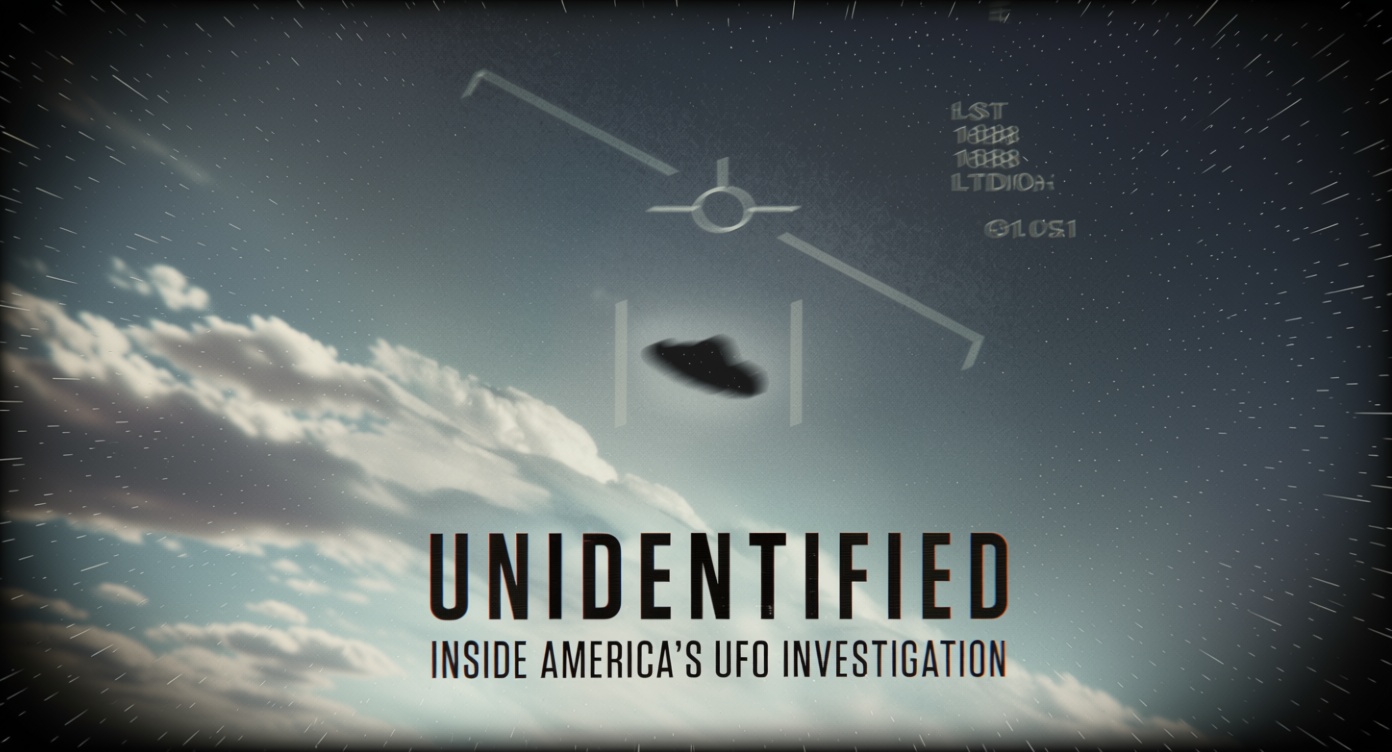
The latest surge began with a Truth Social post from former President Donald Trump, in which he pledged to “identify and release Government files related to alien and extraterrestrial life, unidentified aerial phenomena (UAP), and unidentified flying objects (UFOs).” The Department of Defense responded by publishing more than 170 files dating back to the 1940s, including farmer testimonies and declassified military videos. While the documents do not confirm extraterrestrial origins, they provide a rare glimpse into official investigations of sightings that have long been relegated to the fringe. Vice President J.D. Vance, speaking on a Benny Johnson podcast, added a theological spin, stating, “I don’t think they’re aliens. I think they’re demons anyway,” highlighting how political discourse can quickly merge scientific curiosity with spiritual interpretation.
Religious Perspectives
Jesuit astronomer Brother Guy Consolmagno, author of Would You Baptize an Extraterrestrial?, offers a measured counterpoint. Citing his role at the Vatican Observatory, he affirmed, “Neither I, nor anyone I know, has any evidence that extraterrestrials exist.” Consolmagno’s stance reflects a broader trend within religious institutions: a willingness to engage the UFO question without abandoning doctrinal foundations. The Vatican’s involvement illustrates how the “official” religious voice is evolving from outright dismissal to cautious openness, acknowledging that humanity’s encounter with the unknown—whether labeled as angels, demons or aliens—poses profound questions about the nature of the soul and the scope of divine creation.
Broader Implications
The convergence of governmental transparency, political rhetoric, and theological reflection suggests that UFO discourse is becoming a cultural litmus test for how societies negotiate mystery. Scholars note that modern UAP reports often mirror ancient visionary experiences, not only in descriptive language but also in the emotional impact on witnesses. As the public digests newly released footage, the conversation may shift from speculative sensationalism toward a more nuanced exploration of what “the unknown” signifies for science, faith and the human imagination. Whether future investigations will uncover extraterrestrial life, reveal unknown atmospheric phenomena, or simply reaffirm the limits of current knowledge, the dialogue itself reaffirms a timeless truth: humanity’s search for meaning remains as boundless as the sky it surveys.