Overview
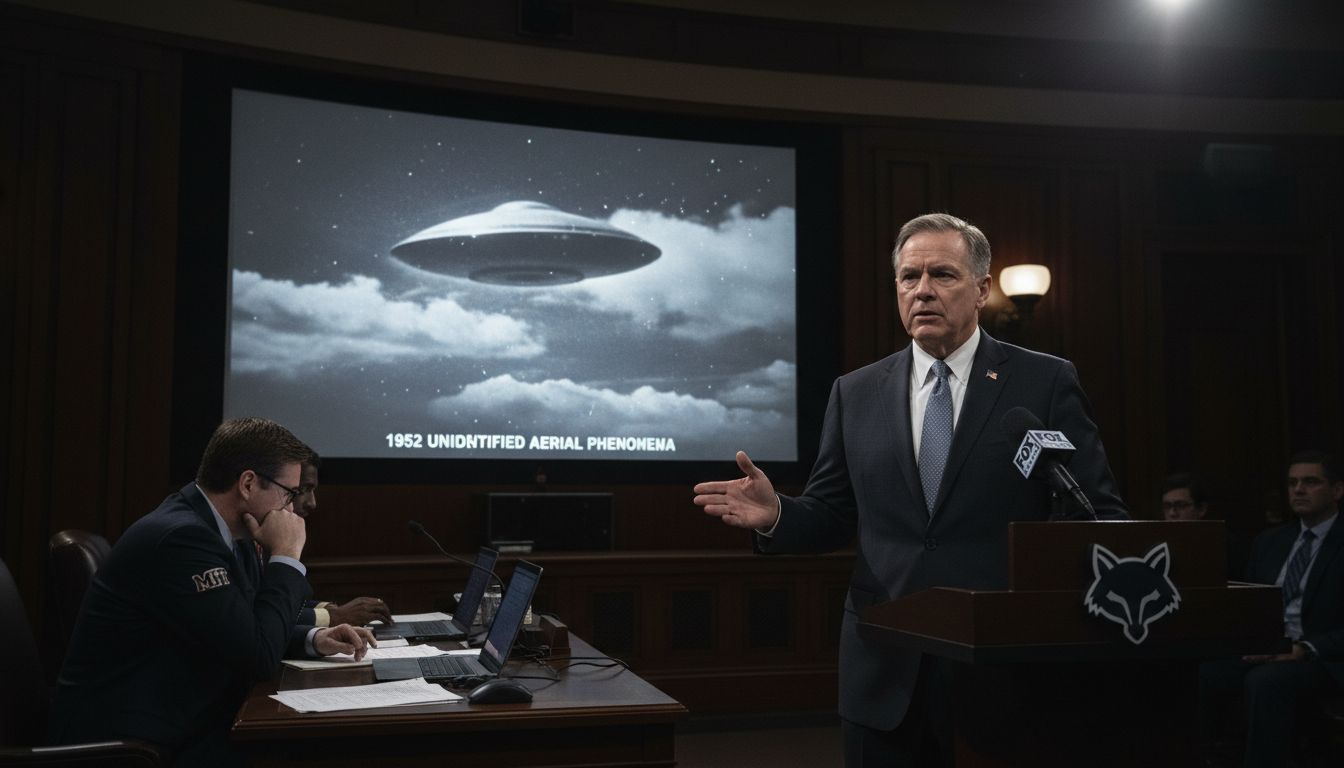
Republican Representative Eric Burlison (R‑MO) told viewers of Jesse Watters Primetime that the Massachusetts Institute of Technology is “cooperating” with a federal investigation into a 1952 aerial‑phenomena video that has recently resurfaced in public discourse. The claim, reported by Fox News, adds MIT to a growing list of academic and governmental bodies reviewing historic footage of unidentified flying objects (UFOs), now more commonly referred to as unidentified aerial phenomena (UAP).
Historical Context
The 1952 video in question is part of a collection of Cold‑War‑era recordings that have been examined intermittently by the U.S. Air Force, the Department of Defense’s Unidentified Aerial Phenomena Task Force, and, more recently, the All‑Domain Anomaly Resolution Office (AARO). While the original footage was never officially classified as a “flying saucer,” it has been cited by UFO researchers as one of the more compelling visual records of unexplained aerial activity from the early jet age. In the past decade, congressional committees have pressed for greater transparency on UAP incidents, prompting renewed scrutiny of archival material.
MIT’s Involvement
According to Burlinson, MIT’s involvement centers on its expertise in aerospace engineering, data analytics, and imaging technology. He asserted that the institute is providing “technical assistance” to help determine the video’s authenticity, frame‑rate, and possible physical explanations. MIT officials have not publicly confirmed the scope of any collaboration, and a spokesperson for the university declined to comment on ongoing projects pending a formal request. Historically, MIT researchers have contributed to government‑funded studies on atmospheric phenomena and sensor performance, but there is no record of a dedicated MIT‑led analysis of this particular 1952 footage.
Congressional Perspective
Burlinson’s remarks reflect a broader bipartisan push to apply rigorous scientific methods to legacy UAP data. In a recent hearing, members of the House Armed Services Committee emphasized the need for “objective, peer‑reviewed assessments” of historical videos to separate misidentified conventional aircraft or weather events from genuinely anomalous observations. The representative’s statement that MIT is “cooperating” underscores the administration’s strategy of leveraging civilian research institutions to bolster the credibility of any findings, a move that could influence future policy decisions on UAP disclosure and funding.
What Comes Next
The next steps remain unclear. If MIT does engage in a formal analysis, its results would likely be submitted to the AARO and potentially shared with congressional oversight committees. Critics caution that without transparent methodology and independent verification, conclusions may still be subject to speculation. Nonetheless, the involvement of a premier technical university could set a precedent for scientifically grounded investigations of legacy UAP material, moving the conversation beyond anecdote toward measurable data. As the debate over the 1952 video continues, stakeholders from government, academia, and the public will be watching closely for any substantive findings that emerge from this collaboration.


