Overview
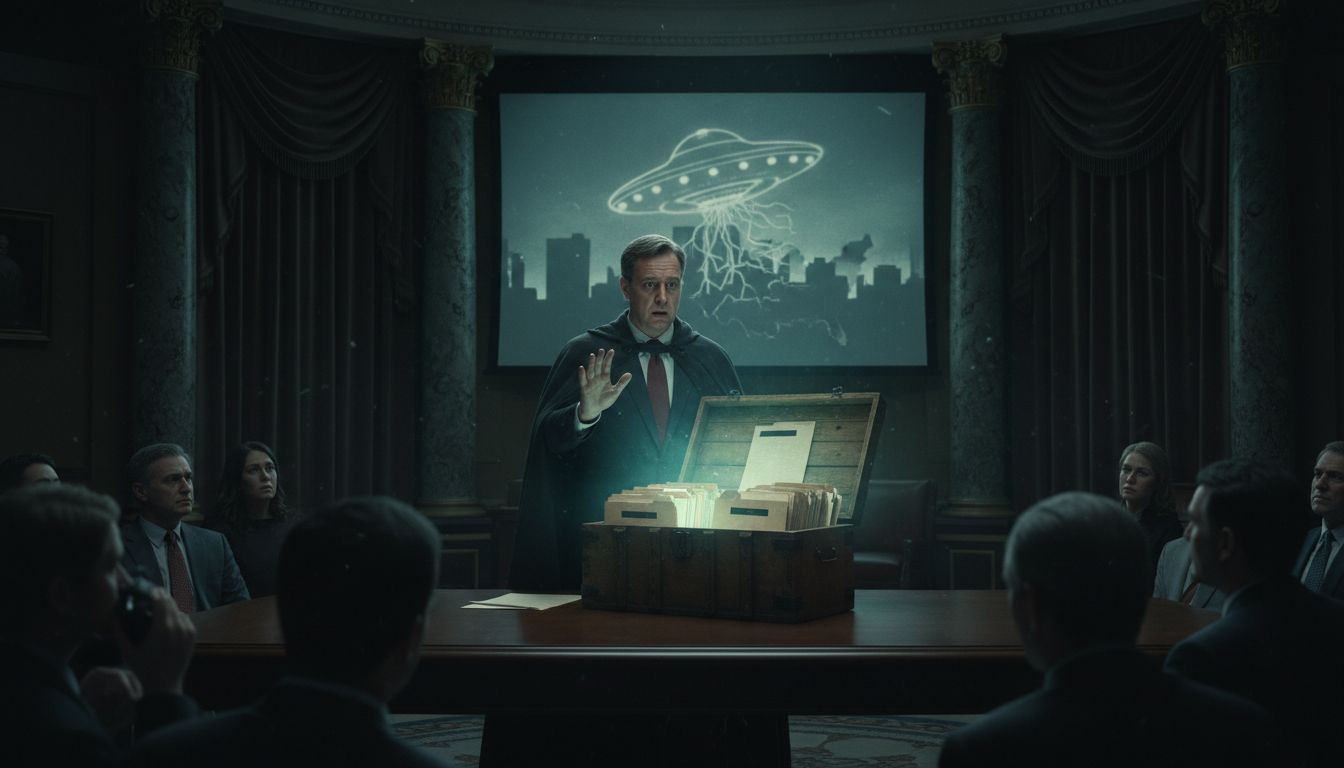
Republican Representative Tim Burchett (TN‑2) warned on the House floor that releasing the long‑kept “Alien Files” could leave the United States “unglued.” His remarks, made during a closed‑door briefing on April 2, echo a growing chorus of lawmakers who argue that sudden disclosure of classified Unidentified Aerial Phenomena (UAP) material could destabilize public confidence and strain national security institutions. Burchett’s statement arrives amid a broader push—originating from the Trump administration—to declassify decades of Pentagon and intelligence‑agency reports on unexplained aerial sightings.
Legislative Context
The call for transparency is not new. In 2023, Congress passed the UAP Transparency Act, mandating the Department of Defense (DoD) to compile a comprehensive inventory of all known UAP incidents. Yet, much of the data remains sealed behind “national‑security” classifications. Burchett, a member of the House Committee on Oversight, cited a classified briefing he received, saying, “If we dump these files on the public without proper context, we risk a wave of panic that could cripple our democratic processes.” His remarks reflect a bipartisan split: while some members, especially in the Senate, have championed full disclosure, others caution that the information could be misinterpreted or weaponized by adversaries.
Ongoing Investigations
Parallel to the congressional debate, a separate effort is under way to retrieve a cache of deleted emails belonging to Luis Elizondo, the former head of the DoD’s Advanced Aerospace Threat Identification Program (AATIP). Elizondo, who left the Pentagon in 2020, has been a vocal advocate for public awareness of UAP encounters. Federal investigators, acting on a subpoena issued by the House Intelligence Committee, are seeking the missing correspondence to determine whether it contains evidence of government‑level concealment. Sources familiar with the probe told Reuters that the emails could shed light on internal deliberations about the potential impact of disclosure on both domestic and foreign policy.
Industry and Expert Commentary
Technology entrepreneur Palmer Luckey, founder of defense‑focused startup Anduril, weighed in on the matter during a recent tech conference. Luckey argued that “the real danger isn’t the existence of unidentified craft, but the misinformation that can spread when raw data is released without proper scientific analysis.” He called for a “controlled, phased release” accompanied by expert briefings to help the public contextualize the findings. Academic researchers at the UAP Research Center at Georgetown University echoed this sentiment, emphasizing the need for rigorous peer‑reviewed studies before any public dissemination.
Implications for the Public Discourse
Burchett’s warning underscores a broader anxiety that the United States is approaching a tipping point in the UAP debate. Public opinion polls from the Pew Research Center indicate that 71 % of Americans now believe the government is withholding information about extraterrestrial phenomena, a sharp rise from 58 % in 2020. Critics argue that this mistrust fuels conspiracy theories, while proponents claim that transparency is essential for democratic accountability. As the House prepares to vote on a supplemental funding bill that could earmark resources for a UAP Disclosure Task Force, the balance between national security and public right‑to‑know remains a contentious policy frontier.
The unfolding saga—spanning congressional hearings, legal subpoenas, and commentary from tech innovators—highlights the delicate interplay between secrecy and openness in a democracy. While Representative Burchett cautions that an abrupt release could leave the nation “unglued,” many observers contend that a measured, scientifically grounded approach may actually strengthen public trust. The next weeks will likely determine whether the “Alien Files” stay locked behind classified doors or become part of a new chapter in America’s relationship with the unknown.


