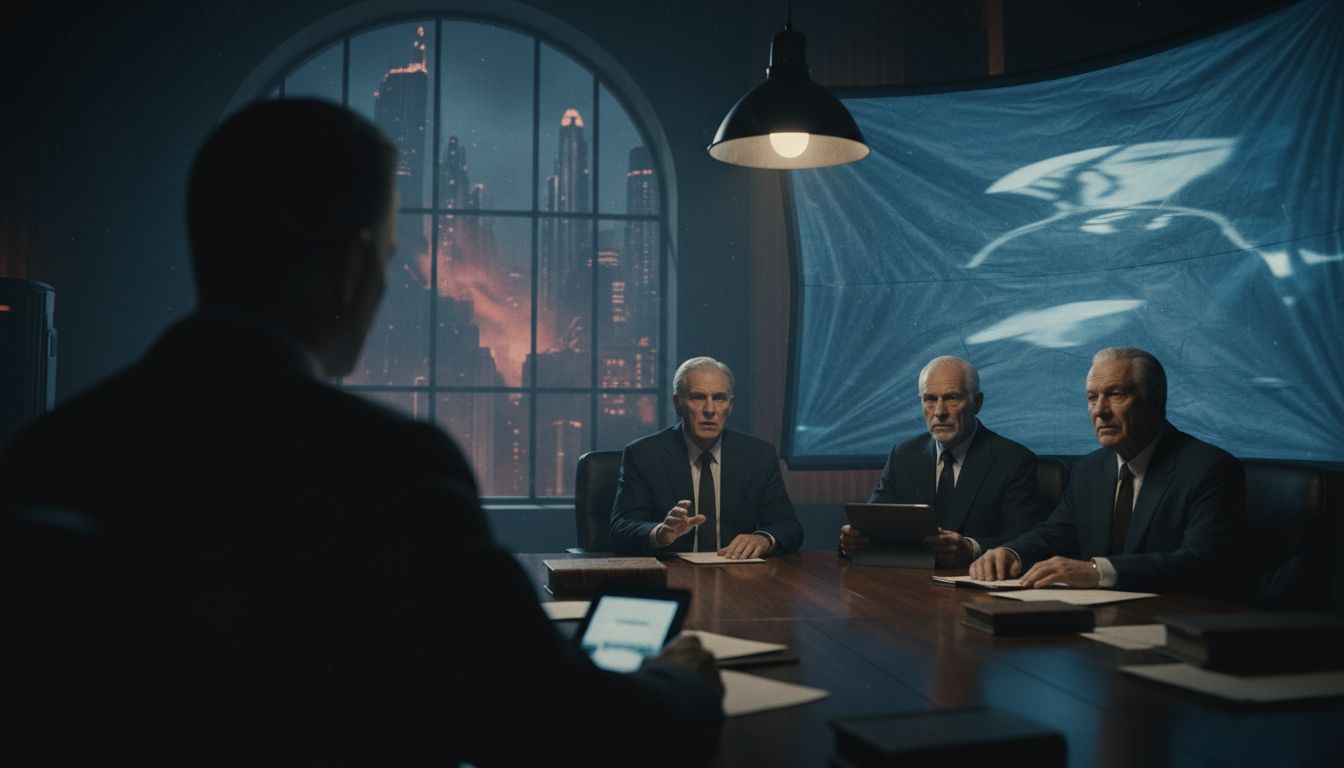
The streaming platform Prime Video is set to release a documentary titled The Age of Disclosure later this year, and a Collider exclusive preview reveals that the film will feature a group of former government officials warning that the forthcoming public release of UFO and unidentified aerial phenomena (UAP) data could have “profound security and societal implications.” In the brief footage shown, the insiders describe the situation as “dire,” suggesting that evidence long hidden from the public—and potential threats associated with advanced aerial technologies—are finally being brought to light.
The documentary’s participants include a retired Pentagon analyst, a former senior official from the Office of the Director of National Intelligence, and a whistle‑blower who worked on the UAP Task Force. While the preview does not disclose their names, each speaks in measured terms about the depth of the classified material they encountered. One source, who asked to remain anonymous for fear of retaliation, said, “We have been tracking objects that demonstrate flight capabilities well beyond any known platform, and the implications for national security are not just speculative.” Another former intelligence officer warned that “the public narrative, if not carefully managed, could cause widespread panic and erode trust in our institutions.”
The timing of the documentary aligns with a series of recent developments that have moved UAPs from the fringe to the mainstream of national‑security discourse. In 2023, the Office of the Director of National Intelligence released a 144‑page report acknowledging 144 incidents of unidentified aerial phenomena, many of which remained unexplained. Congressional hearings in 2024 led to the establishment of a permanent UAP oversight committee, and the Department of Defense declassified several infrared videos of “unidentified aerial objects” that exhibited hypersonic speeds and abrupt maneuvering. These steps have spurred a surge in public interest, but they have also raised questions about how much information will be released and what safeguards will be put in place.
Experts outside the government caution that the stakes are indeed high. Dr. Michael S. Griffin, a former director of the National Aeronautics and Space Administration’s (NASA) UAP research program, told The Washington Post that “any disclosure must balance transparency with the need to protect sensitive technology and avoid giving adversaries a playbook.” Security analysts echo this sentiment, noting that some of the observed phenomena could represent foreign hypersonic weapons or experimental platforms that, if disclosed, would reveal capabilities of both the United States and potential rivals. The insiders featured in The Age of Disclosure argue that the current “information vacuum” is more dangerous than a controlled release, because speculation fills the void with misinformation.
While the documentary promises to present “never‑before‑seen footage” and “first‑hand accounts” from those who worked inside the system, the preview also hints at a broader narrative about how governments worldwide have handled the phenomenon. The film reportedly examines case studies from the 1950s Project Blue Book to the modern UAP Task Force, drawing parallels between past secrecy and present-day challenges. By framing the upcoming disclosure as a pivotal moment, the filmmakers appear intent on prompting a public conversation about accountability, scientific inquiry, and the need for a coordinated international response.
As the release date approaches, policymakers, scholars, and the general public will be watching closely to see whether The Age of Disclosure can bridge the gap between classified knowledge and open dialogue. Whether the documentary’s “dire” warning translates into concrete policy changes remains uncertain, but the convergence of media attention, legislative momentum, and insider testimony suggests that the UAP conversation is moving from the periphery of defense briefings to the center of public discourse.


