Overview
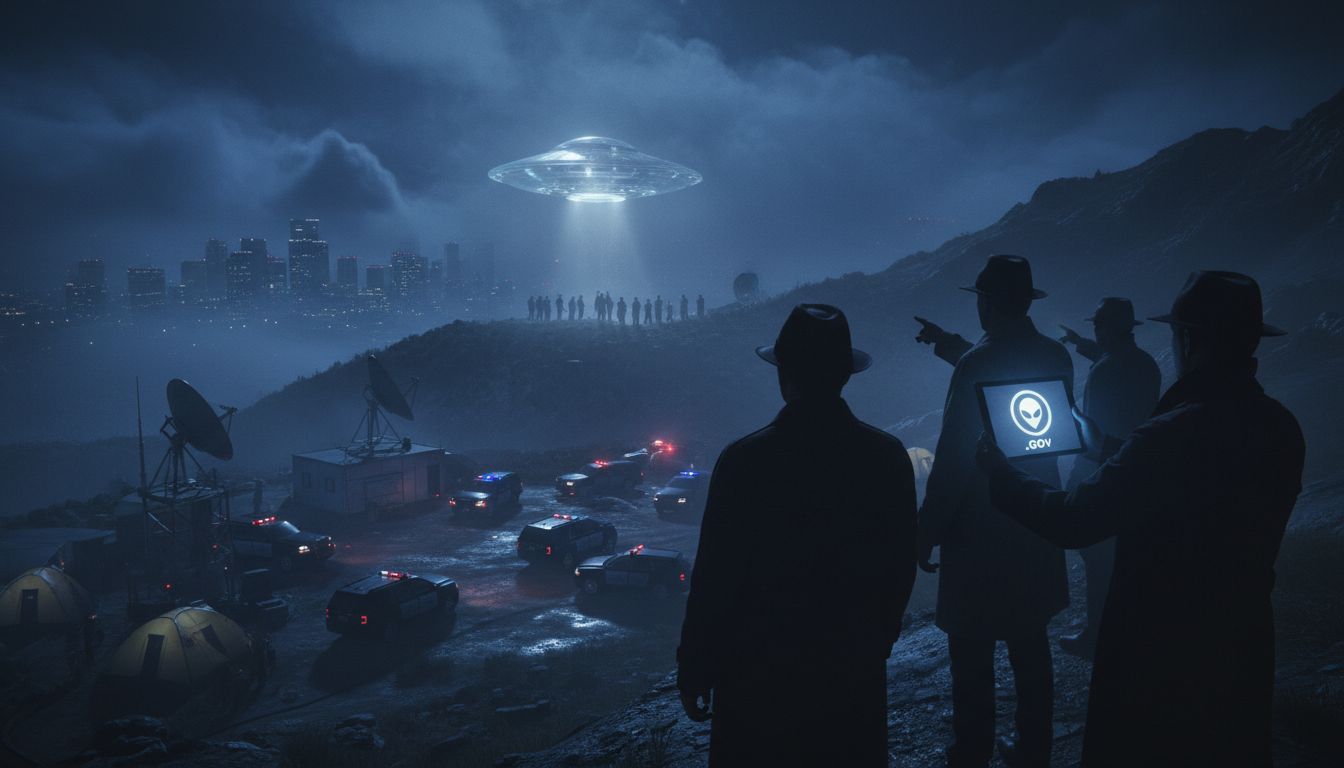
The Executive Office of the President registered the domain aliens.gov early Wednesday morning, according to a federal‑domain monitoring bot that logged the addition at approximately 6:30 a.m. ET. While no website is currently active at the address, the registration arrives just weeks after former President Donald Trump announced plans to direct the release of government files related to unidentified aerial phenomena (UAP). The move has reignited public and congressional interest in a topic that has oscillated between serious security briefings and speculative headlines for decades.
Recent Legislative and Media Context
UAP investigations have become a recurring fixture on Capitol Hill. Senator Chuck Schumer recently introduced legislation modeled on the JFK Assassination Records Act to compel the declassification of “unidentified anomalous phenomena” records, a push that follows a series of high‑profile hearings held by the Senate Intelligence Committee and the House Oversight Committee. Parallel to the legislative effort, the private sector has contributed footage and analysis; the To the Stars Academy, founded by former Blink‑182 frontman Tom DeLonge, released Pentagon‑sanctioned videos of Navy pilots encountering objects that defy conventional aerodynamics.
Despite this momentum, the narrative was complicated last year when The Wall Street Journal reported that much of the publicly available UAP material may be linked to a Pentagon‑run disinformation campaign. That disclosure temporarily dampened enthusiasm, but interest surged again after a February interview in which former President Barack Obama, speaking with journalist Brian Tyler Cohen, suggested that “the odds are good there’s life out there,” while emphasizing the lack of direct evidence of extraterrestrial visitation during his administration. Obama later clarified his remarks on Instagram, noting the vastness of the universe but the improbability of contact given interstellar distances.
Government Action and Presidential Statements
President Trump’s recent comments have added a new layer to the debate. During a press briefing on Air Force One, a reporter asked whether the former president’s remarks about “classified information” implied belief in extraterrestrials. Trump responded, “I don’t have an opinion on it… A lot of people believe it,” before noting that “the President can declassify anything that he wants to.” Later that day, on his Truth Social platform, Trump pledged to direct the declassification effort, citing “tremendous interest” from the public.
The aliens.gov domain registration appears to be a concrete step toward that promise, though officials have not yet disclosed the intended purpose of the site. No content is live, and the White House has not released a statement confirming whether the domain will host declassified documents, serve as a portal for public inquiries, or function in another capacity. The timing—just a month after Trump’s announcement—suggests coordination, but the lack of detail leaves analysts cautious.
Reactions from Stakeholders
Lawmakers on both sides of the aisle have expressed measured optimism. Senate Majority Leader Chuck Schumer praised the “potential for greater transparency” while urging the administration to provide a clear timeline. In contrast, some defense‑policy experts warned that premature release of classified material could compromise intelligence sources or national security. Former intelligence officials cited past instances where selective declassification led to misinterpretation and speculation, emphasizing the need for contextual briefings alongside raw data.
Public response has been mixed. Social‑media analytics show a spike in searches for “aliens.gov” and related hashtags, reflecting curiosity rather than alarm. Meanwhile, advocacy groups such as the Scientific Coalition for UAP Research (SCUAP) have called for a “rigorous scientific framework” to accompany any disclosures, arguing that data alone will not resolve the underlying questions about the phenomena’s nature or origin.
Looking Ahead
The registration of aliens.gov marks a tangible, if still undefined, step in the ongoing effort to bring UAP information into the public domain. Observers will be watching for an official launch announcement, which could include a repository of declassified reports, a portal for citizen‑submitted sightings, or an educational hub outlining current scientific understanding.
As the administration balances transparency with security considerations, the next few weeks are likely to shape the trajectory of UAP policy for the remainder of the current term. Whether the domain becomes a substantive resource or remains a placeholder will be a key indicator of how seriously the government intends to address the “aliens” question that has long hovered at the intersection of science, national security, and public imagination.


