Overview
The Department of Defense’s latest unclassified release of UAP (Unidentified Aerial Phenomena) documents has refocused national attention on a series of aerial sightings reported over Great Falls, Montana, for more than three decades. The Pentagon’s May 2026 briefing, which included de‑classified videos and analysis from the UAP Task Force, cited several incidents that occurred in the western United States, prompting local officials and longtime residents to revisit the town’s own “UFO legacy.” While the federal report stopped short of confirming extraterrestrial origins, it did acknowledge that some encounters remain unexplained, reigniting community interest and scholarly inquiry.
Historical Context
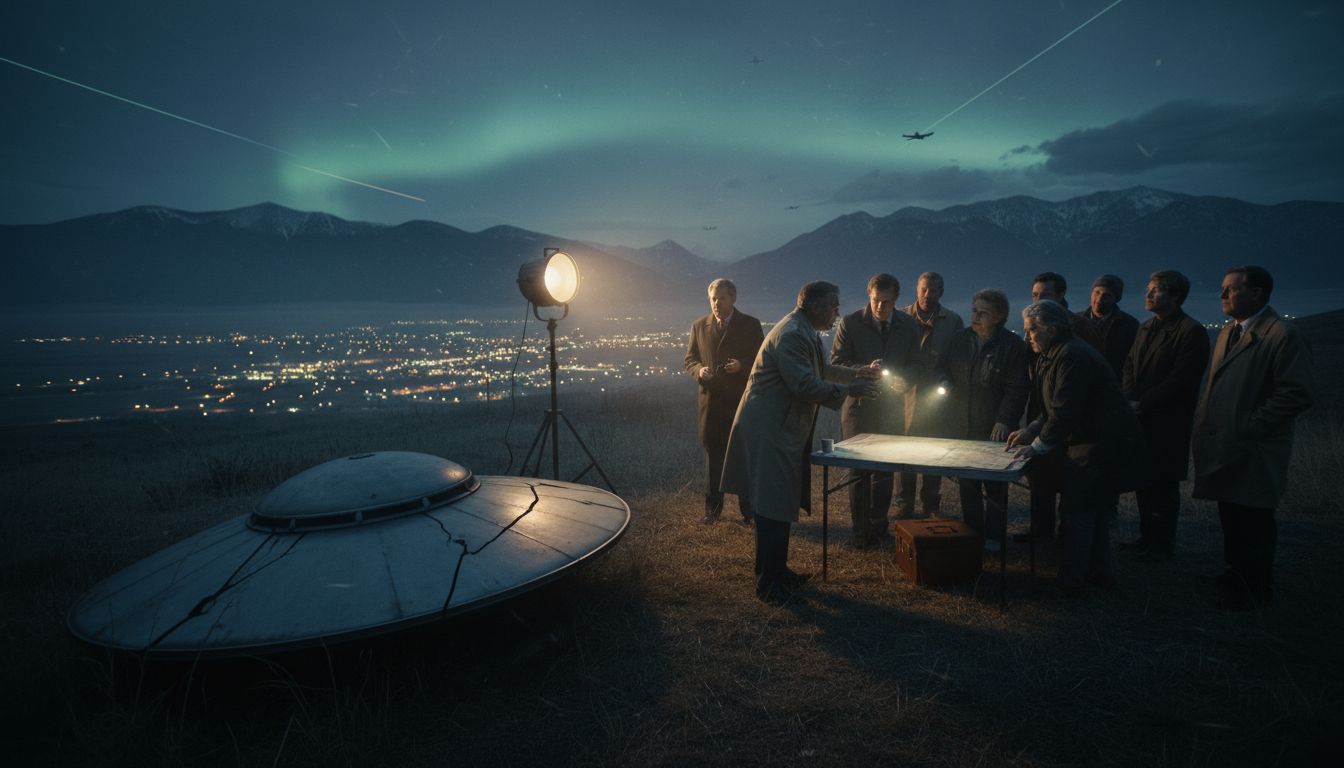
Great Falls first entered the national UFO conversation in the late 1990s, when multiple pilots from the nearby Malmstrom Air Force Base reported bright, maneuverable lights over the Cascade Range that performed rapid accelerations inconsistent with known aircraft. A 2001 sighting—captured on a civilian dash‑cam and later circulated among regional UFO research groups—showed a disc‑shaped object hovering above the Missouri River before vanishing in seconds. Over the years, the Great Falls Historical Society has archived newspaper clippings, personal testimonies, and the occasional grainy photograph, preserving a catalog of more than 30 documented sightings between 1995 and 2020.
Recent Developments
The Pentagon’s latest dossier, released on May 13, 2026, included a previously classified video from a 2019 training flight that displayed an object executing “instantaneous changes in direction and speed”—a description that mirrors several Great Falls accounts. Mayor Bryson McAllister said the timing was “a reminder that our community’s experiences are part of a broader national dialogue on aerial security.” The city’s public‑information officer, Emily Rivera, confirmed that the municipal government has compiled a digital repository of local reports to assist federal analysts who may request supplemental data.
Community Response
Local residents expressed a mixture of curiosity and caution. Linda Jensen, a retired schoolteacher who witnessed the 1997 cascade lights, told KRTV, “I’ve always thought we’d be the ones to finally get answers, but I’m glad the government is being transparent, even if the answers are still out there.” Meanwhile, Mike Harrington, director of the Montana UFO Research Group, emphasized the need for rigorous data collection: “The Pentagon’s release validates the importance of systematic logging—time stamps, radar data, and witness statements—so we can move beyond anecdote to analysis.”
Looking Ahead
City officials plan to host a town hall next month, inviting experts from the Air Force Research Laboratory and civilian scientists to discuss the implications of the Pentagon’s findings for local airspace safety. The meeting will also address potential collaboration with the UAP Task Force, which has expressed interest in “regional case studies” to refine its investigative protocols. As Great Falls prepares for this dialogue, the community’s longstanding legacy of observation may finally intersect with formal scientific scrutiny, offering a clearer picture of what, if anything, is truly “unidentified” in the skies above Montana.