Overview
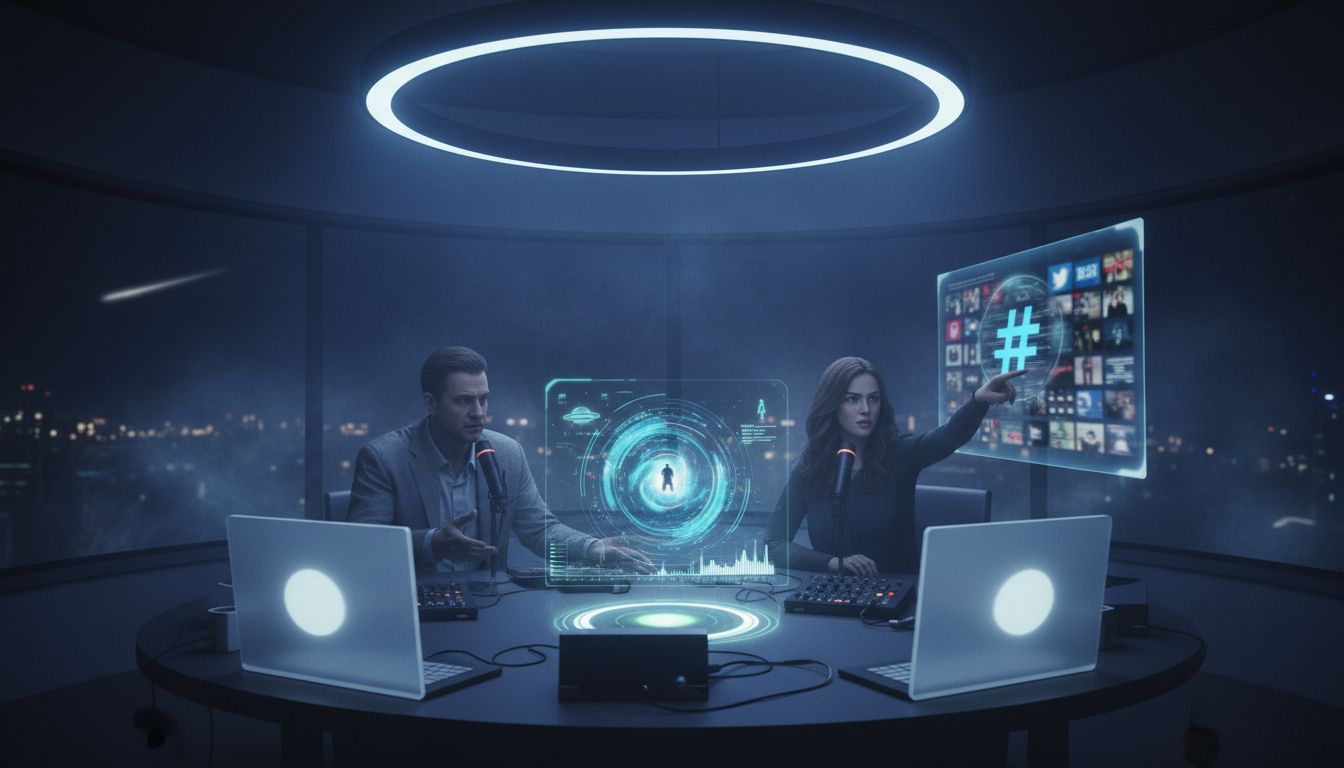
On June 4, 2026 the #UFONEWS podcast released a 28‑minute episode titled “Grusch and Burchett Pushing #UFO Disclosure.” Hosted by veteran UFO‑research commentators, the program examined the renewed push for official transparency spearheaded by former intelligence officer David Grusch and Tennessee Representative Tim Burchett. The discussion placed recent congressional hearings, a pending disclosure bill, and the broader response of the UAP‑research community into a clear timeline, highlighting both the political momentum and the lingering skepticism that surrounds the issue.
Legislative Momentum
Rep. Burchett, a member of the House Committee on Oversight and Reform, introduced the UFO Transparency Act of 2026 earlier this year. The bill would require the Department of Defense, the Office of the Director of National Intelligence, and the Federal Aviation Administration to declassify all unclassified material on unidentified aerial phenomena (UAP) within 180 days and to establish a permanent, publicly‑accessible repository. In the podcast, Burchett’s office was quoted as saying, “America’s taxpayers deserve to know what’s being investigated in our skies, and the American people have a right to that information.”
David Grusch, who testified before the Senate Intelligence Committee in 2023 alleging the existence of a “non‑human” program, has become a central figure in the disclosure effort. The hosts noted that Grusch’s recent appearance before the House Subcommittee on Intelligence on May 30, 2026 reinforced the call for a systematic release of data, emphasizing that “the evidence is already in the hands of the government; it’s a matter of policy, not discovery.” While Grusch stopped short of confirming extraterrestrial origins, he reiterated that “the anomalous capabilities observed cannot be explained by any known technology.”
Community and Institutional Reactions
The episode captured a spectrum of reactions from the UFO‑research community. Long‑time enthusiasts praised the bipartisan nature of the push, with one listener comment highlighted by the hosts: “It’s the first time we’ve seen a Republican and a former intelligence insider aligning on this issue.” Conversely, several scientific skeptics cautioned against premature conclusions, referencing the 2022 Pentagon UAP report that classified most sightings as “unexplained but not necessarily extraordinary.”
Within the intelligence establishment, officials have remained guarded. A senior Defense Department spokesperson, speaking off‑record to the podcast, noted that “while we are reviewing the legislative proposals, any release of classified material must be weighed against national security considerations.” The hosts stressed that this balance is a recurring theme in past disclosure attempts, where security concerns have often delayed or diluted full public access.
Implications for Policy and Public Perception
If passed, the UFO Transparency Act could mark the most significant policy shift on UAPs since the 2021 establishment of the All‑Domain Anomaly Resolution Office (AARO). Analysts cited by the podcast argue that a mandated data dump would enable independent researchers to conduct peer‑reviewed studies, potentially advancing aerospace science or, at a minimum, clarifying the proportion of sightings attributable to sensor errors, foreign adversaries, or natural phenomena.
The hosts also warned that “media coverage will likely amplify sensational narratives,” urging journalists to maintain an evidence‑based approach. They highlighted the need for clear communication from both Congress and the intelligence community to prevent misinformation from filling the vacuum left by classified briefings.
Outlook
The #UFONEWS episode concluded that while the legislative pathway remains uncertain—particularly given upcoming committee mark‑ups and possible executive‑branch pushback—the combined advocacy of Grusch and Burchett has undeniably raised the profile of UAP disclosure on Capitol Hill. As one commentator summed up, “We are at a crossroads where political will, public curiosity, and national‑security imperatives intersect. How that intersection is navigated will shape the narrative of UFOs for years to come.”
Listeners are encouraged to follow the unfolding hearings and to stay informed through official channels, ensuring that future debates remain grounded in verified data rather than speculation.