Overview
Acclaimed filmmaker Guillermo Del Toro recently revisited a childhood experience that has resurfaced in the public eye. In an interview with NME, the Oscar‑winning director recounted a UFO sighting he witnessed at the age of 14, describing the episode as “feeling like a magic‑mushroom trip.” While the anecdote is personal, it joins a long line of artistic figures who have spoken publicly about unexplained aerial phenomena, adding a fresh cultural dimension to the ongoing discourse on unidentified flying objects.
The Encounter
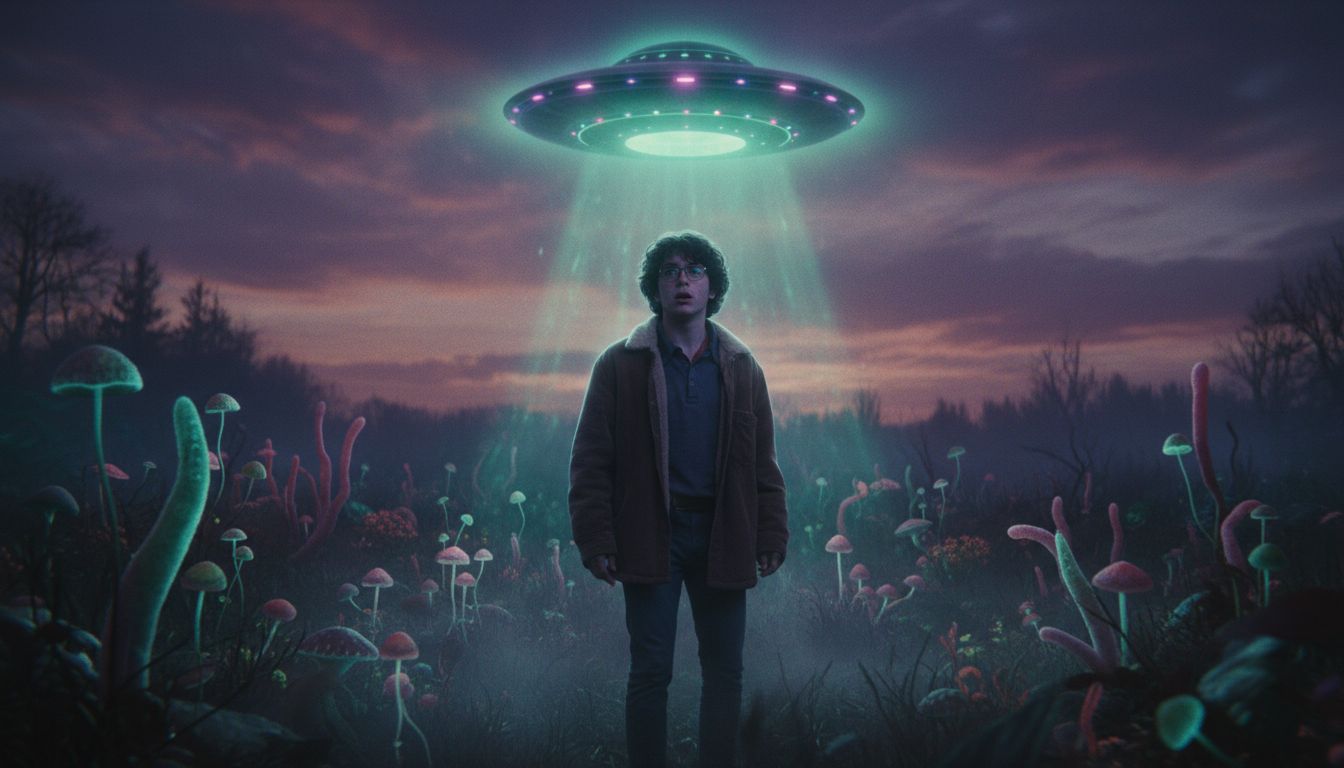
Del Toro said the incident occurred in the early 1990s while he was living in a small town outside Mexico City. He and a group of friends were camping near a forested ridge when a series of bright, pulsating lights hovered silently before disappearing in a fraction of a second. “It wasn’t a typical ‘UFO’ in the Hollywood sense,” he told NME. “The lights moved with a fluidity that made my mind feel… like I’d taken a psychedelic—colors, sounds, a sense of time stretching.” The director emphasized that the memory has stayed vivid, resurfacing whenever he explores themes of the uncanny in his work.
Del Toro’s Reflection
When asked why the memory feels comparable to a psychedelic experience, Del Toro explained that the visual and emotional intensity of the sighting altered his perception in a way similar to a “magic‑mushroom trip.” He noted, “It wasn’t just the lights; it was the way the whole world seemed to shift—my heart raced, my thoughts scattered, and yet there was a strange calm. That duality is something I try to capture in my films.” The director’s comment underscores how personal encounters with the unknown can inform an artist’s creative vocabulary, especially in genres that blend horror, fantasy, and science fiction.
Broader Context
Del Toro’s recollection arrives at a moment of heightened public interest in UAP (unidentified aerial phenomena). Recent declassified Pentagon reports and congressional hearings have pushed the subject into mainstream discussion, prompting both skeptics and believers to examine historical sightings. Cultural scholars note that when high‑profile creatives like Del Toro share personal anecdotes, they help normalize the conversation, moving it beyond fringe speculation. Moreover, the comparison to psychedelic states resonates with ongoing scientific research exploring how altered consciousness can affect perception of anomalous stimuli.
Reactions and Outlook
The NME piece has sparked a wave of commentary across social media platforms, with fans praising Del Toro’s honesty and others urging caution against conflating subjective experiences with empirical evidence. UFO researchers have welcomed the added testimony, noting that “first‑hand accounts from credible public figures can enrich our data pool, provided they are documented responsibly.” For Del Toro, the memory remains a source of creative inspiration rather than a call for investigation. As he prepares his next film—rumored to delve deeper into mythic and extraterrestrial motifs—observers will be watching to see how this childhood encounter may shape his storytelling once again.


