Overview
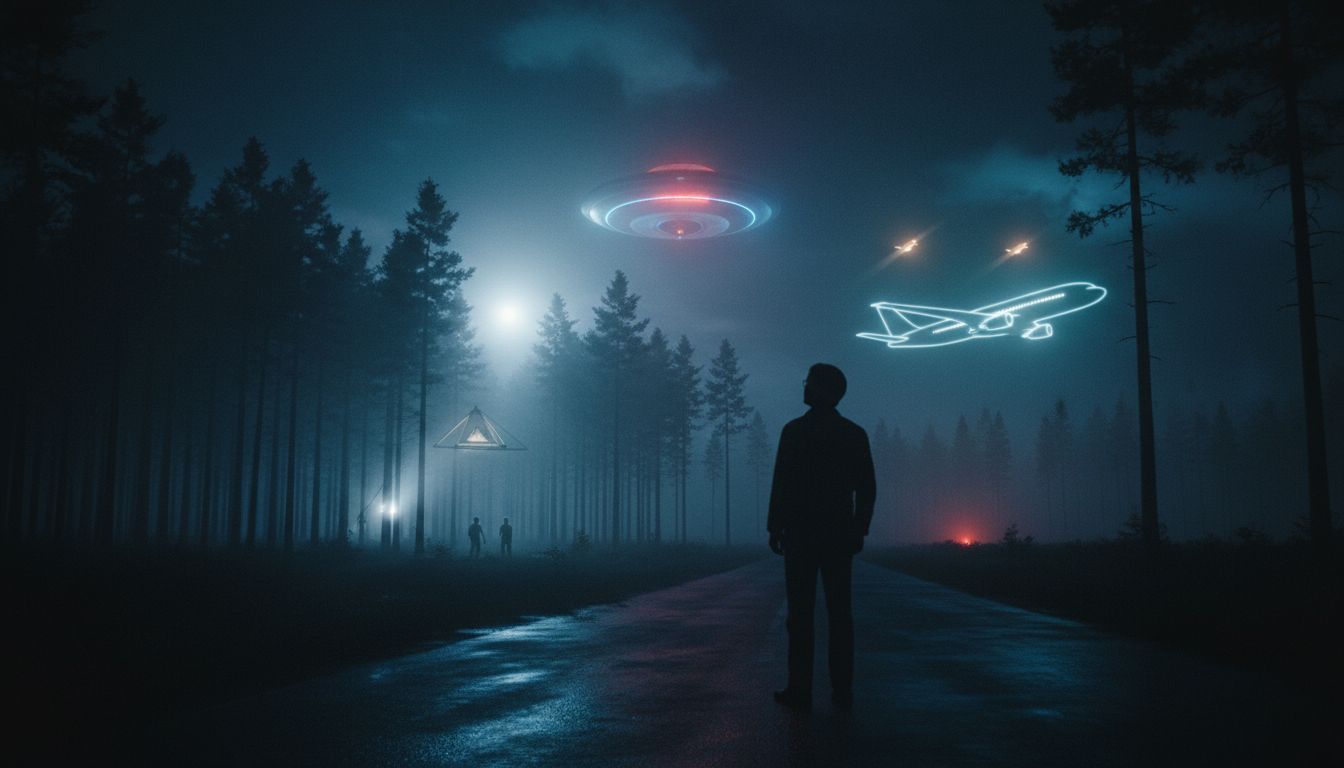
The latest episode of "Podcast UFO," hosted by Martin Willis, offers listeners a deep dive into the world of Unidentified Aerial Phenomena (UAP) through a series of firsthand accounts spanning from the late 1960s through the 1980s. Central to the episode is an interview with Len Filppu, whose 1967 UFO sighting in Brockport, New York, was recently featured in a documentary. The episode also weaves in discussions of other historic cases, including the 1976 Skyline–Sea Island encounter in Vancouver, John Burroughs’ perspective on the infamous Rendlesham Forest incident, and Paul Sinclair’s 1986 North Yorkshire sighting.
Personal Encounters that Shaped Lives
Len Filppu, now retired with a background in journalism and presidential politics, recounted on the show how his close encounter as a teenager in 1967 left a lasting mark on his life. “I went to an Experiencer Group meeting where a number of people sit around and talk about their sightings,” Filppu explained, describing how the experience ultimately led to the creation of a short animated documentary directed by Matthew Sultan. The film, roughly 11 minutes long, draws heavily on Filppu’s recollections, blending animation with personal narrative to capture the emotional impact of the sighting.
Filppu’s story is emblematic of many such encounters discussed on the podcast: a moment of the unexplained that alters a witness’s worldview. Willis emphasized this point, noting, “These anomalous events reshape witnesses’ lives,” highlighting the long-term psychological and personal effects often reported by those who come forward with UAP testimonies.
A Broader Historical Context
The episode situates Filppu’s account within a broader historical tapestry of UAP sightings. Host Martin Willis referenced other significant cases, such as the 1976 Vancouver Skyline–Sea Island encounter and the Rendlesham Forest incident—the latter often dubbed the “British Roswell.” John Burroughs, a key witness to the Rendlesham event, was discussed for his ongoing efforts to bring attention to the official secrecy surrounding such cases. The podcast further explored how, in post-war Britain, secret research bases were established to investigate these persistent aerial mysteries.
Adding to the international dimension, Paul Sinclair’s 1986 North Yorkshire sighting was mentioned as another example of how these phenomena have been reported across different cultures and decades. The inclusion of these cases underscores the global and enduring nature of UAP encounters.
The Human Element and Ongoing Curiosity
The show also touched on the communal aspect of the search for answers. Willis shared a personal anecdote about a childhood friend whose family would go “looking for UFOs” during the late 1960s and 70s—an activity that, while lighthearted, reflects the widespread curiosity and open-mindedness that has characterized public engagement with the UFO phenomenon.
In a lighter moment, Willis recounted receiving a playful text from his friend featuring a photo of a flying saucer—without any “reindeers,” he joked—demonstrating how the subject continues to capture the imagination of both believers and skeptics alike.
Reflections and Responsible Inquiry
Throughout the episode, both guests and host emphasized the importance of responsible engagement with UAP testimonies. “Anyone working with paranormal testimonies needs to appreciate the profound personal impact these experiences can have,” Willis remarked. The show encouraged listeners to approach such accounts with both open-mindedness and critical thinking, recognizing that the legacy of these encounters lies not just in the search for physical evidence, but in understanding their significance for the individuals involved and for society as a whole.
As the field of UAP research continues to evolve, episodes like this serve as a vital reminder of the enduring mystery and human intrigue that surround the phenomenon, as well as the need for thoughtful, respectful inquiry.