Overview
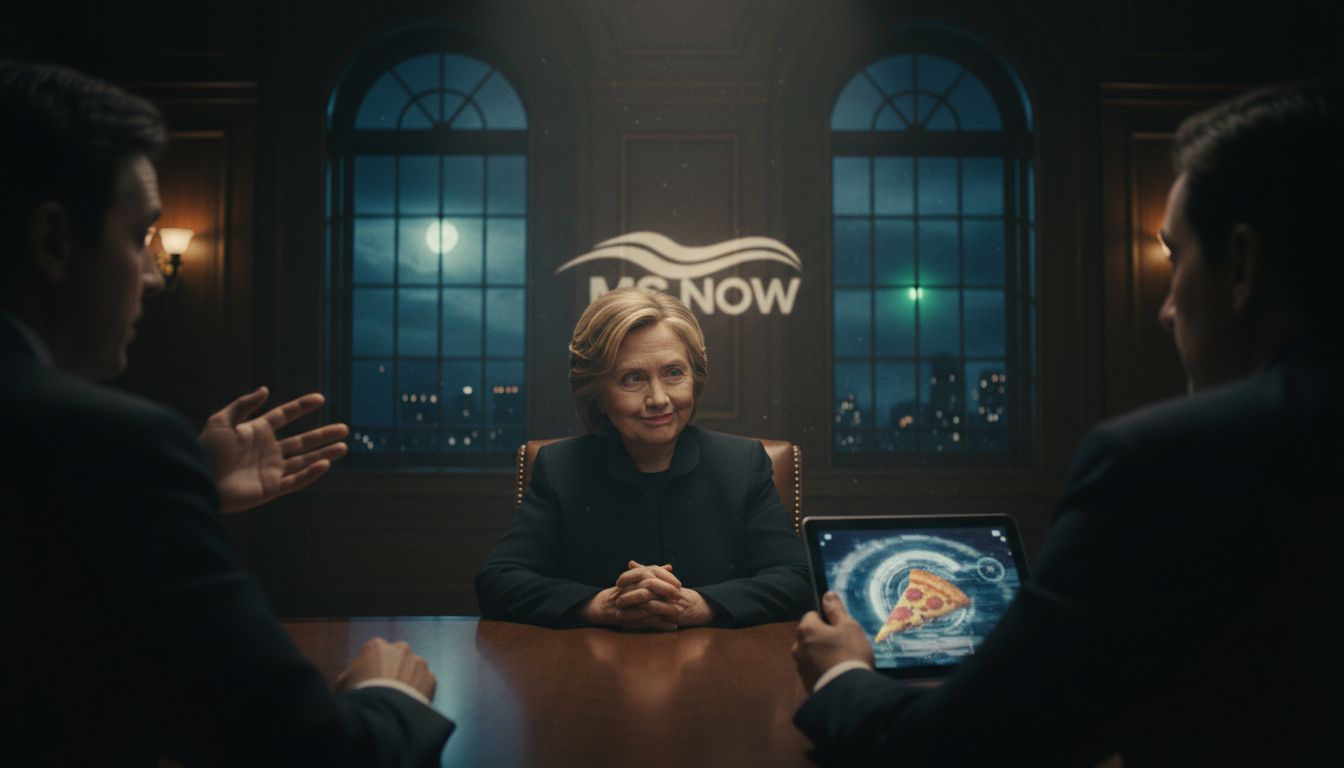
In a deposition connected to the ongoing federal litigation over the late financier Jeffrey Epstein, former Secretary of State Hillary Clinton testified that Republican members of Congress pressed her on two topics that have long sat outside mainstream political discourse: unidentified flying objects (UFOs) and the debunked “Pizzagate” conspiracy theory. The revelation was reported by MS NOW on February 27, 2026 and has sparked renewed discussion about the scope of congressional inquiries in high‑profile legal proceedings.
Deposition Details
The deposition, taken as part of the plaintiffs’ effort to uncover any possible involvement of public officials in Epstein’s alleged trafficking network, was conducted under oath before a federal magistrate. Clinton, who was named in the civil suit for her alleged knowledge of Epstein’s activities, answered a series of questions from the plaintiffs’ counsel before the line of questioning shifted. According to the transcript, a committee of Republican representatives—identified only as “GOP reps” in the filing—asked Clinton whether she had ever discussed UFO phenomena with senior officials, and whether she had any knowledge of the “Pizzagate” narrative that linked a Washington‑area pizzeria to a supposed child‑sex ring.
“They asked me about UFOs and Pizzagate,” Clinton said in response to a follow‑up query, “and I told them I have no knowledge of either beyond what’s been publicly reported.”
The exchange was brief, lasting less than two minutes, but its inclusion in the official record has drawn media attention because it diverges sharply from the core issues of the Epstein case.
GOP Line of Questioning
Lawmakers on the House Committee on Oversight and Reform, which has been conducting a parallel investigation into Epstein’s connections to the political elite, have publicly expressed interest in a wide array of topics ranging from national security to alleged disinformation campaigns. In a statement released earlier this week, the committee’s chair, Rep. James Miller (R‑TX), said the questions were intended to “explore any possible intersections between high‑level diplomatic contacts and unconventional intelligence matters, as well as to address persistent rumors that have circulated in the public sphere.”
Critics argue that the focus on UFOs—an issue that has gained limited official acknowledgment after the Pentagon’s 2023 Unidentified Aerial Phenomena (UAP) report—and the discredited Pizzagate claim may be an attempt to politicize the deposition or to distract from more substantive allegations. Democratic members of the committee, including Rep. Lena Hernandez (D‑CA), have called the line of questioning “unproductive” and “outside the scope of the civil suit.”
Political and Legal Context
The Epstein civil litigation, which seeks damages from individuals alleged to have facilitated his alleged sex‑trafficking operations, has become a focal point for broader partisan battles. Clinton’s involvement stems from a 2015 meeting with Epstein that was disclosed during the 2019 investigations into his activities. While no criminal charges have been filed against her, the deposition underscores how the case continues to serve as a conduit for probing the conduct of former officials.
The inclusion of UFO and Pizzagate topics reflects a growing trend in congressional oversight to address “non‑traditional” security concerns. Since the 2023 UAP report, several bipartisan panels have examined sightings and potential foreign threats, though no definitive link to national security has been established. Conversely, Pizzagate—a conspiracy theory first propagated in 2016 and repeatedly debunked by law‑enforcement agencies—has resurfaced in recent years as part of broader disinformation narratives.
Reactions and Implications
Legal analysts suggest that while the UFO and Pizzagate inquiries are unlikely to affect the substantive outcomes of the Epstein case, they may influence public perception of the deposition’s credibility. “The record shows that the questioning veered into speculative territory,” said Professor Elena Marquez, a constitutional law expert at Georgetown University. “That can be a double‑edged sword: it may distract from the core allegations, but it also highlights the breadth of congressional curiosity about the former president’s and former secretary’s networks.”
Clinton’s legal team has not indicated any intention to file a motion to strike the questions, noting that the deposition’s purpose is to provide a complete factual record. As the Epstein litigation proceeds toward trial later this year, the episode serves as a reminder that high‑profile legal battles often become arenas for broader political debates—whether about extraterrestrial phenomena, internet‑born conspiracies, or the lingering shadows of a disgraced financier.
The information in this article is based on the MS NOW report dated February 27, 2026. All quotations are taken from the publicly released deposition transcript.


