Overview
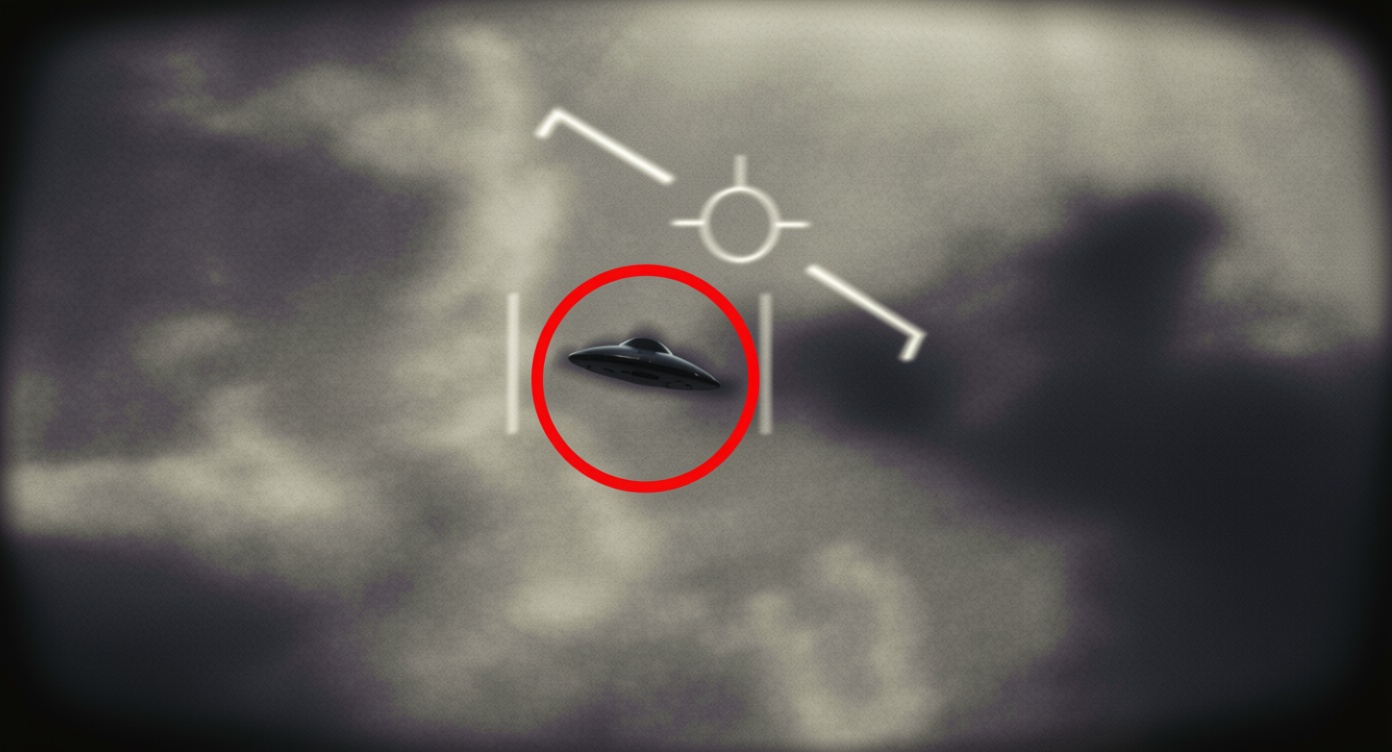
A newly surfaced archival video on DVIDSHub is drawing attention to one of the early Cold War era’s most enduring aviation mysteries: reported UFO activity in Utah in 1952. The file, labeled DOW-UAP-PR159, Historical Film of Reported UFOs, Utah, 1952, appears to be a historical release rather than a modern investigative report, and it revisits a period when unexplained aerial sightings were receiving growing attention from both the public and the U.S. military. While the footage itself is presented as part of a historical record, its appearance on a Department of Defense-affiliated media platform underscores how older UFO cases continue to be preserved, reexamined, and circulated within official channels.
Cold War Context
The year 1952 was a particularly charged moment in the history of American UFO reporting. The United States was deep into the Cold War, jet aircraft were advancing rapidly, and military officials were increasingly concerned about unidentified objects in controlled airspace. Sightings from that era were often interpreted through the lens of national security, with reports frequently tied to questions about surveillance, foreign technology, or misidentification of advanced aircraft and atmospheric phenomena. In that sense, the Utah film fits into a broader pattern: a wave of early U.S. UFO cases that helped shape decades of public fascination and government scrutiny.
What makes this archival release notable is less any single claim of proof than its historical framing. The title suggests the film is meant to document reported incidents, not necessarily to validate them. That distinction matters. Many Cold War-era UFO cases were collected in an environment where eyewitness accounts, military observations, and incomplete records often collided. As a result, these historical materials are valuable not only for what they may show, but also for what they reveal about the way institutions documented uncertainty at the time.
Why the Archive Matters
The appearance of DOW-UAP-PR159 on DVIDSHub highlights the growing role of official and semi-official archives in preserving UAP-related material. DVIDSHub, the Defense Visual Information Distribution Service, is typically associated with military news, imagery, and public affairs content. By hosting historical footage connected to reported UFO activity, the platform helps place such material within the broader public record, making it accessible to researchers, journalists, and enthusiasts interested in the origins of modern UAP discourse.
For observers of the issue, the significance lies in continuity. Today’s UAP debate is often framed as a modern phenomenon driven by drone technology, sensor data, and congressional oversight. But cases like the one referenced in Utah show that the underlying questions are much older. In the early 1950s, unexplained sightings were already prompting formal attention, and many of the same themes—public uncertainty, military interest, and competing explanations—remain central to the conversation now.
Broader Implications
Although the archival listing does not, on its own, establish what was seen in Utah in 1952, it does reinforce the importance of historical context in UAP reporting. Each newly surfaced film, memo, or transcript adds another piece to a decades-long puzzle that has moved from newspaper reports and declassified files to congressional hearings and official review offices. For that reason, the Utah footage is best understood not as a sensational revelation, but as a reminder that the modern UAP story is built on a long and uneven historical record.
As more archival material comes to light, cases from the Cold War period are likely to remain central to the discussion. They offer a window into how unexplained aerial reports were handled before today’s terminology, technology, and oversight structures existed—and why these older records still matter in the ongoing effort to separate fact, speculation, and unresolved mystery.