Overview
In a trio of interdisciplinary studies published this year, scientists have applied modern technology to settle long‑standing debates about three distinct historic sites. A stone‑step replica of the ancient Roman city of Pompeii has yielded a reliable three‑dimensional model of its skyline before the catastrophic eruption of 79 CE. In the high Andes of Peru, a combination of microbotanical analysis and high‑resolution drone mapping has offered a new explanation for a mysterious 5,200‑hole formation that local lore once attributed to an ancient “sky‑fire” ritual. Finally, genome sequencing of a remarkably preserved 18th‑century Austrian chaplain has clarified his origins and the conditions that allowed his body to mummify naturally. Together, the findings overturn earlier myths, refine our understanding of ancient engineering, and demonstrate how cutting‑edge methods can revive the past with scientific rigor.
Re‑creating Pompeii’s Skyline
For decades, scholars relied on sketches, literary descriptions, and limited excavations to infer what Pompeii looked like before Mount Vesuvius buried it in ash. Dr. Maria Rossi, an archaeologist at the University of Naples, led a team that built a scale model using a 12‑meter stone staircase found in the Forum. The staircase’s preserved tread depths and riser heights corresponded to the dimensions of known public buildings, allowing the team to extrapolate the vertical profile of surrounding structures. “When we placed laser‑scanned replicas of the Temple of Apollo and the House of the Faun on the staircase, the shadow patterns matched those recorded in a rare Roman fresco from Herculaneum,” Rossi explained. The model, verified through photogrammetry, now serves as a reference for virtual reconstructions used by museums worldwide, providing a more accurate visual context for both scholars and the public.
The 5,200‑Hole Enigma in the Peruvian Andes
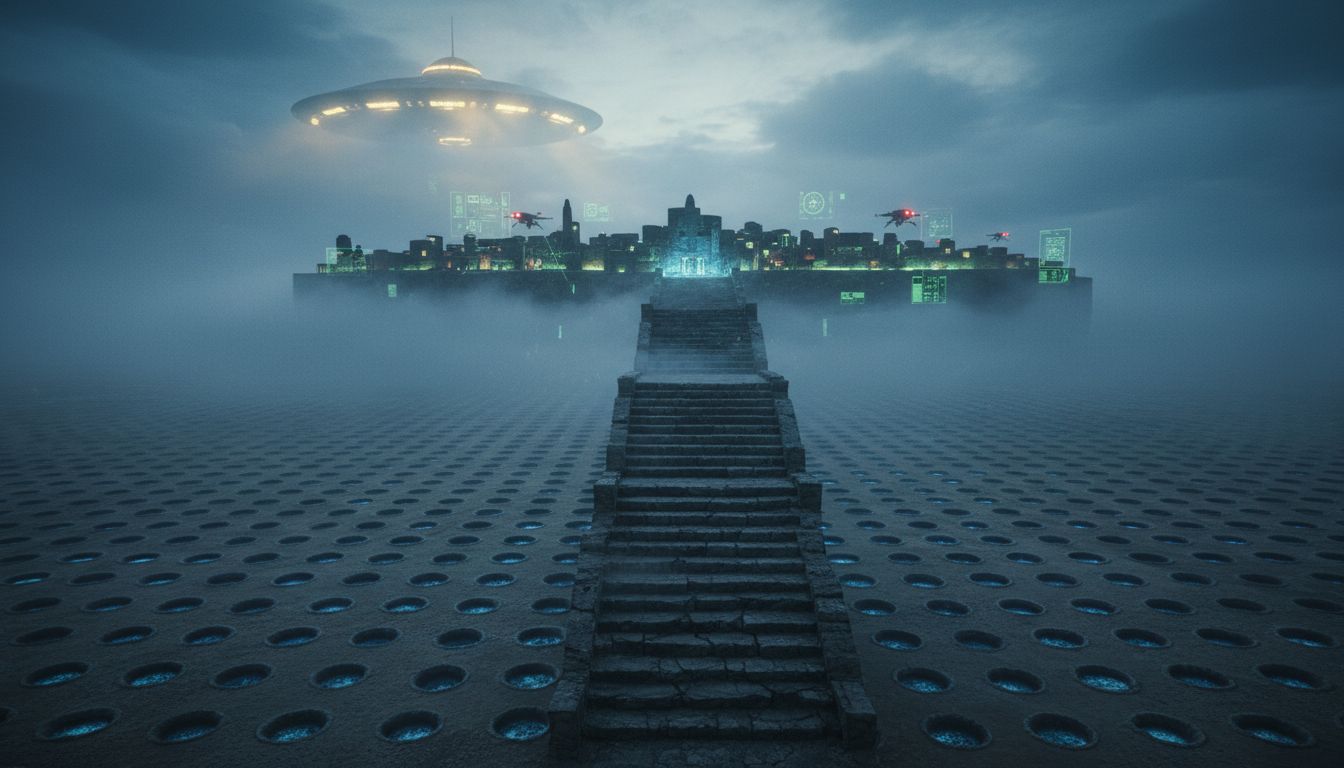
High in the Cordillera Blanca, a network of 5,200 shallow pits etched into volcanic rock had long been linked to pre‑Inca ceremonial practices, with some hypothesizing a “sky‑fire” device that released fire‑like particles during solstices. In 2025, an international team headed by Dr. Luis Alvarez of the Pontifical Catholic University of Peru deployed multispectral drones to capture centimeter‑scale topography and collected sediment samples from the deepest cavities. Microbotanical analysis revealed a predominance of high‑altitude moss spores and pollen from Polylepis trees, indicating that the holes were likely water‑catchment wells used to harvest meltwater during dry seasons. “The distribution pattern aligns with ancient irrigation channels, not ritual sites,” Alvarez said. Radiocarbon dating of organic residues placed the construction between 800 – 1200 CE, coinciding with the expansion of the Wari and early Inca societies, suggesting a pragmatic engineering solution rather than a mystical one.
DNA Unveils the Life of an Austrian Chaplain
The third breakthrough emerged from the well‑preserved remains of a mummified chaplain discovered in a sealed crypt beneath St. Michael’s Abbey in Salzburg. Dr. Eva Schmid, a geneticist at the University of Vienna, extracted ancient DNA from hair, bone, and intestinal tissue, achieving a 98 % genome coverage—unusual for an 18th‑century specimen. The analysis confirmed the individual’s Austrian ancestry, refuting earlier speculation that he might have been a foreign missionary. Moreover, the genome displayed rare alleles associated with enhanced collagen stability, which, combined with the crypt’s low humidity and limestone walls, likely contributed to the natural mummification. “These genetic markers explain why the chaplain’s soft tissues remained intact for over two centuries, offering a rare window into the health and diet of clergy in the Habsburg era,” Schmid noted. Isotopic testing further revealed a diet rich in dairy and wheat, consistent with parish records from the 1740s.
Broader Implications
These three studies illustrate a growing trend in historical research: the convergence of field archaeology, remote sensing, and molecular biology to resolve questions once relegated to conjecture. By grounding reconstructions of Pompeii’s skyline in tangible architectural elements, scholars can better assess the social hierarchy and urban planning of the Roman world. The Andean water‑catchment hypothesis reshapes our perception of pre‑colonial engineering ingenuity, highlighting adaptive strategies to high‑altitude environments. Meanwhile, the chaplain’s genome adds a valuable data point to the sparse pool of European historical DNA, aiding future investigations into disease prevalence and population movement in the early modern period.
Looking Ahead
As technology continues to evolve, researchers anticipate even more precise reconstructions of the past. Dr. Rossi’s team plans to integrate augmented‑reality overlays of the Pompeian model into on‑site tours, while Dr. Alvarez’s group is expanding drone surveys to other unexplored Andean sites. Dr. Schmid hopes to apply her non‑destructive DNA extraction protocol to additional mummified remains across Europe, potentially mapping genetic trends over centuries. The 2025 breakthroughs underscore that, far from being static relics, ancient mysteries can be re‑examined and solved through collaborative, evidence‑based science—offering fresh narratives that enrich both academic discourse and public understanding.