Overview
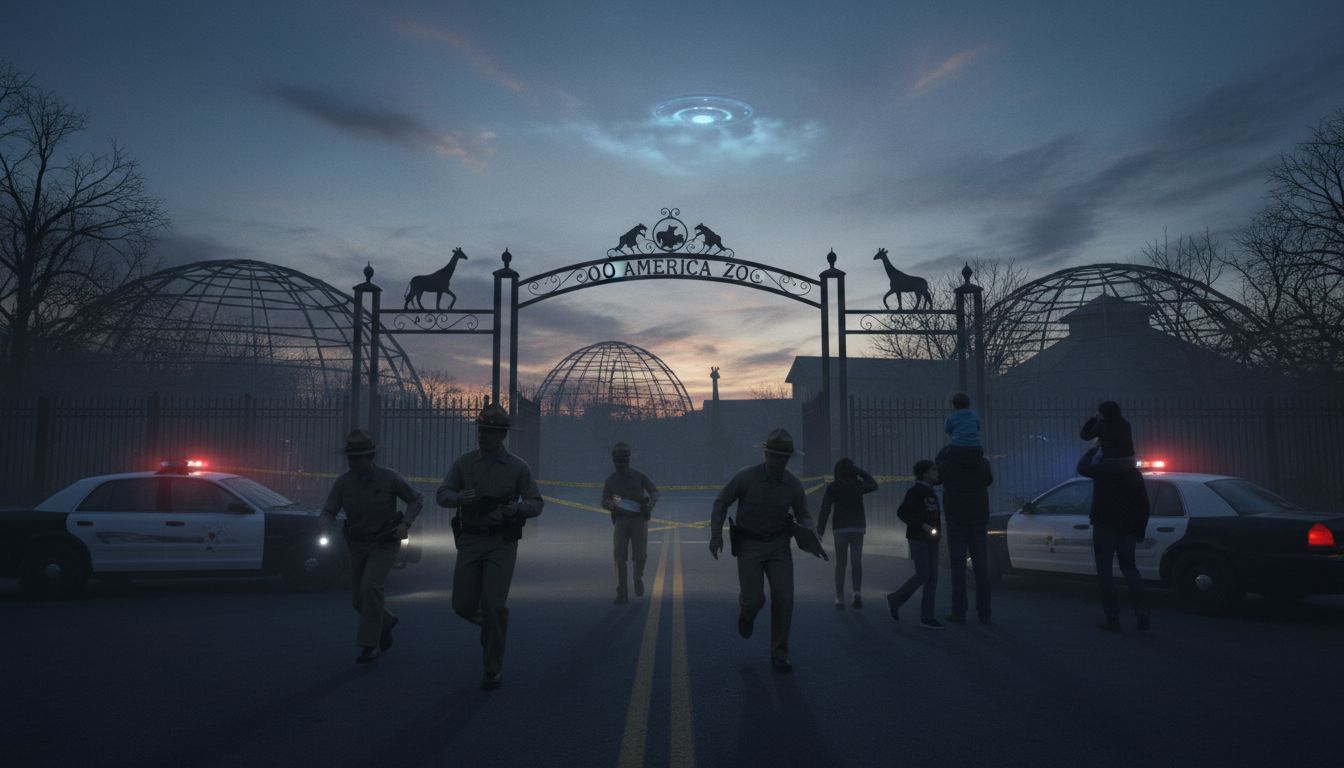
On May 2, 2026, a wave of anonymous phone calls reporting unidentified flying objects (UFOs) hovering over animal enclosures set off emergency protocols at multiple U.S. zoos. Staff at facilities in Texas, Ohio and California initiated evacuations and temporarily closed to visitors while law‑enforcement and wildlife officials assessed the alleged threat. Within hours, the calls were traced to pranksters, and the zoos reopened after authorities confirmed there was no danger to animals, staff or the public.
The Calls and Immediate Reaction
The first reports arrived at the Dallas Zoo just after 9 a.m., when a caller claimed to have seen a “bright, disc‑shaped object” hovering near the African savanna exhibit. Similar calls followed at the Columbus Zoo and the San Diego Zoo Safari Park, each describing “silent lights” and “unusual aerial maneuvers.” Zoo security teams, trained for potential wildlife‑related emergencies, followed standard “SWAT‑ting” procedures—securing dangerous species, moving visitors to safe zones, and notifying local police and the U.S. Department of Agriculture’s Animal and Plant Health Inspection Service (APHIS).
“Given the description, our first priority was the safety of both the animals and our guests,” said Dr. Maria Alvarez, director of animal safety at the Dallas Zoo. “We have clear guidelines for unknown aerial phenomena because, in the past, we’ve had incidents involving drones and aircraft that required rapid response.”
Protocols in Action
At each site, zoo personnel coordinated with emergency responders to establish perimeter control and conduct a visual sweep of the sky. The U.S. Fish and Wildlife Service assisted in confirming that no protected migratory birds or aircraft were present, while the Federal Aviation Administration (FAA) issued a temporary notice to pilots in the vicinity. “We treat any unverified aerial activity with the same seriousness as a potential security breach,” explained Special Agent Tom Reynolds of the FBI’s Counter‑Intelligence Division, which was called in to investigate the source of the calls.
The evacuations, though brief, required the temporary relocation of several large carnivores and primates to secure holding areas. Staff members worked through the night to ensure that all animals were accounted for and that exhibit environments remained stable.
Hoax Confirmation and Reopening
By late afternoon, the FBI’s cyber‑crime unit identified the calls as originating from a disposable‑phone network linked to a known prank‑calling ring. “The voice recordings showed a pattern consistent with previous hoaxes aimed at generating media attention,” the agency noted in a public statement. Local law enforcement has opened a misdemeanor investigation, and the callers face possible charges for false reporting that endangered public safety.
All three zoos resumed normal operations by the following morning. “We appreciate the patience of our visitors and the professionalism of our teams,” said Karen Mitchell, CEO of the Columbus Zoo. “Our primary concern is always the welfare of the animals, and we’re relieved that the situation was resolved without incident.”
Broader Implications
The incident underscores the challenges zoos face in an era of rapid information flow and sophisticated prank technologies. While the U.S. Department of Agriculture emphasizes that emergency response plans must account for a wide range of threats—including aerial objects—experts caution that repeated hoaxes could strain resources and erode public confidence. Wildlife biologist Dr. Ethan Patel of the University of Washington warned, “Repeated false alarms may lead to complacency, which is dangerous when genuine emergencies occur.”
Authorities are reviewing protocols to better differentiate between legitimate threats and hoaxes, including enhanced verification steps with FAA radar data and real‑time communication channels. As the investigation continues, zoo officials are urging the public to report any credible sightings through official channels rather than relying on anonymous tips. The episode serves as a reminder that even well‑intentioned pranks can have real‑world consequences for public safety and animal welfare.


