Overview
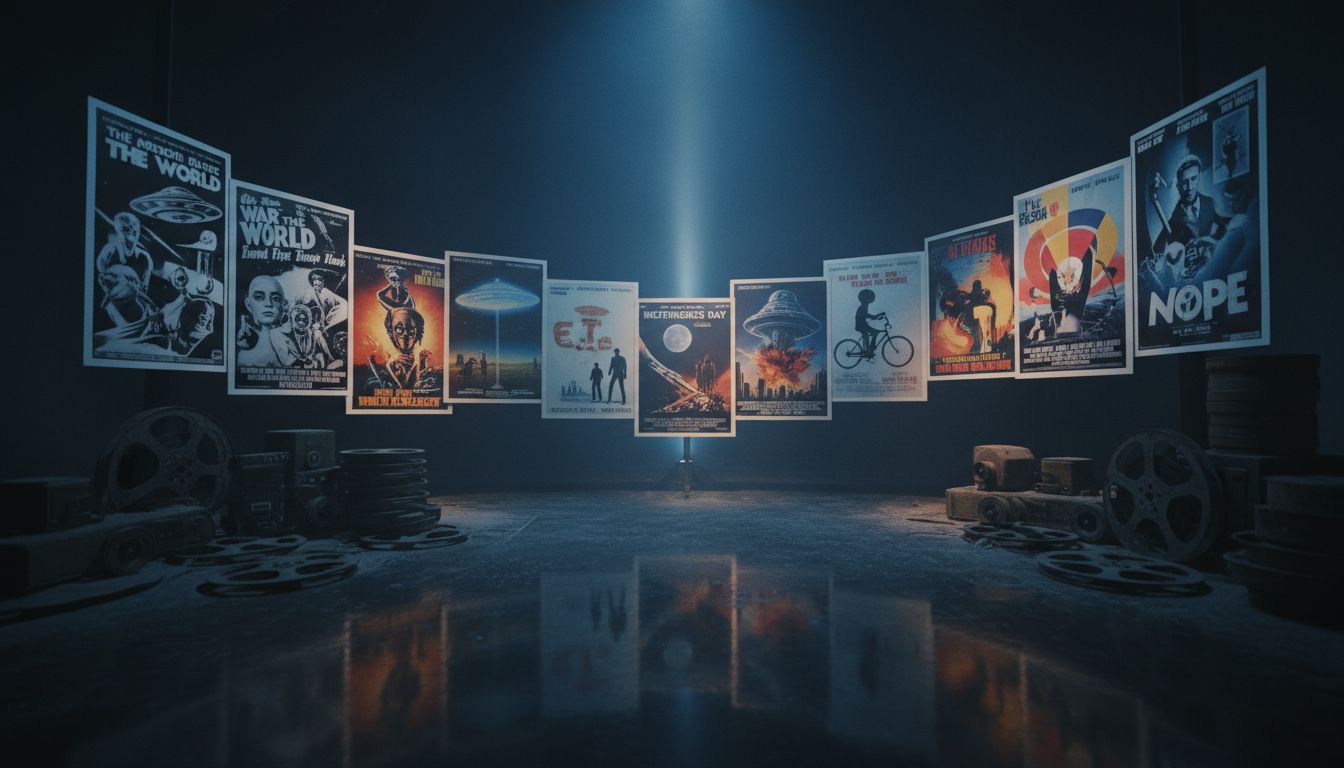
For more than eight decades, Hollywood has acted as both a mirror and a megaphone for America’s fascination with unidentified flying objects (UFOs) and extraterrestrials (ETs). From the black‑and‑white cautionary tales of the 1950s to today’s high‑budget thrillers that blend alleged government secrecy with cutting‑edge visual effects, the cinematic treatment of the unknown has evolved alongside shifting cultural anxieties. Media analyst Dr. Lena Ortiz of the University of Southern California notes that “film has long been a laboratory where collective fears—whether about nuclear war, surveillance, or technological overload—are dramatized through the alien other.”
Early Foundations: Science‑Fiction as Moral Allegory
The post‑World War II era gave rise to a wave of science‑fiction classics that framed UFOs as symbols of Cold‑War tension. “The Day the Earth Stood Still” (1951) portrayed an emissary from the cosmos warning humanity against self‑destruction, echoing contemporary dread of atomic annihilation. Similarly, “Invasion of the Body Snatchers” (1956) used alien replication as a metaphor for conformity and McCarthy‑era paranoia. These films, produced amid the 1947 Roswell incident and the burgeoning UFO craze, established a narrative template: extraterrestrials as either moral judges or existential threats, reflecting a society grappling with rapid geopolitical change.
The Space Age and Shifting Skepticism
The launch of Sputnik in 1957 and the Apollo moon landings of the 1960s broadened the public’s imagination of space travel, prompting Hollywood to explore more nuanced portrayals. “2001: A Space Odyssey” (1968) treated alien contact as an evolutionary catalyst rather than a hostile invasion, aligning with a period of scientific optimism. Yet the 1970s also saw a resurgence of dread‑laden narratives; “Close Encounters of the the Third Kind” (1977) blended awe with governmental secrecy, echoing growing distrust after the Watergate scandal. Film historian Mark Delaney observes that “the 1970s marked a pivot where UFOs shifted from allegorical villains to enigmatic messengers, mirroring a public yearning for wonder amid political disillusionment.”
Modern Conspiracy Era: From “The X‑Files” to Blockbuster Franchises
The 1990s introduced a new layer of conspiracy‑driven storytelling. Television’s “The X‑Files” (1993‑2002) popularized the notion of a hidden government cover‑up, a theme that migrated to cinema with titles such as “Independence Day” (1996) and “The Arrival” (1996). The 2000s added a darker tone: “War of the Worlds” (2005) and “District 9” (2009) portrayed alien contact as a catalyst for social upheaval and xenophobia, reflecting post‑9/11 anxieties about terrorism and immigration.
In the last decade, the release of the Pentagon’s declassified UAP videos (2020) and the subsequent “UFO disclosure” movement have reignited public interest. This real‑world development has been quickly absorbed by Hollywood, evident in the 2023 film “The Phenomenon” and the 2025 streaming series “UFO: Truth Unveiled.” Producer Maya Patel explains, “Audiences now demand a blend of entertainment and plausibility; the line between speculation and documented evidence has blurred, and studios are responding with narratives that feel both thrilling and credible.”
Impact on Public Perception
Scholars agree that cinematic depictions shape, and are shaped by, public opinion on UFOs and ETs. A 2024 Pew Research Center survey found that 58 % of Americans consider the existence of extraterrestrial life “likely,” a figure that has risen steadily since the 1990s. Researchers attribute part of this shift to the “cultural feedback loop” created by film and television, where dramatized secrecy fuels demand for transparency, which in turn inspires more media content.
Nevertheless, experts caution against conflating entertainment with empirical evidence. Astrophysicist Dr. Raj Patel of the SETI Institute emphasizes, “While movies spark curiosity, they also embed mythic tropes that can obscure scientific discourse. Critical media literacy is essential to separate artistic speculation from factual investigation.”
Looking Ahead
As Hollywood continues to mine the UFO phenomenon for storytelling, the industry appears poised to balance spectacle with the growing appetite for authenticity. Upcoming projects, such as the 2026 biopic “Roswell: The Untold Story,” promise to weave archival footage with dramatized narratives, reflecting a broader trend toward hybrid documentary‑fiction formats. Whether future portrayals will alleviate public anxiety or amplify it remains uncertain, but the symbiotic relationship between the silver screen and the collective imagination shows no sign of waning.