Overview
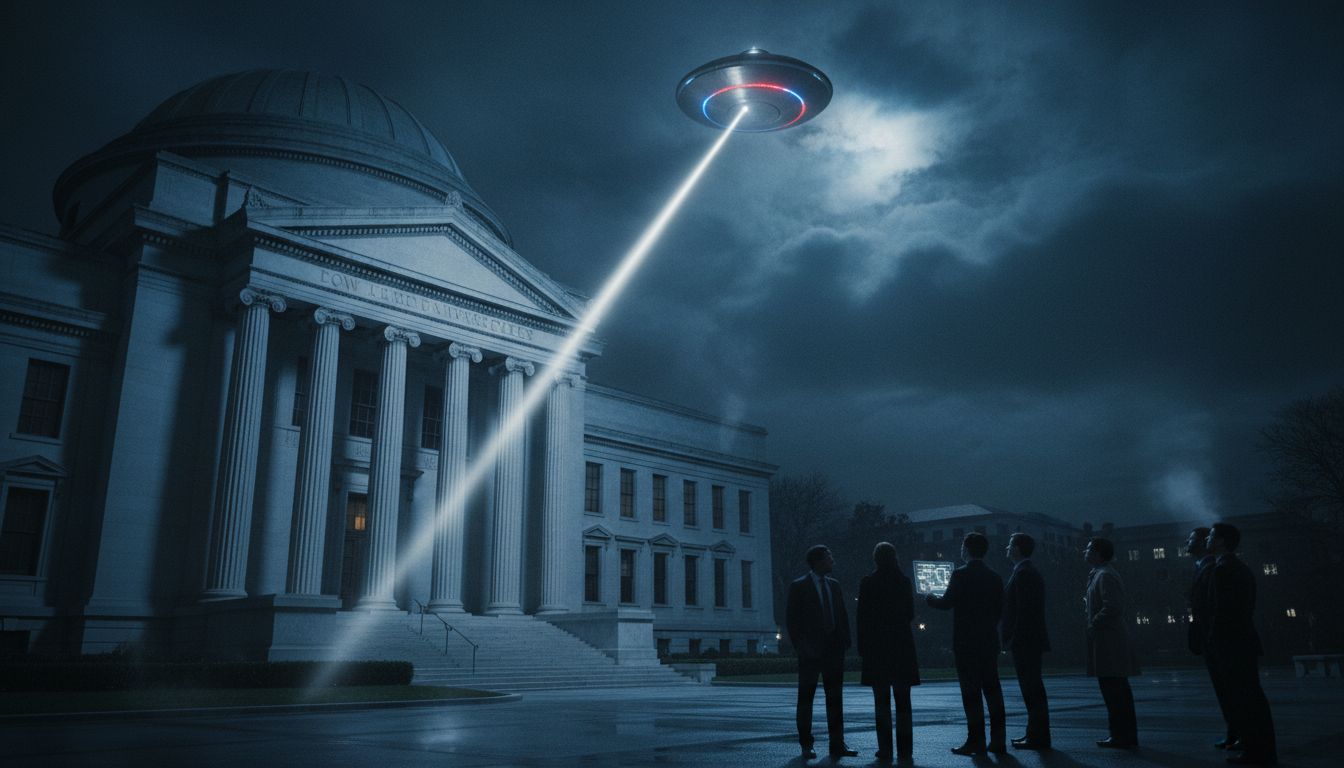
Columbia University is adding its voice to a long-running debate over unidentified flying objects, or UFOs, by arguing that sightings should not be dismissed out of hand. In a recent piece, the university frames the subject less as a matter of belief than as a question of scientific inquiry, asking how seriously such reports should be taken and what standards of evidence are needed before drawing conclusions. The central message is measured rather than dramatic: UFO sightings may not prove anything extraordinary, but they do warrant careful scrutiny.
The Columbia piece reflects a broader shift in how the topic is discussed in academic and policy circles. What was once often treated as fringe or purely speculative is increasingly being approached as a problem of data quality, observation, and analysis. That does not mean the sightings are being accepted as evidence of extraterrestrial technology or unusual phenomena. Instead, the emphasis is on the possibility that some reports may contain useful information that could be lost if they are dismissed too quickly.
Why the Question Matters
At the heart of the discussion is a simple but important scientific principle: unusual claims require solid evidence, but evidence cannot be evaluated if it is never properly collected. The Columbia article suggests that UFO sightings should be viewed through that lens. Many reports come from pilots, military personnel, and civilians who may observe something they cannot immediately identify. The problem, however, is that these accounts often lack the kind of supporting data—such as high-resolution imagery, sensor records, and corroborating measurements—needed for rigorous analysis.
That evidence gap is part of what makes the issue so difficult. A sighting may be genuine without being explainable from the information available, and a lack of explanation does not necessarily imply something extraordinary. Columbia’s framing appears to stress that uncertainty is not the same as proof. In science, unexplained observations are often the starting point for further investigation, not the endpoint of a debate.
The Need for Better Data
The article’s broader point is that the conversation around UFOs will remain limited unless better data is gathered. Eyewitness testimony can be compelling, but it is rarely enough on its own to establish what was seen. Lighting conditions, distance, motion perception, and even stress can all affect human judgment. For that reason, the Columbia piece implicitly supports a more disciplined approach: improve collection methods, preserve raw data, and analyze incidents in a consistent way.
This approach is increasingly relevant as governments and researchers pay more attention to what is now often called UAP, or unidentified anomalous phenomena. Regardless of terminology, the same challenge remains—separating misidentification, sensor error, and genuinely unexplained events. Columbia’s contribution is to insist that the question deserves seriousness without sensationalism.
A Scientific, Not Speculative, Debate
Ultimately, Columbia University’s message is that UFO sightings should be treated as a scientific and evidence-based question, not a cultural joke or a foregone conclusion. That stance may not satisfy those seeking dramatic answers, but it does reflect how serious research is supposed to work. The most responsible position, the piece suggests, is neither disbelief nor certainty, but disciplined curiosity.
For now, the call is straightforward: look carefully, collect better evidence, and resist premature conclusions. In a field crowded with speculation, that may be the most important takeaway of all.