Overview
Maruoka Castle in Fukui Prefecture is among Japan’s oldest surviving castles—and, according to local legend, one of the country’s most enduring stories of human sacrifice. The tale centers on hitobashira, a practice described in historical and folkloric accounts as the burial of a person beneath a major structure to protect it from collapse, disaster, or attack. The subject was recently revisited in a paranormal exploration feature from Hidden Paths Kyoto, published March 30, 2021, as part of a series examining unexplained phenomena in Japan.
Hitobashira is often translated as “human pillar.” Stories associated with the practice connect it to castles, dams, bridges, and other structures, particularly during Japan’s medieval period. However, the extent to which such sacrifices were actually carried out remains difficult to establish. Many accounts survive as oral traditions, local legends, or later written retellings rather than as independently verified historical records.
The Legend of O-shizu
The Maruoka Castle story dates to the castle’s construction in 1576, when Shibata Katsutoyo—a nephew of the prominent warlord Shibata Katsuie—was reportedly overseeing the project. According to the legend, the stone wall supporting the castle keep repeatedly collapsed. One of Katsutoyo’s vassals allegedly proposed a human sacrifice to appease whatever forces were believed to be responsible for the failures.
A poor, one-eyed woman named O-shizu is said to have volunteered. She reportedly had two sons and agreed to be buried alive beneath the wall on the condition that one of them would eventually be made a samurai. The story says she was positioned beneath the central section of the structure while stones were placed around and above her, crushing her to death. Afterward, the wall supposedly remained stable.
The account also says that Katsutoyo failed to honor his promise. He was transferred to another province, and O-shizu’s son never received the position she had been promised. In the years that followed, local tradition attributed heavy spring rains and flooding of the castle moat to O-shizu’s grieving spirit. The phenomenon became known as “the rain caused by the tears of O-shizu’s sorrow.”
A Restless Spirit and a Historic Site
According to the tradition, a small tomb was built to calm O-shizu’s spirit. A poem associated with the story links the annual rains during the season when algae was cut from the moat to her continuing sadness: “The rain which falls when the season of cutting algae comes / Is the rain reminiscent of the tears of the poor O-shizu’s sorrow.” The verse has helped preserve the legend as part of the cultural memory surrounding the castle.
There is no presented archaeological evidence confirming that O-shizu existed or that a person was buried beneath Maruoka’s walls. Researchers and historians generally treat hitobashira narratives cautiously, recognizing that they may reflect religious beliefs, construction anxieties, social memory, or later storytelling rather than documented events. The supernatural interpretation likewise remains a matter of folklore, not established fact.
Maruoka Castle Today
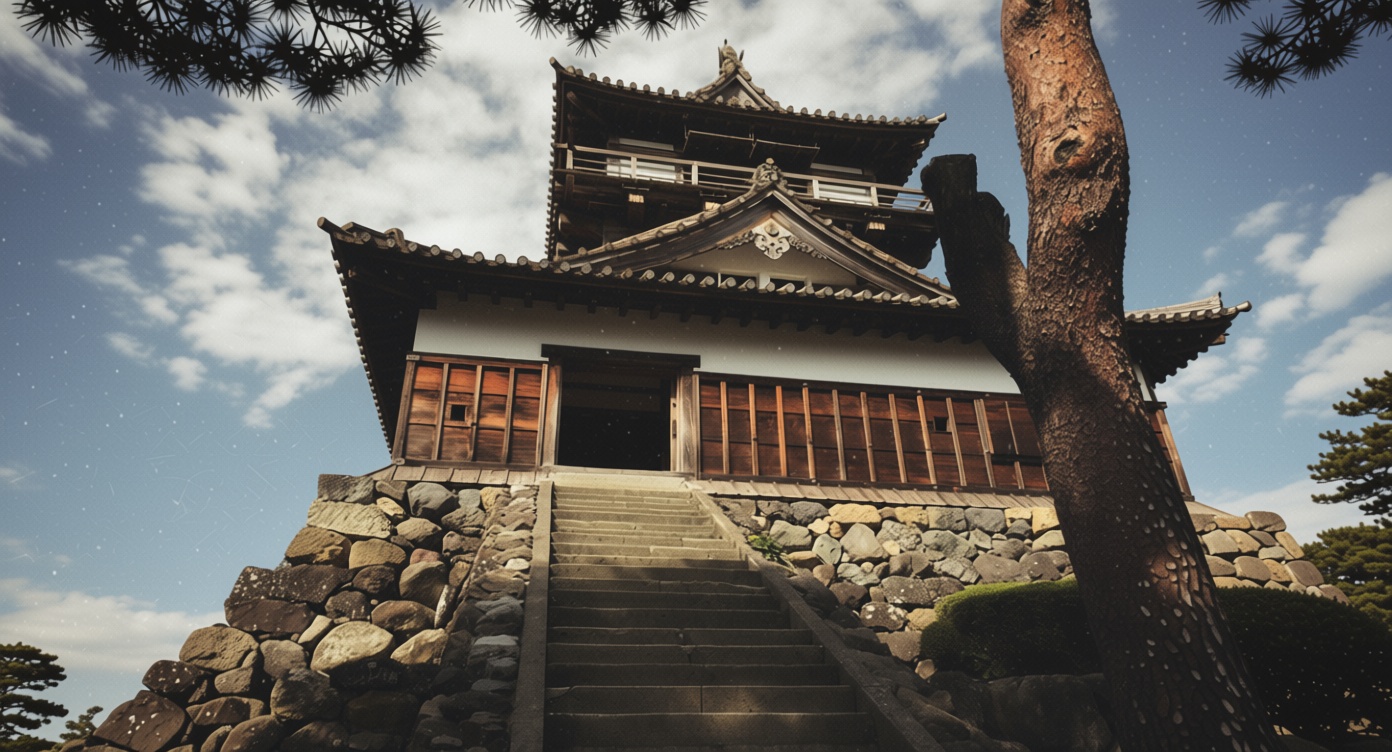
Maruoka Castle is notable for retaining its original tenshu, or castle keep, making it one of only twelve castles in Japan recognized as preserving an original structure of this kind. Visitors can enter the keep and climb to the upper floors via a steep ladder and rope. The former castle grounds now form part of Kasumigajo Park, where remnants of the ramparts and moats remain alongside a museum displaying weapons, armor, and household objects connected to the castle’s former lords.
The site is also known for its cherry trees and an annual blossom festival held during the first three weeks of April. More than 300 paper lanterns illuminate the park in the evenings. Against this historic and scenic setting, the story of O-shizu continues to give Maruoka Castle a darker dimension—linking its architectural survival to a legend of broken promises, seasonal rain, and a spirit said to remain unsettled.