Overview
Former President of Russia’s Kalmykia republic, Kirsan Ilyumzinov, has publicly claimed that he was abducted by an unidentified flying object (UFO) while conducting official business in his office. In a televised interview aired on December 31, 2025, Ilyumzinov said he experienced a “brief but intense encounter” that lasted several minutes before he was returned to his desk. He added that “world leaders have known the truth for decades,” implying a coordinated, long‑standing concealment of extraterrestrial contact. The allegation arrives amid a growing wave of UFO‑related disclosures worldwide, prompting renewed scrutiny from governments, researchers, and the media.
The Allegation and Its Details
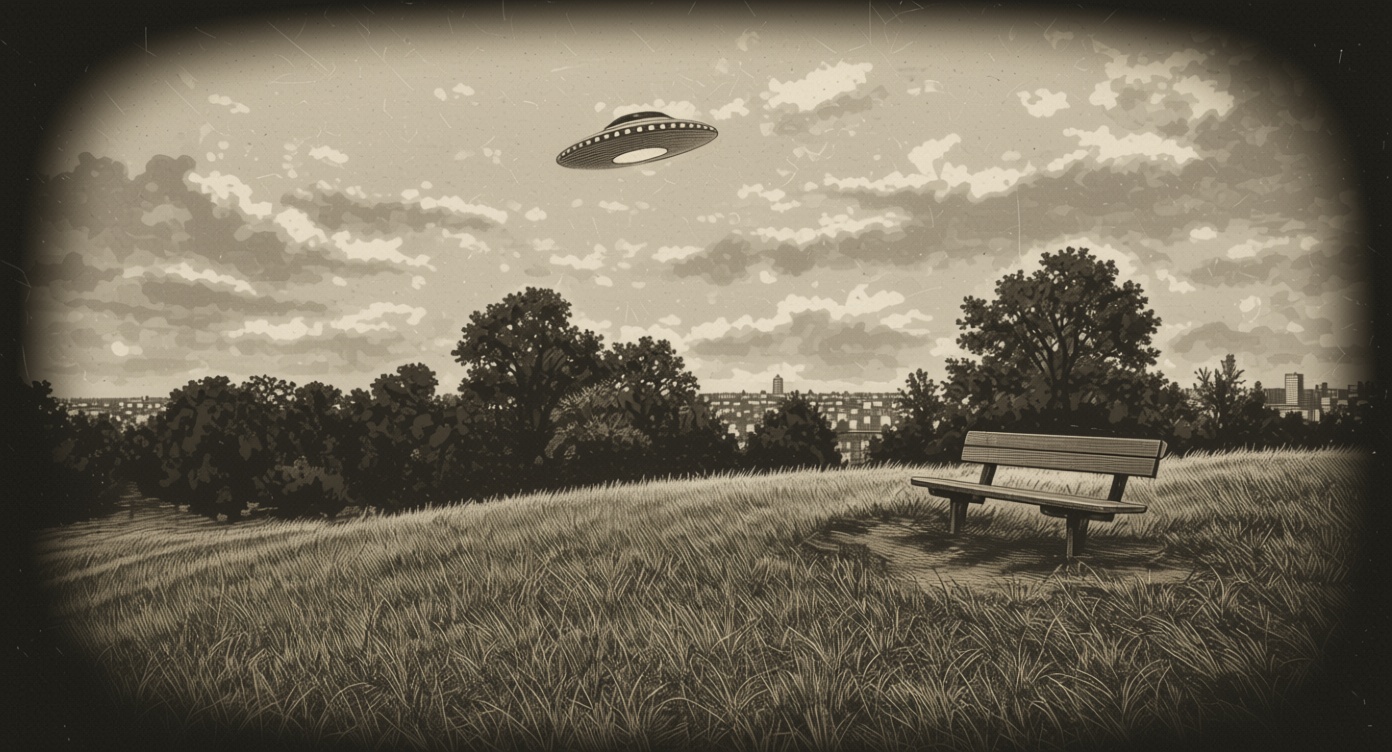
Ilyumzinov described the incident as occurring on a “quiet Tuesday morning” when a luminous disc entered the window of his regional administration building in Elista. According to his account, the craft hovered, emitted a low hum, and a “bright beam” lifted him from his chair. He reported seeing “no discernible crew, only a shimmering interior,” and after what he described as “a few minutes of disorientation,” he found himself back at his desk, with his paperwork untouched.
In the interview, he stated:
“I was taken while I was still in office. When I returned, the clock on the wall showed only a few seconds had passed, yet I felt as though I had been elsewhere for an eternity.”
He further alleged that “the Kremlin, the White House, and other capitals were briefed after the event,” suggesting a hidden diplomatic consensus on the existence of extraterrestrial visitors. No documentary evidence, such as video footage or official logs, has been released to substantiate the claim.
Historical Context of UFO Disclosure
Ilyumzinov’s statements echo a series of long‑standing rumors about high‑level UFO cover‑ups. Historians have cited alleged British Prime Minister Winston Churchill’s 1947 memorandum that purportedly warned of “a possible aerial threat of non‑human origin,” though no original document has been verified. In the United States, the Department of Defense (DoD) has gradually declassified material on unidentified anomalous phenomena (UAP), most notably the 2021 Pentagon report that acknowledged 144 incidents lacking conventional explanations.
Recent developments include the DoD’s delayed release of a 2023 “UAP Task Force” dossier, which was postponed after internal reviews raised concerns about national security implications. Meanwhile, civilian investigators such as Dr. Jacques Vallée and former Navy pilot Luis Elizondo have continued to publish testimonies describing encounters with craft exhibiting advanced propulsion and flight characteristics beyond known technology.
Official Responses and Ongoing Investigations
The Russian Ministry of Foreign Affairs issued a brief statement on December 30, noting that “the government respects the personal experiences of its former officials” but declined to comment on the specifics of Ilyumzinov’s claim. In Washington, a spokesperson for the Office of the Director of National Intelligence (ODNI) reiterated that “the United States remains committed to transparent reporting on UAPs, consistent with existing policy and classification guidelines,” without confirming any knowledge of the Kalmykian incident.
Academic bodies, including the International Center for Aeronautics Research (ICAR), have announced a new collaborative study to assess “the psychological and physiological effects reported by individuals claiming extraterrestrial contact.” The study will employ neuroimaging and biometric monitoring to differentiate between potential hoaxes, misidentifications, and genuine anomalous experiences.
Reactions and Outlook
Analysts caution that extraordinary claims require extraordinary evidence. UFO researcher Dr. John Baker of the Mutual UFO Network (MUFON) remarked, “While Ilyumzinov’s political stature adds a layer of intrigue, the absence of corroborating data means the claim remains speculative.” Conversely, some political commentators argue that the growing chorus of high‑profile testimonies could pressure governments to release more comprehensive information.
The episode underscores a broader trend: a shift from secrecy toward incremental openness on UAP matters, driven by public interest, legislative inquiries, and advances in sensor technology. Whether Ilyumzinov’s account will prompt further declassification or remain an isolated anecdote is uncertain, but it reinforces the need for rigorous, multidisciplinary inquiry into phenomena that challenge conventional scientific understanding.