Overview
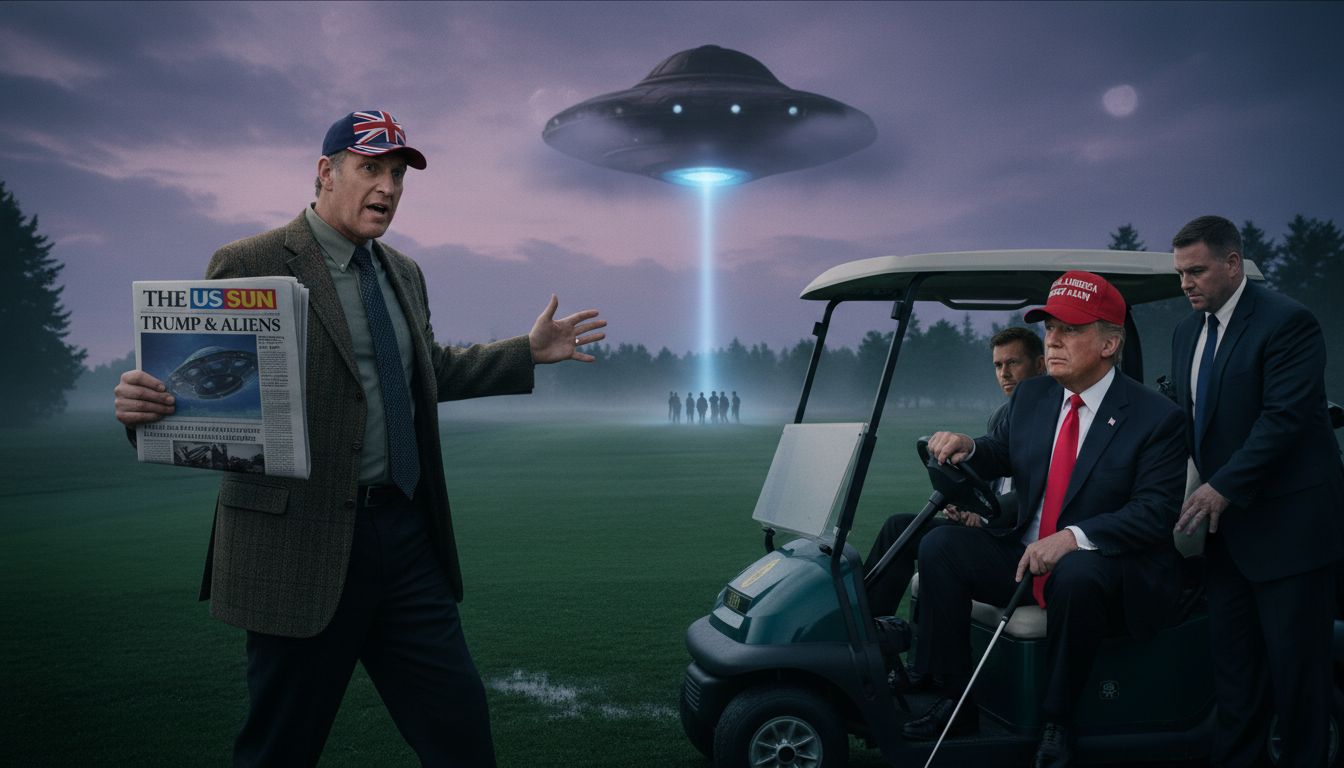
Former British Transport Police detective Gary Heseltine, now a full‑time UFO investigator, has publicly urged former U.S. President Donald Trump to accelerate the release of government material on unidentified aerial phenomena (UAP). Heseltine, who retired from policing in 2013 to pursue what he calls “UFO hunting,” sees Trump’s recent directive to U.S. agencies as a potential turning point for transparency on alleged extraterrestrial evidence.
Heseltine’s Background
Heseltine, 65, spent 24 years with the British Transport Police, primarily as a detective constable, before leaving the force to focus on UFO research. He has positioned himself as a leading authority on the Rendlesham Forest incident of December 1980, when U.S. Air Force personnel reported multiple unexplained lights over RAF Bentwaters and RAF Woodbridge in Suffolk. In interviews, Heseltine describes his work as “investigating credible witness testimony and physical evidence” rather than promoting speculation. He says his motivation is “to bring rigor and documentation to a field that has long been dismissed by mainstream agencies.”
Trump’s Announcement
On February 20, 2026, Trump announced via a public statement that he would direct the Department of Defense and other agencies to “begin the process of identifying and releasing” files related to aliens and UAP. The comment followed a recent podcast appearance in which Trump said “aliens are real,” a remark that quickly went viral before he clarified that he had not personally seen any evidence. While the president’s order does not explicitly call for full declassification, Heseltine notes that it “signals a sitting President is authorising the release of government UFO/UAP files,” a move that could set a precedent for broader disclosure.
Reactions from the UFO Community
Heseltine welcomed the development but remains cautious. “The statement is significant because it comes from the highest office in the United States,” he told The Sun, “yet it makes no mention of declassifying all material.” He likens the potential release to the public exposure of the Epstein files, suggesting that congressional pressure could compel agencies to share more than selective excerpts. Congressional Representative Anna Paulina Luna has already signaled intent to meet with the FBI to discuss videos shown to her during briefings, further indicating that lawmakers are beginning to treat UAP investigations as a legitimate oversight issue.
Congressional and Policy Implications
U.S. lawmakers have increasingly demanded accountability regarding UAP investigations. In recent months, the Senate Intelligence Committee has requested a comprehensive inventory of UAP sightings and related analyses. Heseltine argues that “Members of Congress should feel empowered to pursue the release of ‘secret’ government files,” emphasizing that transparency could help separate credible data from myth. Analysts note that any formal declassification would likely be subject to national‑security reviews, meaning that while some footage and reports may become public, more sensitive technical assessments could remain classified.
Outlook
The convergence of a high‑profile political figure’s call for openness and the activism of dedicated investigators like Heseltine may reshape the public conversation on UFOs. If the Trump administration follows through, the next steps will involve inter‑agency coordination, potential congressional hearings, and a careful balance between national‑security concerns and public interest. As Heseltine puts it, “The real X‑files will reveal ‘out‑of‑this‑world’ revelations only if the evidence is allowed to speak for itself.” The coming weeks will reveal whether that promise translates into concrete releases or remains a rhetorical gesture.


