Overview
A new feature on Phys.org examines the surprisingly diverse network of people who devote time, money and scientific‑style rigor to the search for Bigfoot. The investigation, conducted by a research team at Cardiff University and reviewed by Science X editors Gaby Clark and Andrew Zinin, concludes that while the legendary creature is unlikely to be a living, undiscovered hominid, the myth functions as a cultural touchstone for thousands of Americans. The article situates the phenomenon within a broader context of folklore, identity and community‑building, rather than presenting it as a straightforward cryptozoological mystery.
Who Is Involved
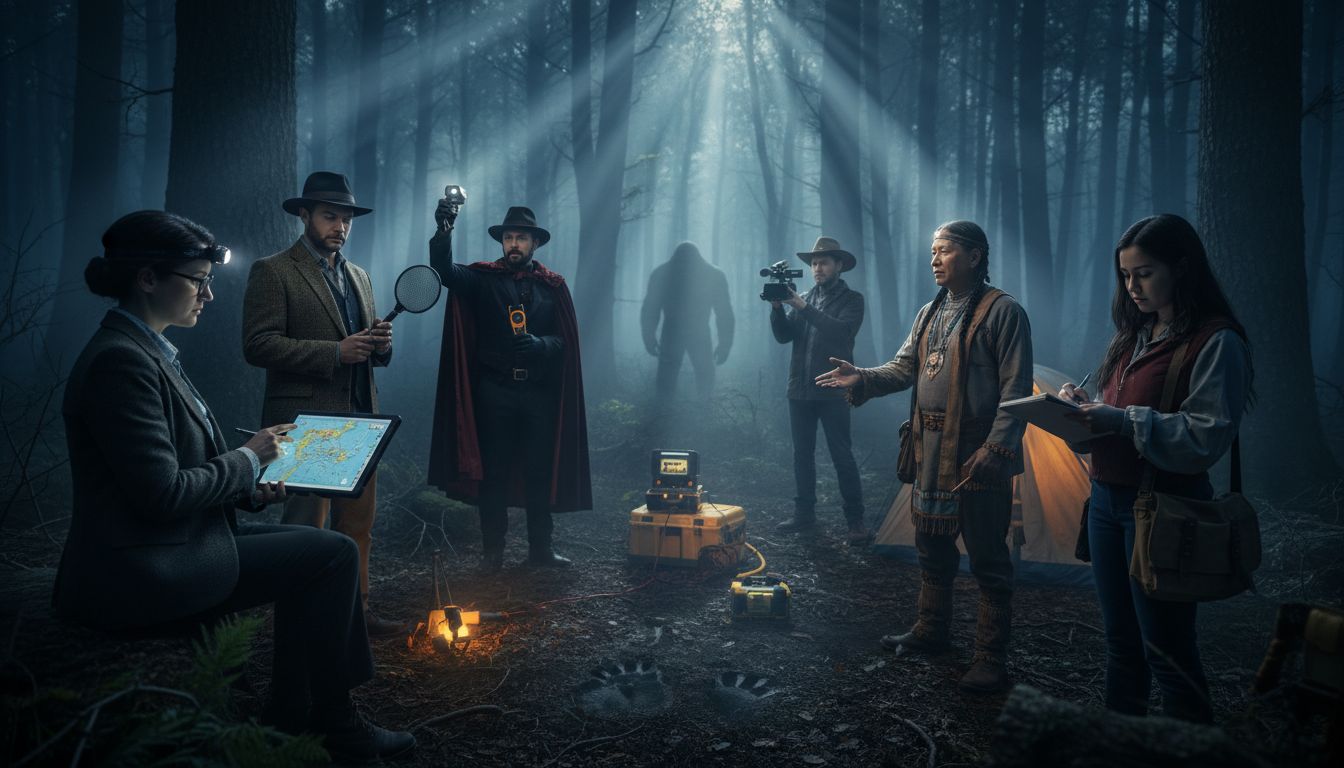
The “Bigfoot community” is far from monolithic. It includes university professors of anthropology and ecology who treat field reports as data sets, visual artists who render speculative anatomy, and professional skeptics who apply statistical analysis to sighting logs. Indigenous elders from the Pacific Northwest, where many tribal stories reference “hairy men,” contribute oral histories that pre‑date modern media portrayals. Even entertainers—documentary filmmakers, podcast hosts and reality‑TV personalities—join the effort, often acting as bridges between academic researchers and the public. As one participating folklorist explained, “We’re not chasing a monster; we’re tracing a story that has traveled across generations and media.”
Methods and Findings
Researchers documented a range of investigative practices that mirror conventional scientific protocols. Field teams conduct systematic transect walks, set up motion‑triggered cameras, and collect environmental DNA (eDNA) samples from remote forest streams. Data are logged in shared databases, allowing cross‑regional comparison of footprints, hair specimens and audio recordings. Yet, after years of coordinated effort, the team found no verifiable physical evidence that meets the standards of a new species description. “The lack of reproducible, peer‑reviewed findings suggests that Bigfoot, as a biological entity, is highly improbable,” the lead author wrote. Nonetheless, the process has yielded valuable ancillary outcomes, such as refined methods for monitoring elusive wildlife and increased public engagement with field biology.
Cultural Impact
Beyond the empirical results, the study emphasizes Bigfoot’s role as a symbolic construct. For many rural communities, the legend provides a sense of mystery and a narrative that ties people to their environment. Indigenous participants note that the creature often overlaps with traditional guardians of the forest, reinforcing stewardship values. In urban settings, the myth fuels a subculture of hobbyist explorers who organize “Bigfoot festivals,” produce merchandise, and sustain online forums where anecdotes are exchanged. Psychologists cited in the article argue that belief in such entities can serve as a coping mechanism, offering a shared mythic framework during periods of social uncertainty.
Looking Ahead
The researchers propose shifting the focus of future projects from proving the creature’s existence to studying the sociocultural dynamics that sustain the legend. Planned interdisciplinary workshops will bring together anthropologists, ecologists, media scholars and indigenous knowledge holders to map how the story evolves across digital platforms. Funding bodies have shown interest in supporting these collaborative models, recognizing their potential to enhance science communication and community outreach. As one veteran field researcher summed up, “Whether or not Bigfoot walks the woods, the pursuit itself walks us toward a deeper understanding of how myths shape real‑world behavior.”
The article underscores that the allure of Bigfoot endures not because of concrete evidence, but because the mystery connects people across disciplines, cultures and generations—a testament to the power of folklore in the modern scientific landscape.


