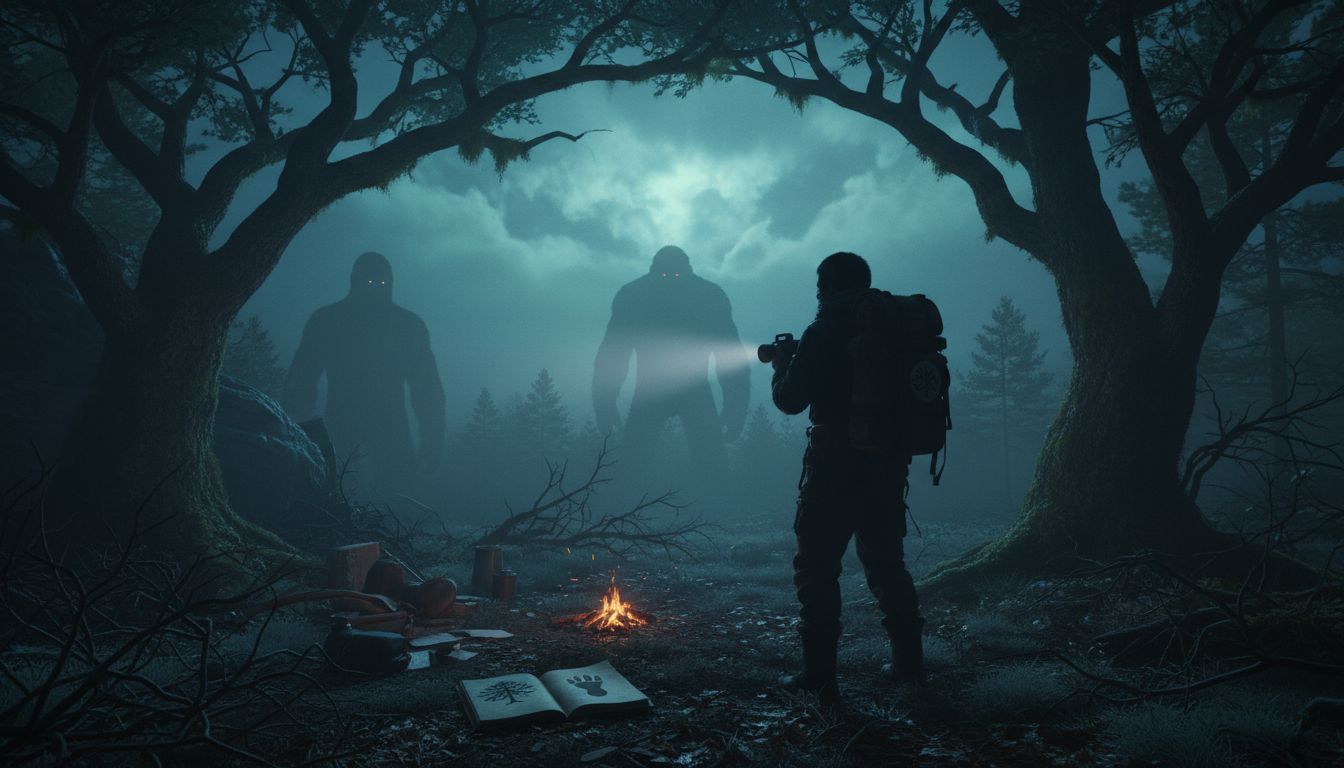
The belief in Bigfoot, or “Sasquatch,” has long occupied a space that straddles folklore, science and popular culture, and recent developments suggest the myth is being reshaped to address contemporary concerns. In a recent opinion piece for the Cody Enterprise, commentator LaRonn Katchia argues that the creature’s appeal “goes beyond the norm” because it offers a collective narrative that blends mystery with a yearning for wilderness preservation. “When people talk about Bigfoot they’re not just chasing a monster; they’re reaching for a symbol of something we feel we have lost,” Katchia wrote, framing the legend as a cultural touchstone that can inspire environmental stewardship.
Katchia’s perspective is the centerpiece of his new documentary, Bigfoots: Guardians of the Wild, which premiered at the Jackson Hole Film Festival last week. The film follows researchers, Indigenous storytellers and conservationists as they explore how the Bigfoot story can serve as a rallying point for protecting remote forest ecosystems. “We’re not trying to prove the creature exists,” says director Katchia in a recent interview, “we’re using the myth to remind people that there are still places on this planet that are wild enough to inspire wonder.” The documentary weaves together archival footage of alleged sightings, interviews with anthropologist Jeff Meldrum—who appears posthumously through archival clips—and on‑the‑ground footage of habitat restoration projects in the Pacific Northwest.
The film’s release coincides with a notable moment in Bigfoot scholarship: the New York Times published an obituary for Jeff Meldrum, the University of Idaho State professor whose career was defined by a rigorous, though controversial, scientific inquiry into the phenomenon. Meldrum, who died at 73, was best known for his 2006 book Sasquatch: Legend Meets Science, which catalogued footprints, eyewitness accounts and photographic evidence while urging mainstream scientists to apply standard field methods to the study of unexplained primates. “Jeff was a bridge between the fringe and the academy,” the Times noted, emphasizing his willingness to entertain unconventional data without abandoning methodological rigor.
Meldrum’s legacy, while polarizing, underscores a broader trend: the persistence of Bigfoot belief reflects deeper social currents. Sociologists have pointed to the creature’s role as a “modern totem,” a figure that embodies humanity’s ambivalence toward nature—both as a source of fear and a well of hope. In the wake of climate anxiety, the legend offers a narrative that can be repurposed for activism. Environmental groups cited in Katchia’s documentary have begun using the Bigfoot motif in campaigns to protect old‑growth forests, arguing that the myth’s allure can attract public attention to otherwise overlooked conservation issues.
Critics caution against conflating myth with policy, warning that sensationalism can distract from evidence‑based solutions. Yet the convergence of scholarly tribute, artistic storytelling and grassroots advocacy suggests that the Bigfoot phenomenon is evolving from a fringe curiosity into a cultural catalyst. Whether the creature ever steps out of the shadows, its symbolic weight appears to be growing, prompting both scholars and activists to reconsider how legends can be harnessed to safeguard the very landscapes that birthed them.