On 16 December 2017 the New York Times began a series of investigative reports that lifted the veil on a long‑running, classified effort inside the U.S. Department of Defense. The Advanced Aerospace Threat Identification Program (AATIP), based on the Pentagon’s fifth floor, had been collecting and analysing “unidentified aerial phenomena” (UAP) for years, producing footage of objects that moved with speeds and maneuvers that defy conventional aeronautical explanations. One of the most widely cited clips shows a white, Tic‑Tac‑shaped craft darting over the ocean, a sight later echoed in a 2025 congressional hearing where a similar object appeared to deflect a Hellfire missile fired from a drone off the coast of Yemen. The Pentagon’s own releases, coupled with testimonies from senior military officers, have cemented the reality that UAPs are being studied at the highest levels of government, even if the nature of the phenomena remains unresolved.
The modern fascination with UAPs has a surprising historical echo in the late‑19th century, when a handful of astronomers announced the discovery of “canal‑building” aliens on Mars. Giovanni Schiaparelli’s 1877 sketches of linear features, later termed “canali,” were misread by English‑speaking observers as artificial canals, prompting Percival Lowell and others to publish elaborate theories that a technologically advanced Martian civilization was engineering its planet’s climate. Lowell’s popular books, illustrated with imagined Martian cities and machines, captured the public imagination and spurred a wave of speculative fiction, museum exhibits, and even early scientific debates about extraterrestrial engineering. Though later shown to be optical artifacts and the result of a visual illusion, the episode demonstrates how a scientific claim—however tenuous—can steer cultural and technological narratives for decades.
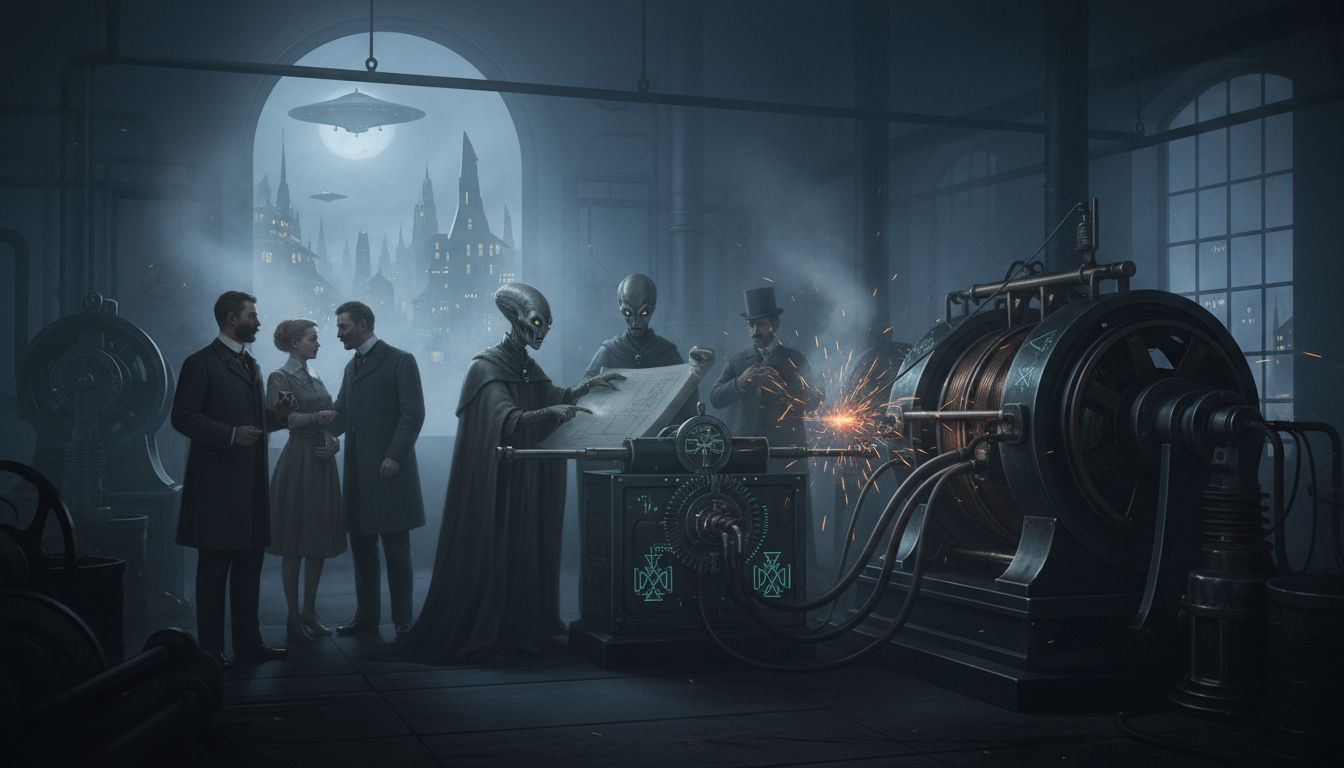
Proponents of the “alien engineers” hypothesis argue that the same pattern repeats today: that extraterrestrial visitors have subtly guided pivotal shifts in human technology and culture. They point to the convergence of rapid advances in radio, electricity, and aviation in the 1880‑1900 period, suggesting a hidden hand accelerated progress. The Aeon essay that sparked renewed discussion links these 19th‑century ideas to contemporary UAP investigations, asserting that the “collective shrug” of the public—despite widespread belief in intelligent life beyond Earth—mirrors the historical complacency that allowed speculative Martian theories to flourish without rigorous scrutiny.
Skeptics caution against drawing causal lines from ambiguous sightings to sweeping historical reinterpretations. Dr. Emily Ramirez, a historian of science at the University of Chicago, notes that “the canal‑building episode was a product of its time: limited telescopic resolution, a cultural appetite for adventure, and the nascent field of planetary astronomy.” She adds that “while modern UAP data are more robust—thanks to radar, infrared, and multiple sensor platforms—the leap from unexplained flight characteristics to the notion of alien engineers remains speculative without verifiable artifacts or reproducible evidence.” Likewise, the U.S. Office of the Director of National Intelligence’s 2021 assessment described UAPs as “a security concern” but stopped short of attributing them to non‑human origin.
Nevertheless, the convergence of historical precedent and present‑day transparency has reignited public debate about the implications of potential extraterrestrial contact. A 2021 Pew Research poll found that more than half of Americans believe UFOs likely confirm intelligent alien life, yet a similar proportion view the issue as a low‑priority national security matter. Lawmakers, prompted by the 2025 video release, have called for expanded inter‑agency reporting and a clearer framework for scientific analysis, echoing the earlier calls for openness that followed the 2017 NY Times series. As congressional committees deliberate, the dialogue now includes not only defense officials but also astronomers, ethicists, and historians who remind policymakers that past “alien engineer” narratives have shaped public expectations as much as they have reflected the limits of contemporary knowledge.


