Overview
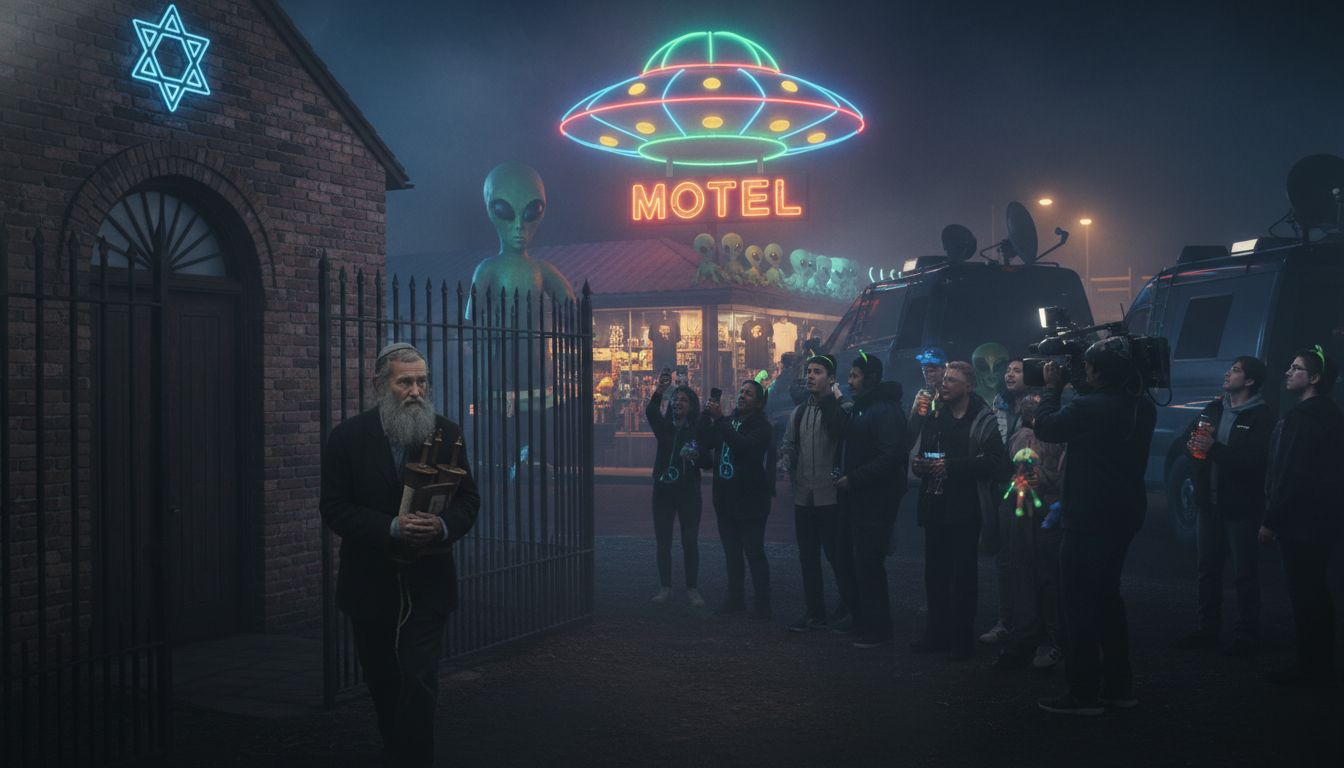
Roswell, New Mexico — the site of the infamous 1947 incident that sparked worldwide fascination with unidentified flying objects—has increasingly turned its historic downtown into a UFO‑themed tourist hub. Over the past decade, the town’s economy, branding and public spaces have been reshaped to cater to alien‑enthusiasts, UFO‑research groups and pop‑culture tourists. At the same time, Roswell’s once‑vibrant Jewish community, which dates back to the early 20th century, is dwindling. The closure of the town’s sole synagogue in 2023 and the departure of most of its remaining families underscore a cultural shift that many longtime residents find bittersweet.
Economic Impact of UFO Tourism
The “Roswell UFO Festival,” now a ten‑day event each July, draws over 70,000 visitors and generates an estimated $12 million in local revenue, according to a 2024 economic impact study commissioned by the Roswell Chamber of Commerce. “Our downtown storefronts are filled with alien‑themed merchandise, from glow‑in‑the‑dark T‑shirts to replica crash‑site models,” said Maria Delgado, owner of the popular “Alien Alley” gift shop. The city has invested $3.2 million since 2019 in signage, a revamped visitor center, and a new exhibit at the International UFO Museum & Research Center, which now averages 150,000 annual visitors.
These investments have created jobs in hospitality, retail and event management, helping to offset the decline of traditional sectors such as agriculture and oil services. Yet some critics argue that the reliance on a single niche market makes the town vulnerable. “If the public’s fascination wanes, Roswell could face a sharp downturn,” warned Economic Development Director Luis Ortega during a recent council meeting.
Cultural Identity and Public Spaces
Roswell’s visual landscape reflects the alien craze: murals of stylized spacecraft adorn the side of the former train depot, and a “UFO Trail” of illuminated markers guides visitors past historic sites. The city’s official slogan, “Where the sky meets the unknown,” appears on municipal letterheads and tourism brochures. Local schools have incorporated UFO history into elective courses, and the public library now hosts a weekly “UFO Talk” series featuring researchers and former military personnel.
While many residents embrace the attention, others feel the town’s broader heritage is being eclipsed. Historian Dr. Evelyn Hart, who has documented Roswell’s multicultural past, noted, “The focus on extraterrestrials is fascinating, but it risks marginalizing the stories of the people who built this community—farmers, miners, and the Jewish families who contributed to its early civic life.”
The Fading Jewish Community
Roswell’s Jewish presence began in the 1920s with immigrants who opened grocery stores and helped establish the town’s first school. By the 1960s, the congregation had built a modest synagogue on Main Street, serving a peak membership of roughly 120 families. Today, only four families remain active, and the building was sold to a developer in 2023 after the congregation could no longer sustain regular services.
Rabbi Daniel Stein, who led the synagogue until its closure, reflected on the loss: “Our community was always small, but it was a place of continuity for families who felt at home in the desert. The younger generation moved to larger cities for education and employment, and the pull of the UFO economy didn’t provide the cultural anchor we needed.” The closure has also meant the loss of annual events such as the Hanukkah lighting at the town square, which had become a modest yet cherished interfaith tradition.
Outlook and Community Response
City officials acknowledge the need to balance the booming UFO sector with preservation of Roswell’s diverse heritage. In a recent town hall, Mayor Catherine “Cat” McAllister announced the formation of a “Cultural Preservation Committee” tasked with documenting and promoting the town’s non‑UFO history, including the Jewish legacy. Funding will be sought from state heritage grants and private donors.
Meanwhile, former synagogue members have organized a traveling exhibit titled “Stars Over Roswell: Jewish Life in the Desert,” scheduled to tour regional museums later this year. “We want people to know that Roswell’s story is about more than flying saucers,” said Miriam Gold, a former congregant and current project coordinator.
As Roswell continues to ride the wave of extraterrestrial curiosity, its residents grapple with the paradox of celebrating a mythic past while safeguarding the very real histories of the people who have called the town home for generations. The coming years will test whether the city can sustain its economic momentum without erasing the cultural threads that have long woven its community together.


