Overview
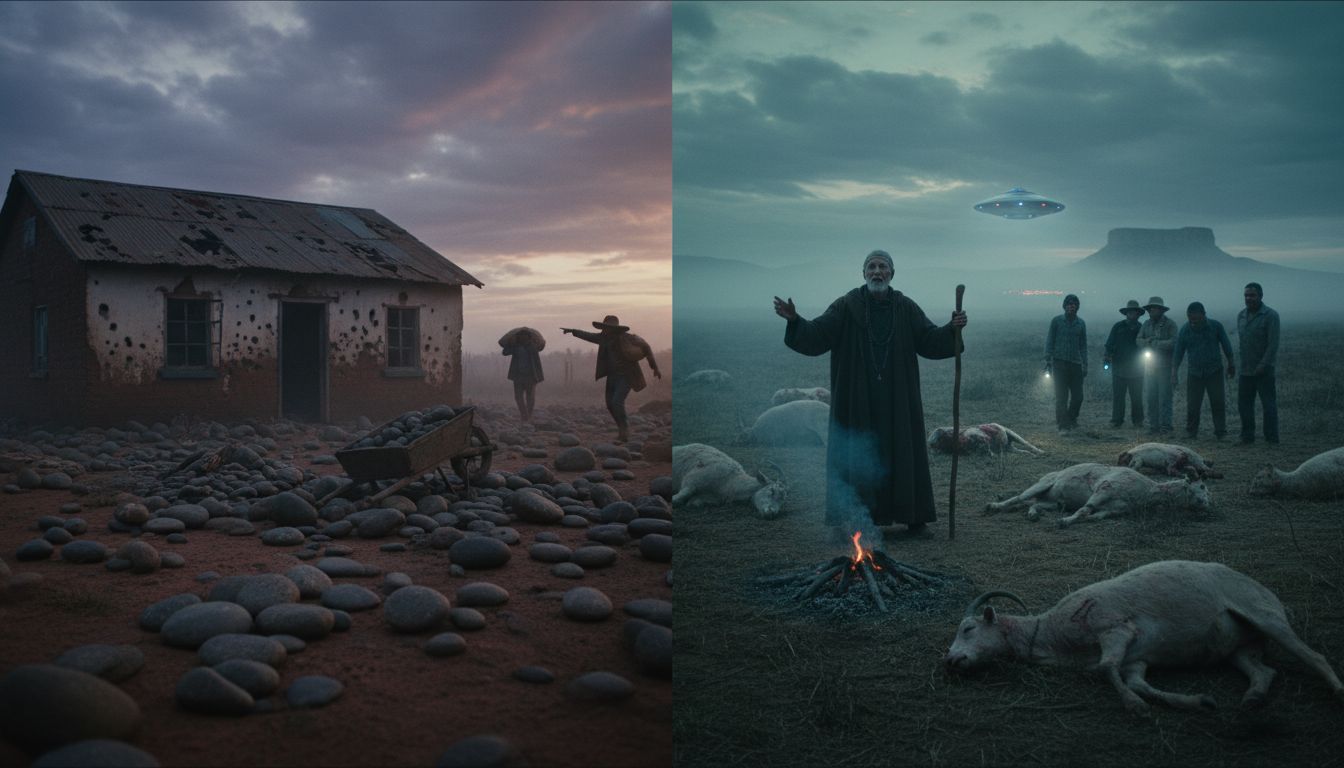
A series of unusual events has drawn attention to two distant locales this week. In Harare’s suburban outskirts, tenants of a modest rental property fled after enduring several days of unexplained stone showers that fell from the sky without an identifiable source. Simultaneously, in the Mexican state of Puebla, a small farm reported the deaths of ten turkeys and a pig, prompting local residents to revive Chupacabra folklore while authorities continue their investigation. Both incidents underscore the challenges faced by officials when confronting phenomena that lie at the intersection of the physical and the cultural.
Zimbabwe: Stone Rain Forces Evacuation
The Harare‑area dwelling, occupied by a family of four and two boarders, began experiencing a steady cascade of small stones that struck windows, walls, and the roof over a period of three days. According to tenant Miriam Chikomba, “We heard a faint thud at first, then it turned into a constant patter. The stones were too light to be hail, and there was no cloud cover.” The family reported the stones to the local municipal office, but engineers were unable to locate any structural damage or natural explanation. With the building’s integrity in question and the psychological strain mounting, the tenants decided to vacate the premises on March 12.
Local police filed a report but noted the absence of forensic evidence linking the stones to any known source. “We have collected samples for laboratory analysis,” said Constable Tendai Moyo of Harare Central Police. “Preliminary observations suggest the material is basaltic, but we need further testing to determine its origin.” The investigation remains open, and the rental property is currently listed as uninhabitable pending the results.
Mexico: Livestock Deaths Ignite Chupacabra Rumors
In the municipality of Tehuacán, a family farm reported the sudden death of ten turkeys and a pig on March 10. The animals were found with puncture‑like lesions and blood loss, a pattern that locals quickly associated with the legendary Chupacabra, a creature said to feed on livestock. Farm owner Luis Hernández described the scene: “The bodies were intact except for small, clean cuts on the necks. We’ve never seen anything like this.”
State agricultural officials arrived within hours, collecting tissue samples and conducting a site survey. Veterinarian Dr. Ana López, leading the investigation, stated, “We are examining the possibility of predation by known wildlife, disease, or human‑induced injury. While folklore offers a cultural lens, our priority is a scientific assessment.” To date, no definitive cause has been identified, and the case remains under review by the Puebla Ministry of Agriculture.
Expert Commentary
Phenomena that appear inexplicable often generate a blend of scientific inquiry and cultural interpretation. Dr. Samuel K. Mwangi, a geologist at the University of Zimbabwe, explained that “rock falls can be triggered by sudden temperature changes or underground water movement, but an airborne stone shower without a visible source is highly atypical.” He added that “meteorological anomalies, such as micro‑bursts, can sometimes transport debris, but corroborating data is essential.”
In contrast, Dr. Elena García, a folklorist specializing in Latin American myth, noted that “the Chupacura legend resurfaces during periods of economic stress or unexplained animal loss, serving as a communal coping mechanism.” She emphasized that “while folklore should not replace forensic analysis, it provides insight into community reactions and can guide outreach efforts.”
Ongoing Investigations and Community Impact
Both incidents highlight the importance of transparent communication between authorities and affected residents. In Harare, municipal officials have promised to release laboratory findings within two weeks, and the rental property’s owners are exploring temporary relocation assistance for the displaced tenants. In Puebla, the agricultural department plans to issue a public advisory on livestock safety and to increase patrols in the area while the forensic analysis proceeds.
As the investigations unfold, local communities remain vigilant, balancing practical concerns with cultural narratives. Whether the stone rain and the livestock deaths will be attributed to natural causes, human activity, or remain unresolved mysteries, the events underscore the need for rigorous, multidisciplinary approaches when confronting the unknown.


