Overview
The sixth tranche of UAP records, released on September 18, 2026, has drawn attention for its combination of modern observations, historical government material and technical studies. Astrophysicist Avi Loeb reviewed the release in an analysis titled Insights from the Sixth UAP Tranche, highlighting reports of spherical objects moving at approximately 480 miles per hour as well as audio linked to the U.S. Air Force’s former Project Blue Book investigation.
The material reportedly spans several decades of records, illustrating how UAP-related documentation has appeared across different periods of military and scientific inquiry. Rather than focusing on a single incident, the tranche appears to bring together case files, research documents and historical records involving unusual aerial encounters and proposals concerning advanced propulsion.
Spherical Objects and Reported Maneuverability
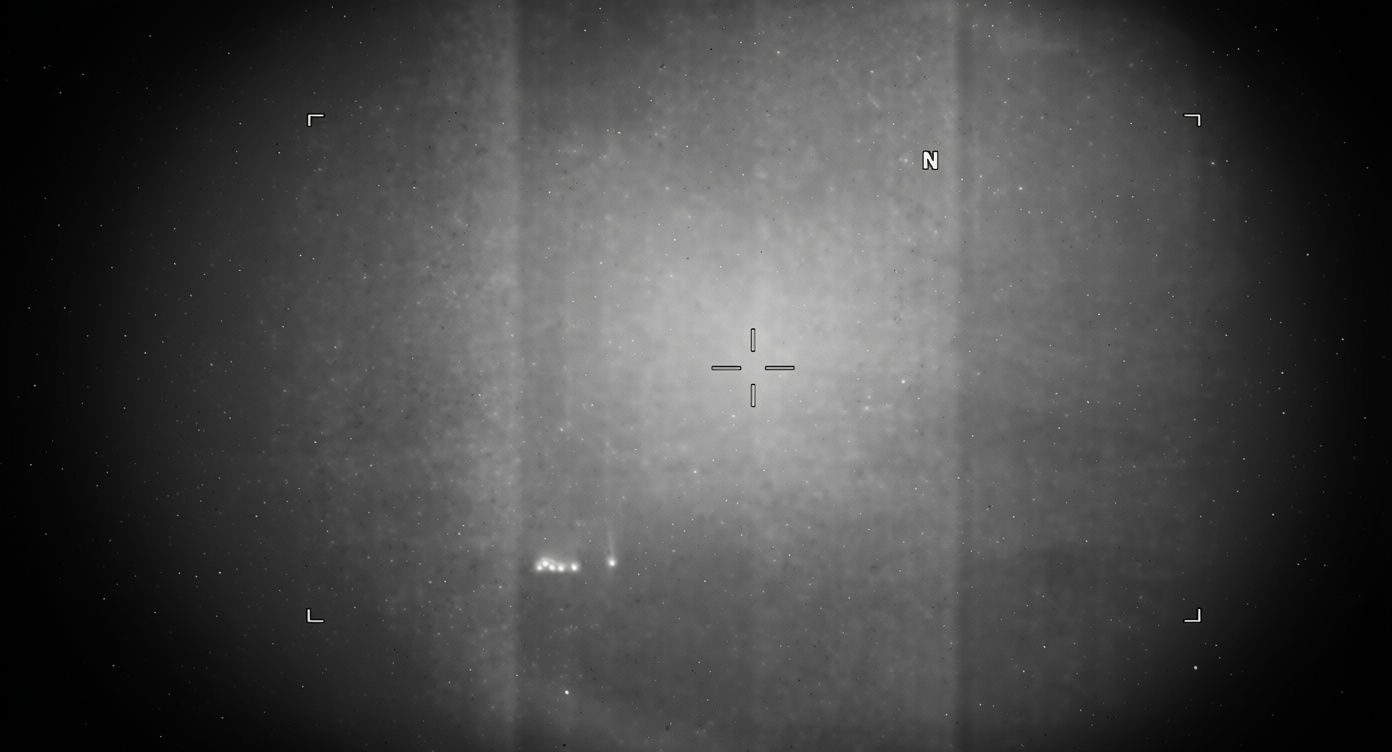
Among the observations emphasized by Loeb are reports involving agile, spherical objects traveling at roughly 480 mph. The available source material does not establish the objects’ origin, composition or propulsion system, and the reported speed alone does not demonstrate that they represent technology beyond known aerospace capabilities. However, such cases remain of interest because analysts typically examine not only speed, but also acceleration, maneuvering, altitude, sensor data and the reliability of eyewitness or instrument records.
The characterization of the objects as “agile” is similarly significant but requires careful qualification. Without full flight-path data, it is not possible to determine whether the maneuverability was genuinely anomalous, a result of perspective or tracking limitations, or associated with an ordinary object observed under unusual conditions. Loeb’s discussion places these reports within the broader question of whether some UAP cases can be explained by conventional aircraft, atmospheric phenomena, sensor artifacts or other known causes.
Project Blue Book Audio and Historical Context
The tranche also reportedly includes historical audio associated with Project Blue Book, the Air Force program that investigated UFO reports from 1952 until 1969. Audio records can provide useful context by preserving how witnesses, investigators and officials described incidents at the time, although recordings must be evaluated alongside original reports, instrument data and archival provenance.
The inclusion of Blue Book material connects the new release to earlier U.S. government efforts to assess unexplained aerial sightings. Project Blue Book ultimately concluded that most reports could be attributed to identifiable causes, while a smaller number remained unresolved. An unresolved case, however, does not automatically establish an extraterrestrial or otherwise extraordinary explanation; it may instead reflect incomplete information or limitations in the investigation.
Advanced Propulsion and Unresolved Questions
According to the summary of Loeb’s analysis, the sixth tranche also contains studies addressing advanced propulsion and documented encounters. These materials may be relevant to researchers examining whether reported UAP characteristics are compatible with established aerospace engineering or require new physical models. At present, the supplied information does not identify a confirmed breakthrough, a specific propulsion mechanism or a government finding that any case represents nonhuman technology.
The broader importance of the release may therefore lie in its range rather than in a single decisive incident. Further assessment will depend on access to the underlying files, including dates, chain of custody, sensor specifications and corroborating evidence. The source page was not accessible for independent review because it returned a 403 access error, so the details above are based on the provided summary and should be treated as attributed claims pending examination of the original documents.