Overview
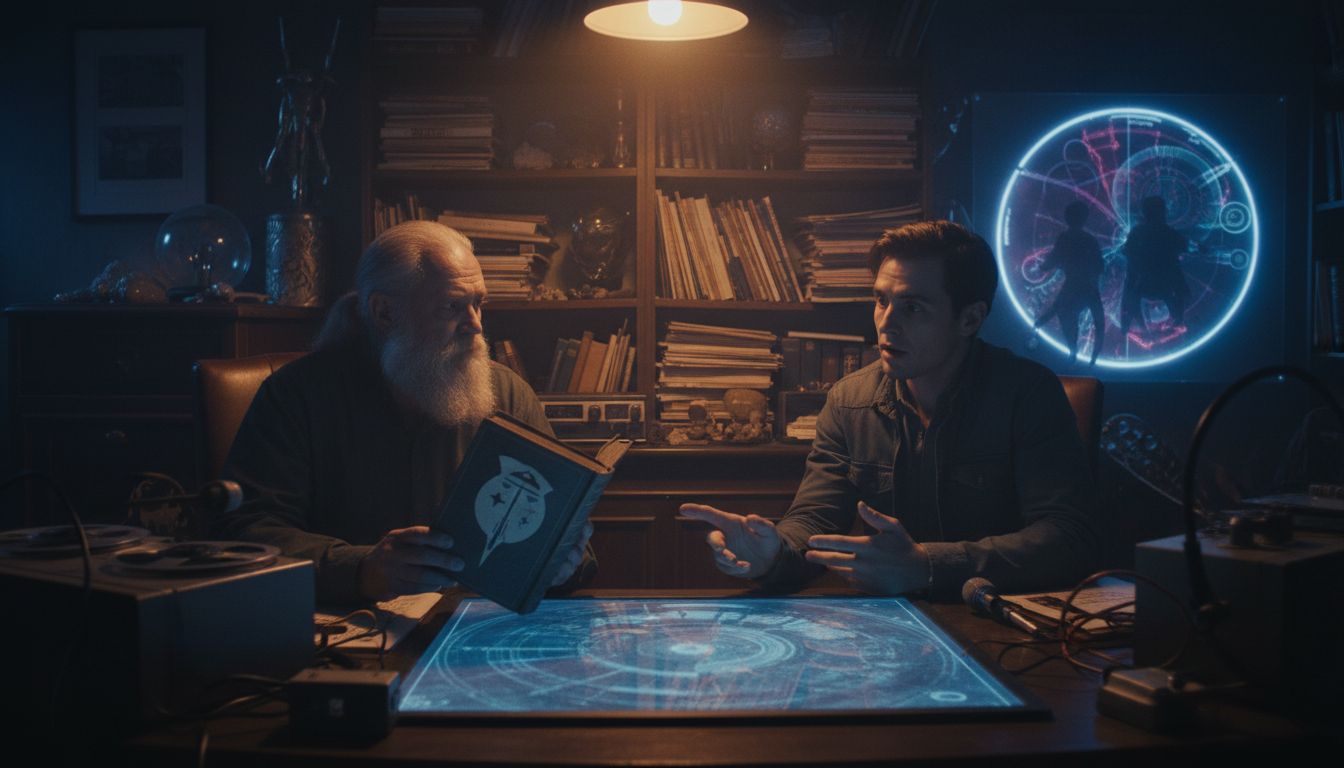
In a recent episode of UFO Talker, host Michael Ryan sat down with veteran ufologist Bernie O’Connor—founding editor of The Official UFO Magazine—to explore the “high‑strangeness” dimension of unidentified aerial phenomena (UAP). The hour‑long conversation, recorded on March 4, 2026, brought together a panel that included researcher Meredith Spearman, documentary filmmaker Michael Grosso, and Navy cryptologist Matthew Roberts. O’Connor argued that the traditional “nuts‑and‑bolts” approach to UFO research—focused on flight‑technology explanations—fails to account for the recurring themes of consciousness, interdimensionality, and what he calls “ultraterrestrials.”
High Strangeness Defined
High strangeness, a term coined in the 1970s to describe UFO encounters that defy conventional physics, re‑emerged as the central focus of the interview. O’Connor described it as “the intersection where the material world meets a paraphysical reality, often experienced through altered states of awareness.” He cited cases reported by Spearman and Grosso in which witnesses described non‑linear time perception, telepathic communication, and entities that appeared to be composed of light or pure information. Roberts, who has cleared classified data for the Pentagon’s UAP Task Force, added that “some of the sensor returns we see simply do not map onto any known aircraft or drone, suggesting a phenomenon that operates on a different set of physical rules.”
A Call for a New Paradigm
The panel agreed that the prevailing scientific framework is ill‑equipped to handle these anomalous reports. O’Connor emphasized that “the moment we insist on forcing every sighting into a conventional aerospace model, we lose the most profound data.” He advocated for a multidisciplinary paradigm that incorporates quantum physics, consciousness studies, and comparative mythology. Grosso highlighted the growing body of first‑person accounts that link UFO encounters with personal spiritual transformation, noting that “the subjective experience is as crucial as the objective data.” This perspective aligns with recent academic work suggesting that UAP research could become a catalyst for broader discussions about the nature of reality.
Push for Full Disclosure
A recurring theme was the systemic withholding of information by the military‑industrial complex. Roberts, who has spent years decrypting classified communications, warned that “a wealth of sensor data collected over the past two decades remains locked behind security classifications, limiting independent analysis.” O’Connor called this a “deliberate opacity” that hampers public understanding and scientific progress. He urged policymakers to release archived UAP recordings and to establish an independent civilian oversight board, echoing calls from the Senate’s recent UAP hearings. The interview also referenced upcoming events—the Australian UFO Festival and the Fredericton UFO and Metaphysical Conference—where these disclosure efforts will be discussed publicly.
Looking Ahead
The episode concluded with a forward‑looking statement from O’Connor: “If we can integrate high‑strangeness phenomena into mainstream discourse, we may unlock not just new technologies, but a deeper comprehension of consciousness itself.” He announced the upcoming release of his memoir, The Official History of The Official UFO Magazine, which will document decades of investigative work and the evolution of high‑strangeness theory. Listeners were encouraged to engage with the broader community via the UFO Talker platform, where transcripts, supplemental reading, and avenues for contacting the show are available. As the conversation illustrates, the next phase of UFO research may hinge less on hardware and more on expanding the very lenses through which humanity perceives the unknown.


