Overview
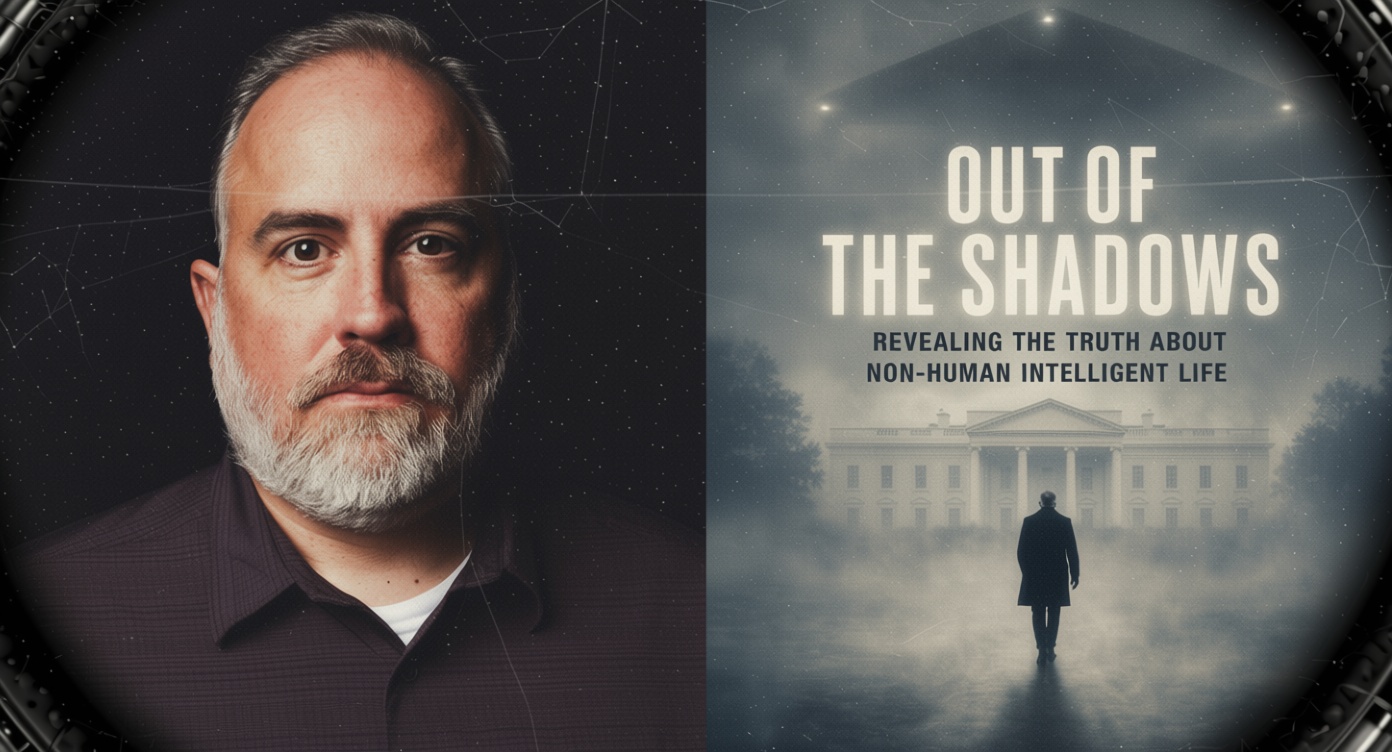
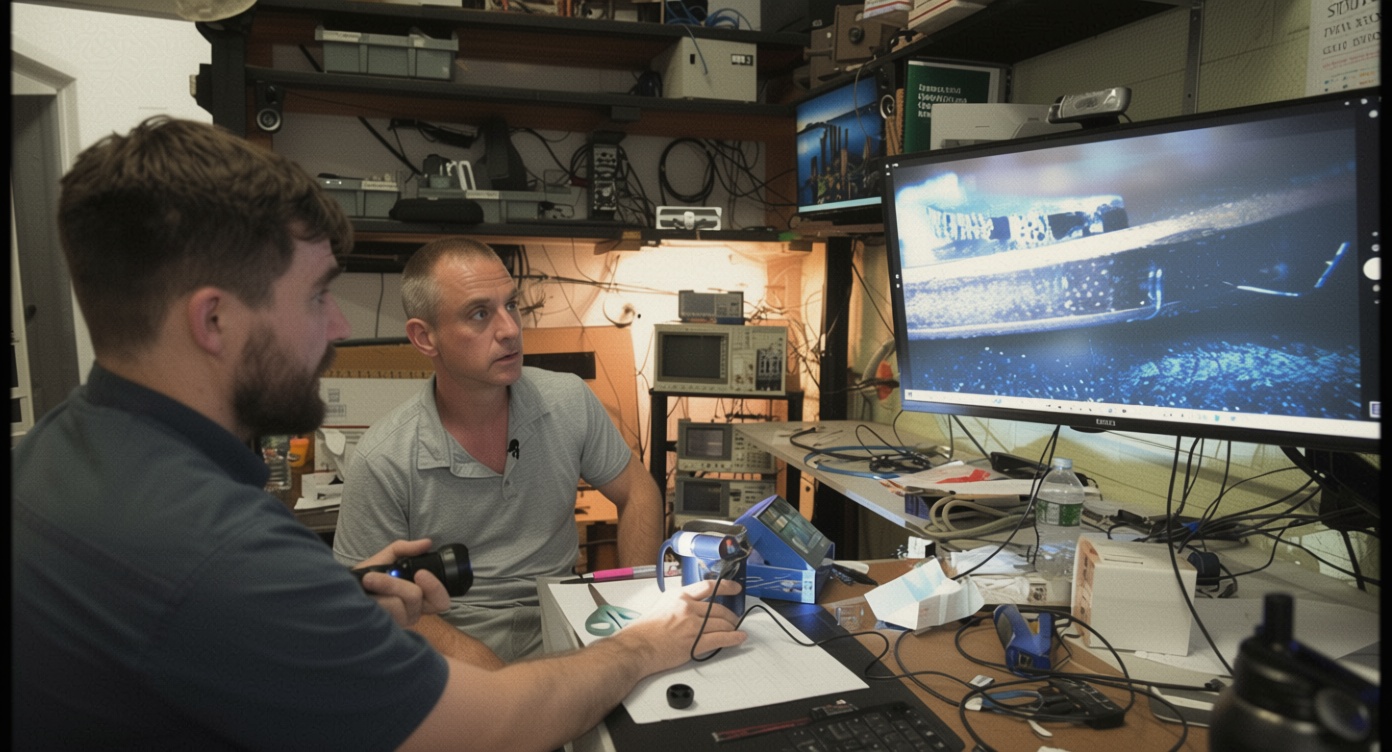
An interview hosted by Tim Ventura examines the scientific investigation of materials allegedly recovered from unidentified anomalous phenomena (UAP) cases. Jarod Yates, an experimental researcher and co-founder of Flux Space, describes efforts to determine whether selected fragments possess unusual physical or chemical properties. Yates draws on experience in U.S. Air Force avionics and electronic warfare while discussing laboratory analyses of samples commonly described by enthusiasts as “metamaterials.”
The interview does not establish that any sample is of non-human origin. The material presented consists largely of Yates’ interpretations, test results and comparisons, and the summary provides no independent verification of the findings. Several of the cases remain disputed, while others appear to have plausible terrestrial explanations.
Samples Under Investigation
Yates discusses eight primary sample groups, including the well-known Art’s Parts material, a bismuth-magnesium bilayer associated with a 1996 UFO-related claim. According to Yates, transmission electron microscopy revealed nanoscale structures embedded in the magnesium that resemble “bow-tie resonators,” or miniature antenna-like components. He argues that the arrangement could indicate deliberate engineering intended to influence electromagnetic energy.
Another focus is material linked to the 1986 Dalnegorsk incident at Height 611 in the former Soviet Union. Yates says the sample contains quartz-clad gold nanowires with dimensions and composition similar to features identified in Art’s Parts. He interprets the apparent similarities as evidence of a possible common manufacturing process, although the interview does not provide independently published confirmation linking the two samples.
Other cases receive more conventional assessments. Yates reportedly considers debris associated with the 1983 Llanilar, Wales, incident consistent with fiberglass and honeycomb structures potentially connected to terrestrial stealth aircraft, including the F-117 Nighthawk. He also characterizes the Buga Sphere, a recent Colombian case that gained attention on social media, as likely fraudulent because of black epoxy and chemical-etching patterns he says are compatible with inexpensive fabrication methods.
Testing and Scientific Claims
The interview also addresses material attributed to the Ubatuba case in Brazil, the Maury Island incident, Roswell-area fragments and samples from San Agustin. Yates suggests some Ubatuba material could be related to the Art’s Parts samples, while describing Roswell fragments as broadly consistent with common aluminum alloys. San Agustin samples, he says, exhibited minute electromagnetic effects under extreme cooling.
A radiation-related claim involves testing attributed to Dr. Matthew Szydagis of the University at Albany. Yates says neutron activation analysis caused the Art’s Parts sample to become “saturated” and begin reflecting radiation. He proposes that the material could have applications as a radiation shield for space travel. The summary, however, does not provide the complete methodology, data set or peer-reviewed publication needed to evaluate that interpretation.
Disputed Official Assessments
Yates criticizes the assessment by the Pentagon’s All-domain Anomaly Resolution Office and Oak Ridge National Laboratory, which reportedly concluded that Art’s Parts was prosaic. He argues that only a portion of the available information was released and that more unusual findings—including alleged bismuth-lead isotope characteristics—remain unavailable or insufficiently explained. Such claims cannot be independently assessed without access to the full data and laboratory records.
Context and Next Steps
The discussion reflects a broader effort by researchers, including Garry Nolan, Jacques Vallée, Frank Kimbler and Steve Colbern, to apply modern materials science to historical UAP reports. Its central conclusion is cautious but unresolved: many alleged fragments may be terrestrial debris or hoaxes, while a small number warrant additional study. Even if the unusual samples ultimately prove terrestrial, Yates argues that their manufacturing characteristics could still raise important questions about advanced materials production. At present, the evidence described in the interview remains preliminary and should be treated as a research claim rather than confirmation of extraterrestrial technology.