Overview
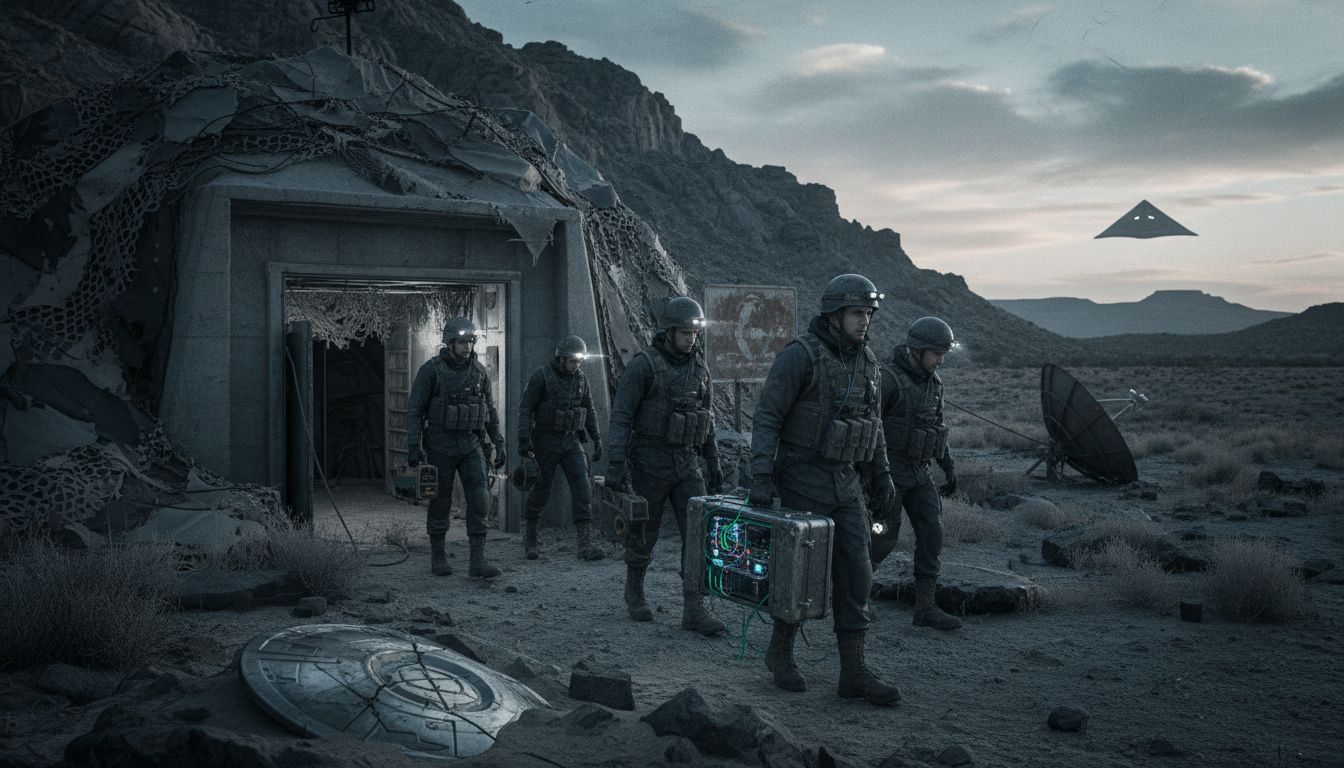
A new VibeWire Magazine episode is revisiting one of the most persistent ideas in UFO and national-security circles: that the United States may conceal a network of deep underground military bases and tunnel systems linked to advanced technology programs. The piece, titled “Deep Underground: The Hidden Military World Beneath America?”, centers on commentator Michael Schratt, who explores claims about secret construction projects, black budget funding, and the engineering challenges of building facilities far below the surface. While the subject has long circulated in disclosure and conspiracy communities, it remains largely unverified by public evidence.
What the Episode Claims
According to the article description, Schratt examines reports of massive underground installations that could be used for military, intelligence, or classified research purposes. The framing suggests these facilities may sit outside normal oversight, funded through opaque budget channels and designed to support programs that would be difficult to explain publicly. The episode also appears to connect these claims to broader questions around UAP, advanced propulsion concepts, and highly compartmentalized defense work—ideas that regularly surface in online disclosure debates.
VibeWire presents the topic as part of a larger investigation into “America’s hidden underground network,” a phrase that reflects the language common to Deep Underground Military Bases, or DUMBs, a term frequently used by researchers, podcasters, and conspiracy theorists. The article does not provide documentary proof of hidden sites, but it does signal interest in the idea that some military infrastructure may be intentionally shielded from public view because of its strategic value or classified mission.
Why the Theory Persists
Claims about underground military facilities are not new. They have appeared for decades in books, interviews, and fringe research tied to Cold War secrecy, continuity-of-government planning, and rumored black programs. The concept appeals to audiences who believe advanced aerospace projects—potentially including UAP-related research—could be hidden underground to avoid scrutiny. In that sense, the topic sits at the intersection of military secrecy, technological speculation, and public distrust of official explanations.
At the same time, experts caution that the existence of secure underground facilities is not itself extraordinary. Governments routinely build hardened bunkers, command centers, storage depots, and tunnel systems for legitimate defense needs. What remains unproven is the more dramatic allegation that a large, hidden underground network in America is being used for extraterrestrial, reverse-engineering, or other exotic programs. Without hard evidence, those claims remain speculative.
Disclosure Context and Public Scrutiny
The renewed attention reflects how underground-base narratives continue to thrive inside the wider UFO disclosure conversation. As lawmakers, former officials, and researchers push for greater transparency on unidentified anomalous phenomena, some audiences have extended that demand to other secretive areas of national security. In that environment, stories about buried facilities and classified engineering projects gain traction because they offer a tangible explanation for secrecy that otherwise seems difficult to penetrate.
For now, the VibeWire piece appears less like a conclusive exposé than a spotlight on a durable and controversial theory. It underscores a familiar tension in UAP reporting: the public’s appetite for answers versus the reality that many claims are built on inference, rumor, or anonymous testimony. Whether underground military sites hold any connection to advanced aerospace programs remains unproven, but the subject is clearly still resonating with readers looking for the next piece in the disclosure puzzle.