Overview
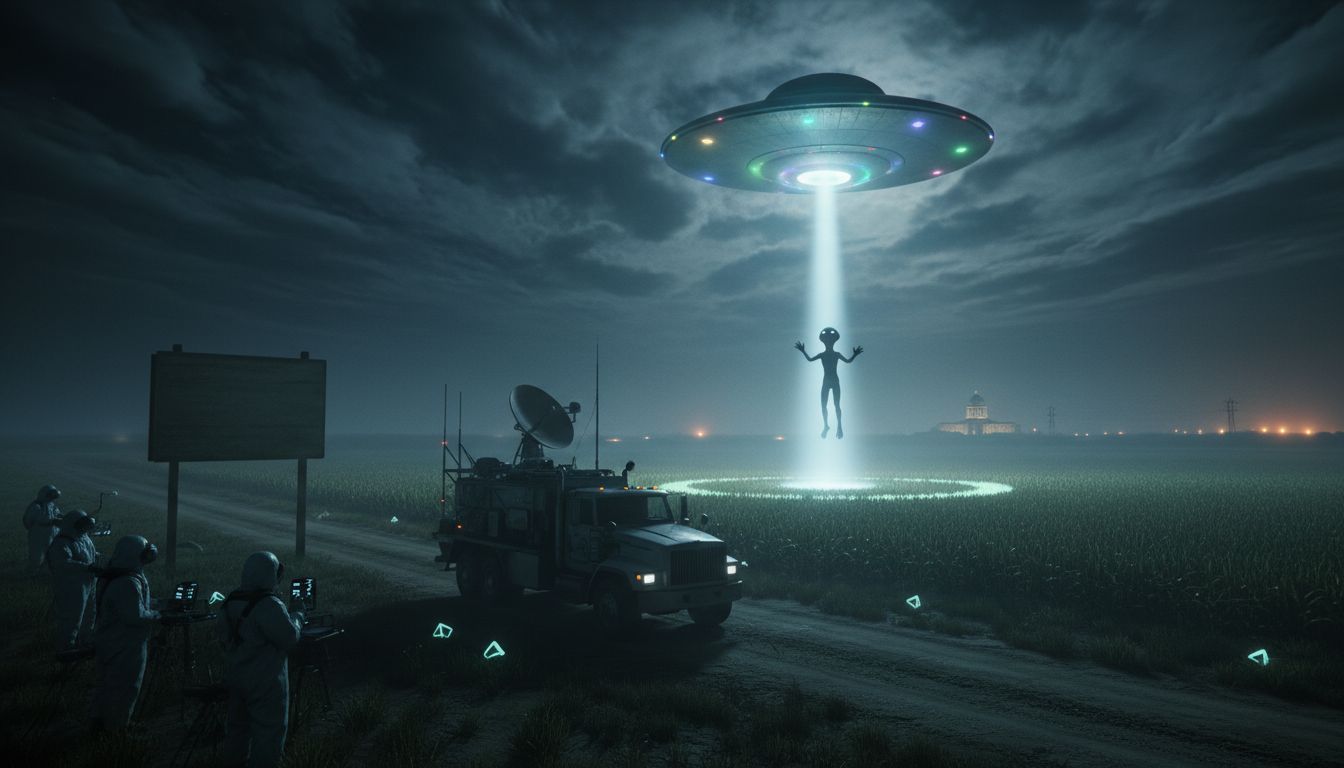
A new report released this week claims that Delaware leads the United States in per‑capita reports of alien abductions, earning the state the tongue‑in‑cheek moniker “Alien Abduction Capital.” The analysis, compiled by the Center for Extraterrestrial Phenomena Research (CEPR) at the University of Delaware, examined 2,143 self‑reported abduction accounts collected between 2010 and 2025. When adjusted for the state’s 1‑million‑plus population, Delaware’s rate of 1.8 reports per 1,000 residents outpaced the national average of 0.7 and topped states such as Arizona and Colorado, which have long been associated with UFO sightings.
Methodology
CEPR researchers used a mixed‑methods approach, drawing on three data sources: the National UFO Reporting Center’s (NUFORC) public database, a 2024 online survey distributed through social‑media groups dedicated to “UFO experiences,” and a Freedom of Information Act request for police and medical records mentioning unexplained phenomena. Each claim was vetted against a five‑point credibility checklist that considered consistency of narrative, corroborating witnesses, and any physical evidence. “We deliberately set a low threshold for inclusion to capture the full spectrum of self‑identified abduction reports,” said Dr. Lena Morales, lead author of the study. After filtering, 1,842 cases remained, of which 332 originated from Delaware.
Local Reaction
The findings have sparked a mix of amusement and curiosity among Delaware residents. “I always joked that the only thing we’re famous for is chicken and tax‑free shopping,” said Rehoboth Beach café owner Marco Alvarez, “but now I’m half‑expecting a UFO to land in my parking lot.” A petition posted on the state’s official website has already gathered more than 4,500 signatures urging the Delaware Department of Tourism to market the “UFO-friendly” image. Meanwhile, the Delaware State Police confirmed they have received a modest uptick in calls about strange lights, though they stressed none have resulted in formal investigations.
Expert Commentary
Skeptics caution against drawing sweeping conclusions from the data. Dr. Susan Patel, a psychologist at the University of Pennsylvania who studies anomalous experiences, noted that “self‑report surveys are prone to selection bias; people who believe they’ve been abducted are more likely to respond.” She also highlighted that Delaware’s relatively small population can inflate per‑capita statistics. Former NASA aerospace engineer and UFO‑research consultant Mark Whitaker added, “While the numbers are intriguing, they don’t constitute evidence of extraterrestrial activity—just a cultural phenomenon that varies by region.”
Context & Next Steps
Delaware’s newfound reputation arrives amid a broader resurgence of interest in unidentified aerial phenomena, spurred by the U.S. government’s recent declassification of several UAP videos. The CEPR team plans to expand its analysis to include longitudinal trends, comparing the current surge with data from the 1990s “Phoenix Lights” era. State officials, meanwhile, have scheduled a town‑hall meeting for next month to address public concerns and explore whether the label could be leveraged for tourism without compromising credibility. As the debate unfolds, Delaware residents will be watching the skies—and the headlines—more closely than ever.


