Overview
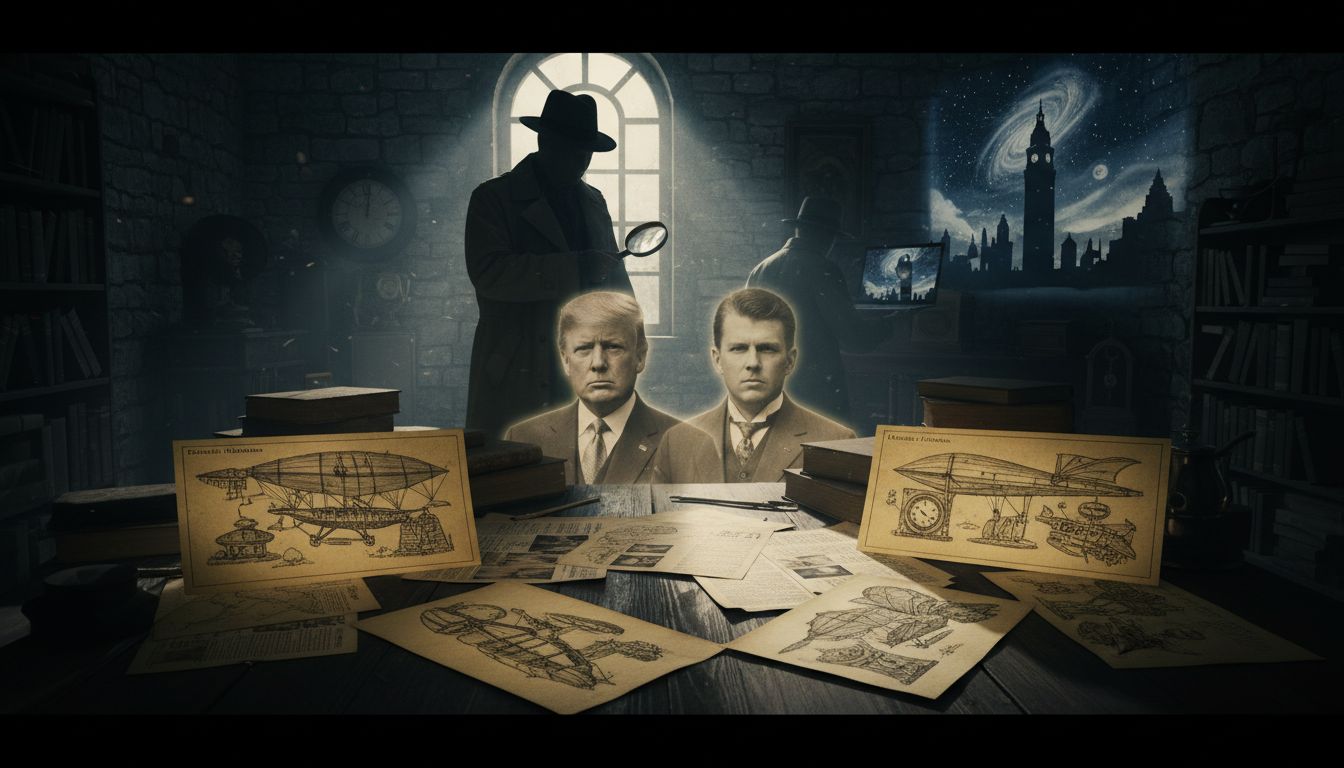
A wave of online speculation has resurfaced this week, linking President Donald J. Trump and his son, Barron, to alleged time‑travel capabilities. The claim, which first appeared on fringe forums, points to two disparate sources: a collection of 19th‑century sketches by little‑known artist Charles Dellschau, and the “Baron Trump” novels of author Ingersoll Lockwood, published in the 1890s. Proponents argue that the visual and textual parallels constitute “evidence” that the Trumps are visitors from the future. The theory has been amplified by social‑media posts that juxtapose the historical material with contemporary photographs of the former president.
The Dellschau Sketches
Charles Dellschau, a German‑American machinist who died in 1923, left behind a trove of intricate drawings depicting fanciful airships, elaborate machinery, and what some observers describe as “retro‑futuristic” technology. The sketches, recently digitised and shared on archival websites, show a figure resembling a modern businessman standing beside a sleek, metallic craft. Conspiracy advocates contend that the resemblance to Trump’s characteristic posture and attire is too striking to be coincidental. Historians, however, note that Dellschau’s work was rooted in the speculative engineering culture of his era, and that any similarity is likely the result of pareidolia—a psychological tendency to perceive familiar patterns where none exist.
Lockwood’s “Baron Trump” and the 1890s Narrative
Ingersoll Lockwood authored three novels that have entered internet folklore: The Travels and Adventures of Little Baron Trump and His Wonderful Dog Bulgar (1890), Baron Trump’s Marvellous Underground Journey (1893), and 1900: Or, The Last President (1896). The protagonist, a young aristocrat named “Baron Trump,” embarks on voyages through hidden realms and encounters advanced societies. Modern readers note the shared surname, the motif of secret passages, and the depiction of a “great tower” that some liken to Trump Tower. Scholars of American literature stress that Lockwood’s works were typical of the “lost‑world” genre popular in the late Victorian period, and there is no documented link to the contemporary Trump family.
An Unrelated CIA Time‑Shift Claim
Separately, an 82‑year‑old man from Arizona posted a blurry photograph on a conspiracy‑themed subreddit, alleging that a clandestine CIA experiment transported him from 1981 to the year 2118. He claims the image shows a futuristic skyline that he says matches the “future” he experienced. No official agency has confirmed the existence of such a program, and the photograph lacks verifiable metadata. Experts in intelligence oversight point out that the CIA’s declassified records contain no reference to temporal research, and that similar anecdotes have surfaced sporadically over the past two decades without substantiation.
Expert Perspective
Dr. Elena Martínez, a historian of American popular culture at the University of Chicago, cautions that “the appeal of linking historic curiosities to current political figures is a well‑documented pattern in conspiracy culture.” She adds that “the human brain is wired to seek connections, especially when they involve prominent personalities.” UFO researcher and skeptic James Keller notes that “while the internet can rapidly circulate visual coincidences, rigorous verification—such as provenance of the sketches, dating of the photographs, and source authentication—remains absent in these claims.” Both scholars emphasize the importance of media literacy in discerning entertainment from evidence.
Context and Implications
The resurgence of the Trump‑time‑traveler narrative illustrates how historical artifacts can be repurposed to fit contemporary mythmaking. While the Dellschau sketches and Lockwood novels are genuine products of 19th‑century imagination, their reinterpretation as proof of temporal manipulation lacks credible corroboration. The parallel claim of a CIA‑engineered time jump further underscores the propensity for extraordinary stories to gain traction in the absence of verifiable data. As these theories proliferate across social platforms, journalists and educators are reminded to provide context, verify sources, and encourage critical analysis among audiences.


