Overview
Far Out Magazine has revisited one of Kate Bush’s strangest reported encounters with the unexplained, a story that sits neatly alongside the singer’s long-standing image as one of British pop’s most otherworldly figures. The piece is framed by the eerie phrase “It’s in the trees, it’s coming,” a line that captures the mood of the account Bush shared with fans: a dark Scottish night, a remote landscape, and a sighting that she and her companions could not easily explain. While the episode remains unverified, it has endured as one of the more intriguing entries in Bush folklore.
A night in the Scottish countryside
According to the account cited by Far Out, Bush was travelling through the Scottish countryside with friends when the group stopped by the roadside to read a sign describing a fifth-century BC fort and a nearby “phantom battle” said to have taken place in the area. Bush later wrote about the scene in the 11th issue of her Kate Bush Club newsletter, describing a landscape steeped in local history and mystery. What began as a quiet stop in a remote setting soon took on a stranger tone when attention shifted from the ground to the sky above.
The lights in the sky
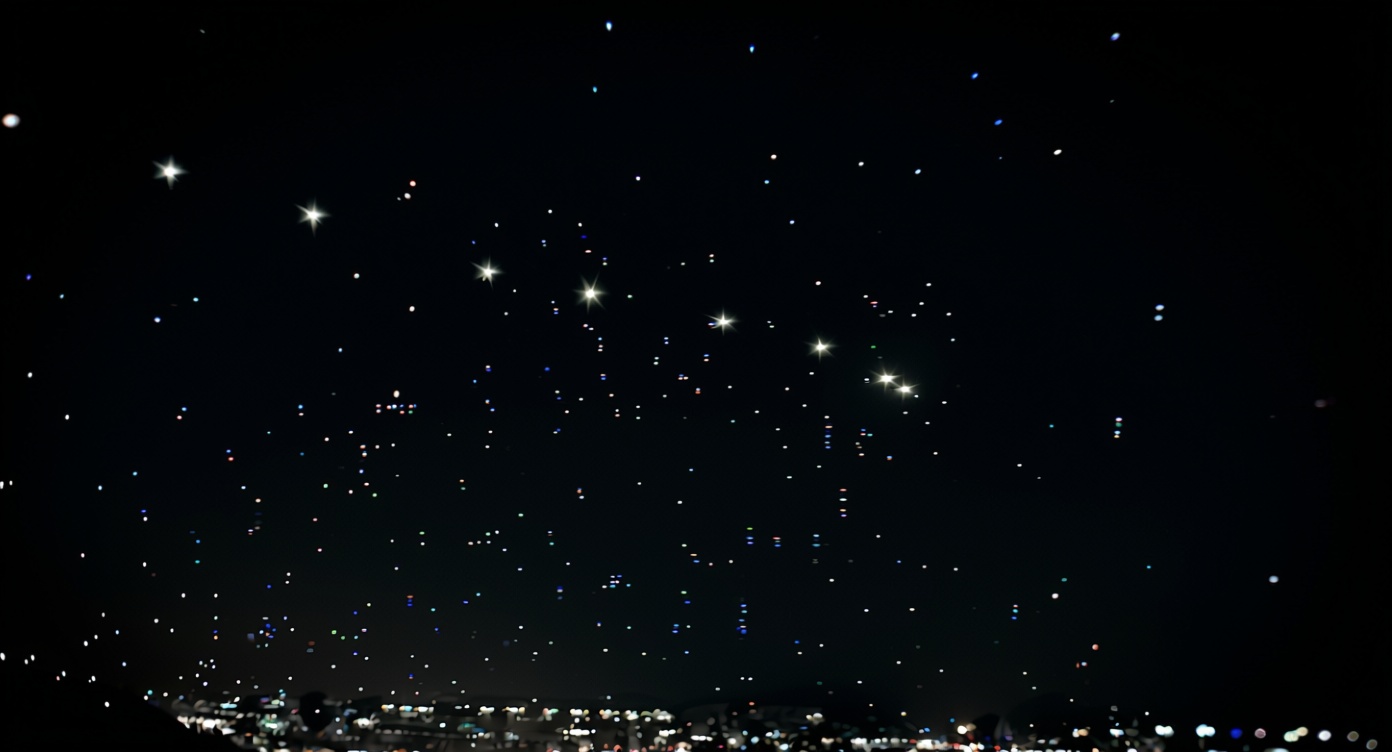
Bush said she and her friends noticed three lights moving into different positions in the sky, prompting them to watch more closely rather than dismiss the sighting immediately. “We thought maybe they were some kind of stadium lights,” she recalled, “But they were too near to the clouds, and we had never seen aircraft with such big lights, nor that colour.” The group followed the lights in what Bush described as “hot pursuit,” only to lose sight of them around a bend before seeing them again. On their second appearance, she said the glowing, golden orbs were “completely unattached to any form of structure on the ground.”
Why the story still resonates
The account has persisted partly because it fits so naturally with the mythology that has grown around Bush herself. Her music has long been described in terms that suggest the uncanny: soaring vocals, ghostly textures and a lyrical world that often feels suspended between dream, folklore and fantasy. That image makes any reported brush with the unexplained seem almost apt, even if the incident itself remains anecdotal. Far Out’s retelling leans into that duality, presenting Bush not as a believer in sensational claims, but as an artist whose imagination and instincts often seemed tuned to unusual experiences.
An enduring mystery
As with many UFO stories, the Scottish sighting does not offer a definitive answer. It could have been something conventional misread in unusual circumstances, or something more difficult to identify. What gives the tale staying power is not certainty, but atmosphere: the remote setting, the ancient battlefield reference, the changing lights, and Bush’s own vivid recollection of the moment. In that sense, the story has become less about proving the existence of a UFO than about how mystery lingers in places where history, landscape and human perception intersect.