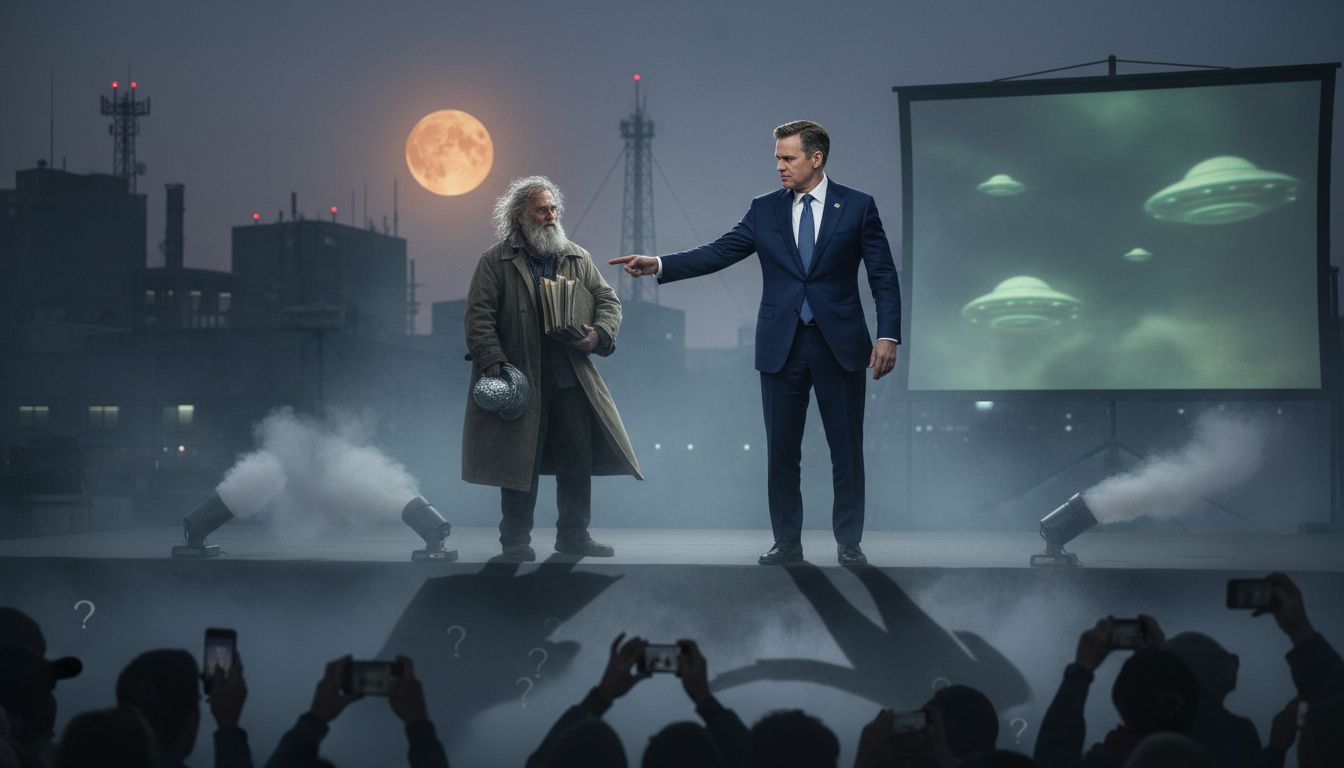
Sen. J.D. Vance (R‑OH) publicly broke with a longtime ally on the Senate floor this week, saying the former congressman’s “persistent focus on unidentified aerial phenomena” has become a political liability for the Republican Party. In a brief statement released after a closed‑door meeting with party leadership, Vance warned that “the growing emphasis on UFOs and UAPs among some of our most vocal supporters distracts from the core issues Ohioans care about—jobs, public safety and fiscal responsibility.” The ally in question, former Rep. Marco Rubio, has long been associated with the MAGA wing of the party and has spoken openly about his belief that the U.S. government is concealing evidence of alien spacecraft.
Rubio’s interest in the subject dates back to at least 2015, when he co‑authored a resolution urging the Pentagon to declassify its UAP investigations. In a 2022 interview on a conservative talk show, he claimed that “the evidence is mounting” that “extraterrestrial technology is already influencing our national security discussions.” Those remarks resurfaced in recent weeks after the Office of the Director of National Intelligence released its biennial UAP report, which acknowledged a “small number of incidents that remain unexplained” and called for further inter‑agency coordination. While the report was largely technical, it reignited public fascination and gave fringe conspiracy circles fresh ammunition.
Vance’s decision to distance himself reflects a broader strategic shift among establishment Republicans who are seeking to re‑center the party’s messaging ahead of the 2026 midterm elections. Political analyst Maya Patel of the Brookings Institution noted that “the GOP is trying to shed the perception that it’s a breeding ground for conspiracy‑theory politics. Vance’s move is a signal to moderate voters that the party can still be taken seriously on mainstream issues.” The senator, who has positioned himself as a bridge between the party’s populist base and its traditional business wing, said the timing was “critical” as the Senate prepares to vote on a bipartisan UAP oversight bill that would allocate additional funding for the newly created All‑Domain Anomaly Resolution Office.
Rubio, for his part, has defended his stance, arguing that “the truth about unidentified aerial phenomena is a matter of national security, not partisan politics.” In a statement to his constituents, he asserted that “the American people deserve transparency, and I will continue to push for full disclosure.” The divergence between the two Republicans underscores an internal debate over how far the party should engage with topics that sit at the intersection of science, defense, and fringe speculation. Some MAGA‑aligned groups have praised Rubio’s advocacy, posting memes that blend the “tin‑foil hat” aesthetic with slogans like “America First, Even to the Stars.” Others, including several Senate Republican leadership figures, have expressed concern that such rhetoric could alienate suburban voters who view UFO discussions as a distraction.
The episode arrives at a moment when congressional interest in UAPs is at an unprecedented level. In the past year, the Senate Intelligence Committee has held multiple hearings featuring former military pilots and intelligence officials who described “unidentified aerial vehicles” exhibiting capabilities beyond known technology. While the bipartisan UAP bill is expected to pass with modest funding, critics warn that without rigorous oversight it could become a platform for unverified claims. As the GOP navigates the delicate balance between catering to its more conspiratorial base and appealing to a broader electorate, Vance’s public repudiation of Rubio’s UFO advocacy may serve as a bellwether for how the party will handle fringe issues moving forward.


