Overview
Investigative journalist and filmmaker Jeremy Corbell discussed U.S. military encounters with unidentified aerial phenomena (UAP) during an episode of the Weaponized podcast hosted with journalist George Knapp. The conversation, later circulated among UAP-focused accounts on X, examined why military forces might fire on unidentified objects and whether the United States maintains organized efforts to recover debris or craft after such incidents.
Corbell presented the subject as part of a longstanding military and intelligence concern rather than a series of isolated encounters. However, the discussion consisted primarily of claims and interpretations offered by the speakers. The episode did not independently establish the nature, origin, or capabilities of the objects described, and publicly available evidence remains subject to continuing debate.
Conditions for Military Engagement
According to Corbell, the military has historically operated under specific conditions for determining whether an unidentified object should be engaged. He identified proximity to ground troops as one factor: an object flying close to personnel could be treated as a potential threat, particularly if its intentions and capabilities were unknown.
Corbell also cited an object’s apparent ability to carry a payload as a possible trigger for a defensive response. In this context, “payload” could refer to equipment, weapons, or another object carried by an aircraft or aerial platform. The discussion did not provide a formal military directive or publicly released rules of engagement that would independently confirm these criteria, but Corbell characterized them as established parameters derived from historical military activity.
Congressional Evidence and Reported Engagements
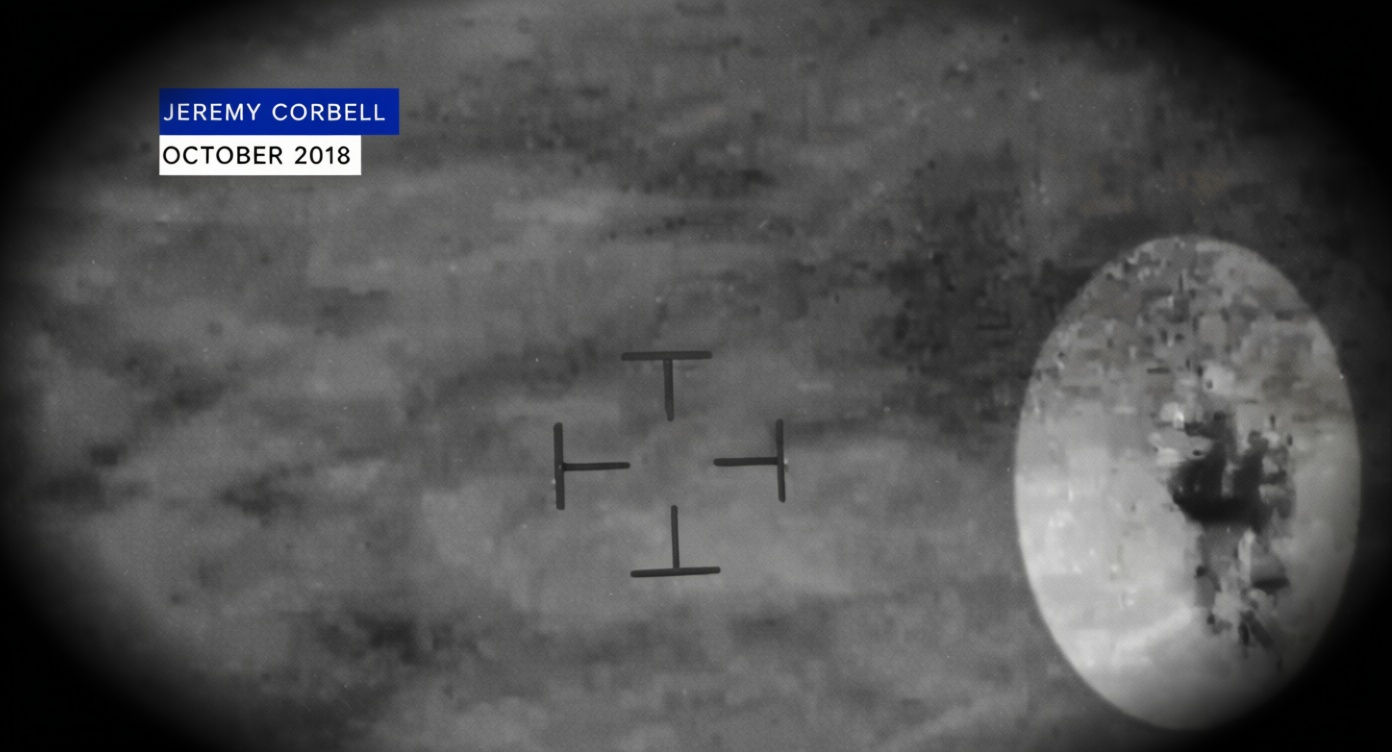
Corbell pointed to congressional hearings as part of the public record surrounding UAP incidents. He specifically referenced testimony and material associated with George Knapp, stating that video had been shown publicly for the first time depicting a UAP being targeted and struck by military fire.
The reported footage was presented as evidence that U.S. forces have engaged unidentified objects, rather than merely observing them. The description alone, however, does not resolve key questions, including the identity of the object, the circumstances of the encounter, the type of weapon used, or whether the engagement caused significant damage. Officials and congressional investigators have continued to distinguish between an object being unidentified and evidence that it represents non-human technology.
Defense Actions and Retrieval Claims
A central theme of the discussion was Corbell’s distinction between immediate defensive actions and what he described as a more advanced recovery effort. He suggested that, beyond responding to perceived threats, the government may have developed “an organized and high-tech program” intended to retrieve objects or debris after they are brought down.
Such claims have appeared repeatedly in UAP disclosure debates, including congressional testimony and public statements by former officials. They remain contested, and the U.S. government has not publicly verified the existence of a program dedicated to recovering extraterrestrial craft. Government reviews have generally acknowledged reports of unexplained incidents while emphasizing that many cases lack sufficient data for definitive conclusions.
Context and Outstanding Questions
The Weaponized discussion adds to an ongoing debate over how the military should respond when unidentified objects operate near sensitive facilities, aircraft, or personnel. Corbell’s account suggests that some encounters may involve deliberate engagement decisions governed by threat assessments, rather than accidental or purely observational interactions.
At the same time, the claims raise questions that require documentary evidence and independent verification. An object’s unidentified status does not, by itself, establish an extraterrestrial origin, and alleged retrieval activities would require corroboration through official records, physical evidence, or testimony that can be independently evaluated. The episode therefore contributes to the public conversation about UAP transparency while leaving the nature of the reported objects and the scope of any recovery program unresolved.